Read more about the ArtGraduates Fresh Edit open call and the other selected projects.
The selection for the exhibition Buničina (Cellulose) brings together works by seven visual artists and one performer, all working across experimental media. The works are set in dialogue about the human and the natural world, about their accord and their discord.
The exhibition Buničina takes as its starting point the human need to draw boundaries around nature, around the body and around identity itself, to name them and to keep them under control. It looks at the overlap, and above all the conflict, between culture and landscape, between the sphere of the body and that of its surroundings. What the works share is a fascination with the fragility and the menace of organic structures, and above all an interest in movement, reciprocity and relationship, in the processes that unfold between material and the human, between the body and its environment. They show that material is not a passive medium, that the human is not a closed unit and that nature is not a passive backdrop. The dialogue among the works therefore explores the blurred edges of these relationships; the forms differ, but the common denominators are mutability, the malleability of matter, the passage from one state to another and, above all, the tension between our tendency to fix boundaries and the experience of permeability.
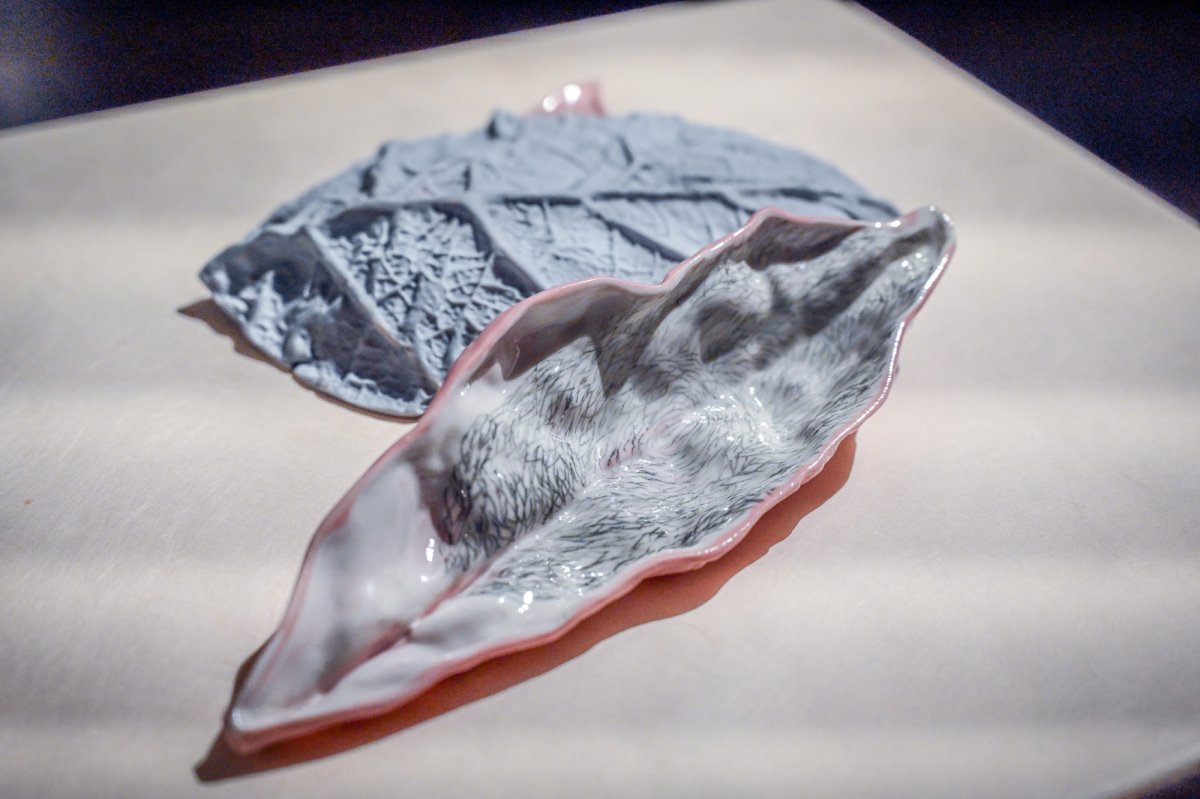
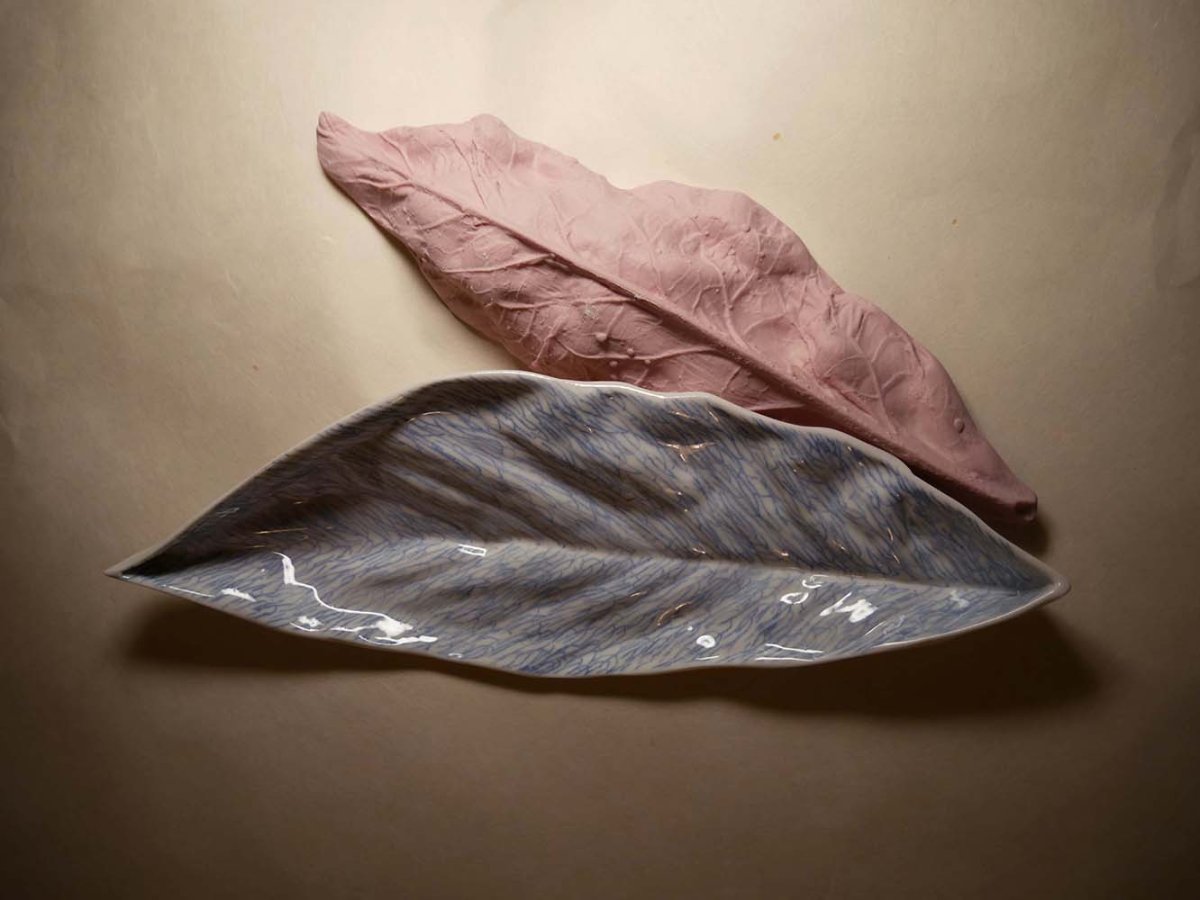
The Porcelánové objekty (Porcelain Objects) of Pavla Gajdošíková are a first step towards grasping what we call the autonomy of material. For the artist, ceramics and porcelain are not simply a means of making: their malleability acts as a guiding force, and what is essential to it conceptually is her willingness to give up control and to let the material take its own part in the process. The objects emerge not from an artistic intention but from a process of listening to the material, a relationship that holds the whole exhibition together in a space of mutual action.
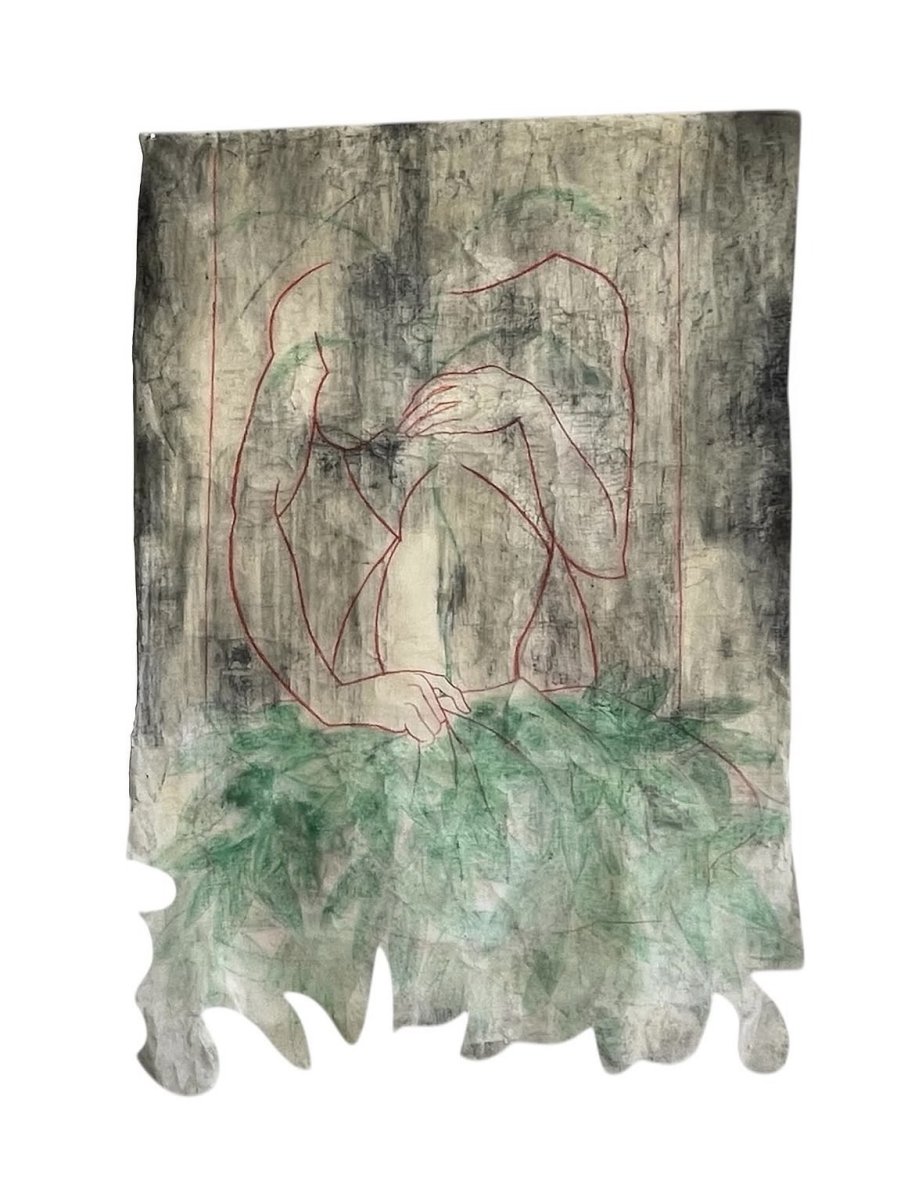
The work of Iva Davidová has long touched on interspecies communication and coexistence, but also on the perception of plants, the politics of lawns and the way we deal with so-called invasive species. Alongside ecological grief and anxiety, her work brings in the idea of a “militant gentleness” and of radical imagination. The drawing Watching The Leaves Fall Wishing I Could Do The Same… and the sheet-metal installation Breathing Hard In The Pastures stand as intensely personal gestures which at the same time reach beyond the limits of human experience, drawing on natural processes, transformation, surrender and the longing for another way of living.
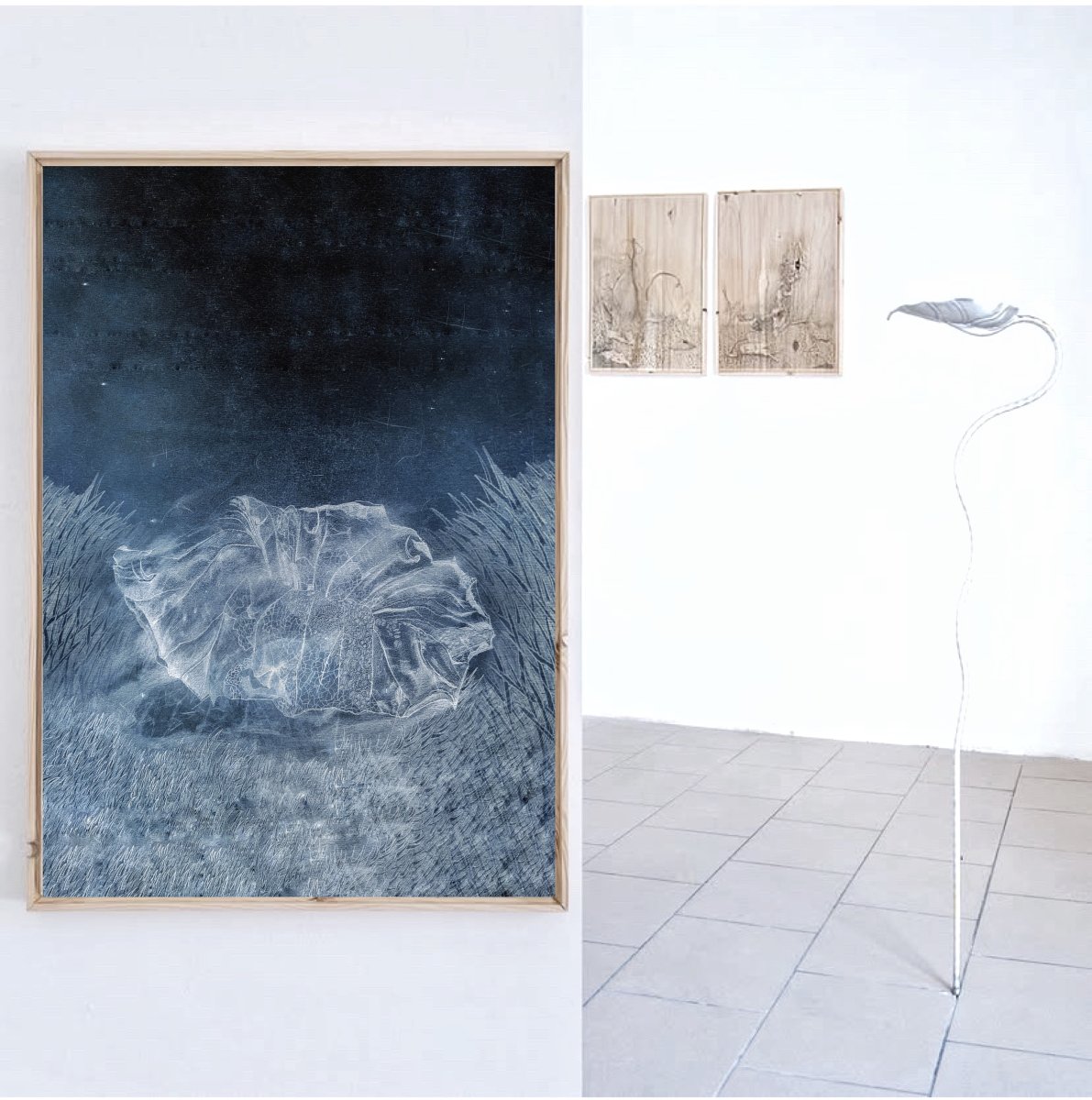
Breathing Hard In The Pastures, sheet-metal installation, Zaazrak Dornych, Brno (right)
Processes and transformations that run through the landscape as much as through human society are also the subject of the work of Anna Treterová. In Divoké traviny (Wild Grasses) and Má dobrá a zlá stránka (My Good and Bad Side) the landscape motif appears as an object of study and observation, and in her hands it becomes a space, at once physical and mental, in which we can discuss our own ways of looking.
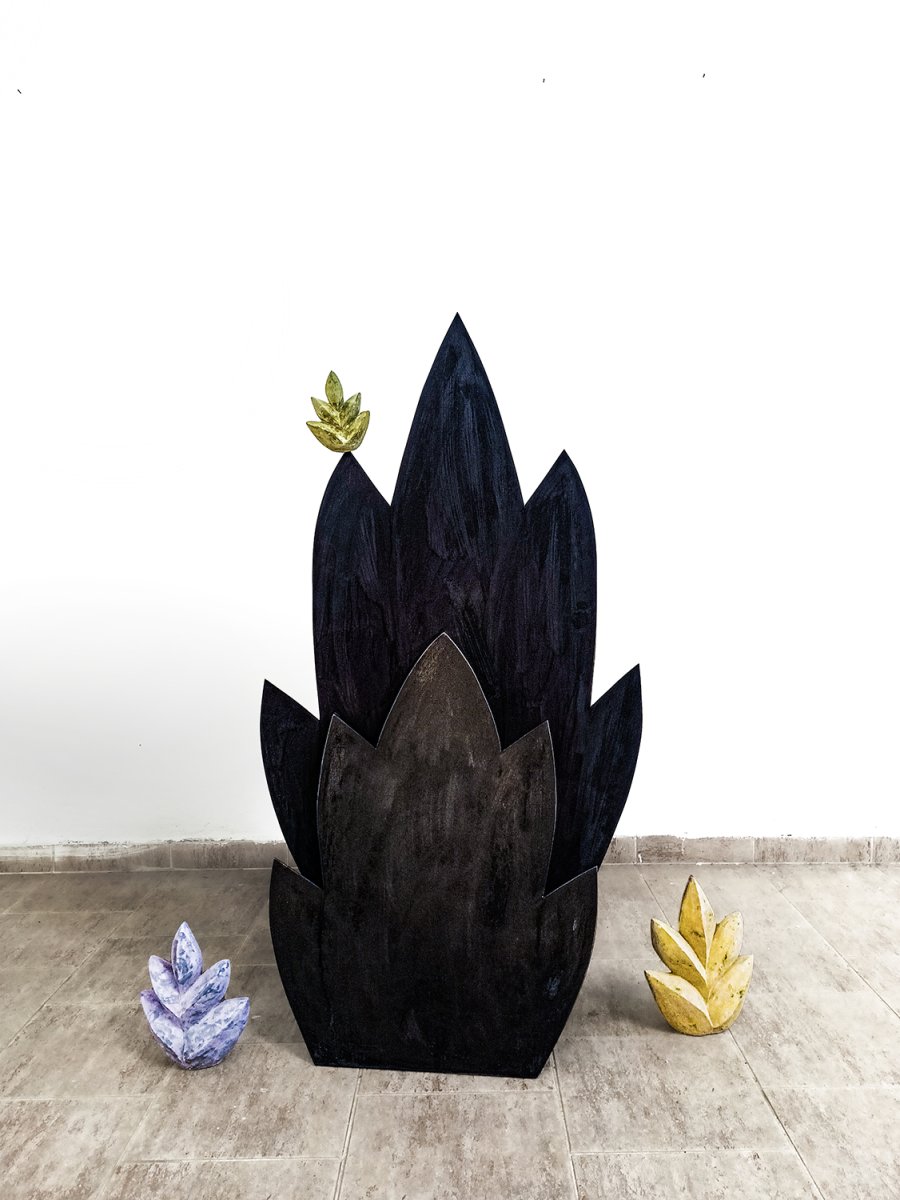
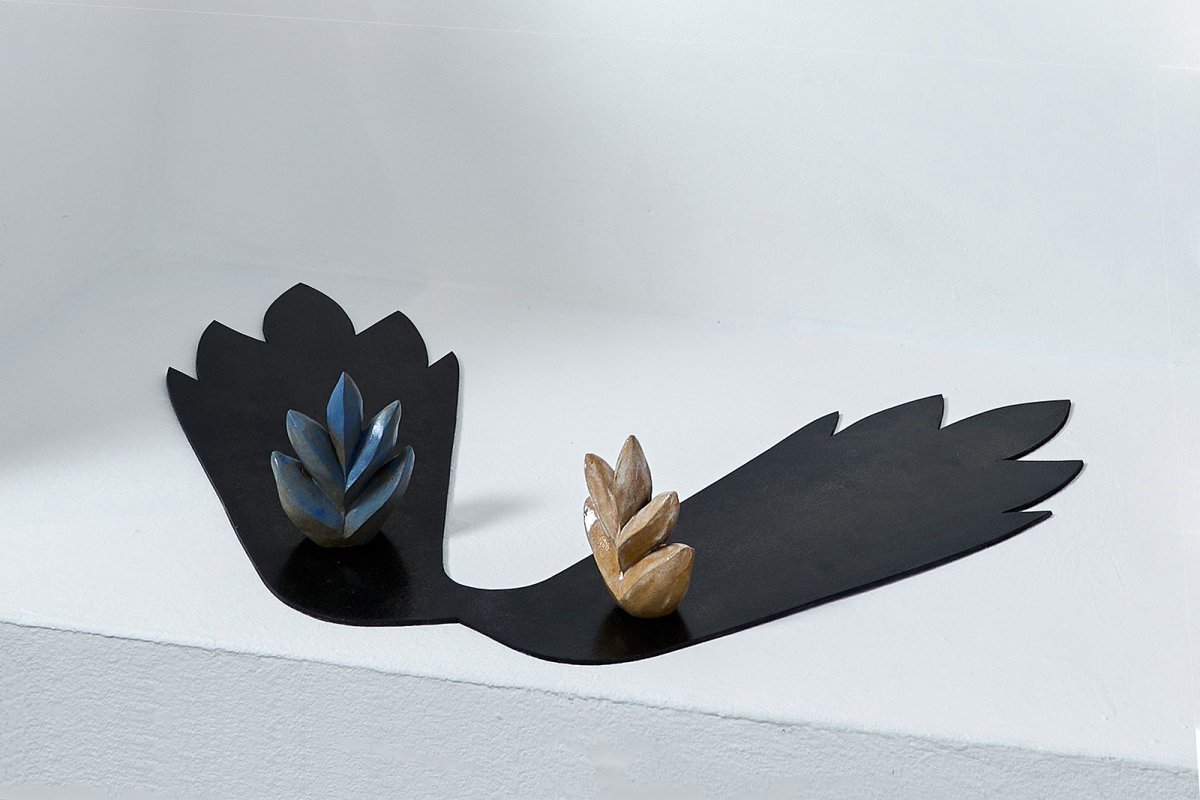
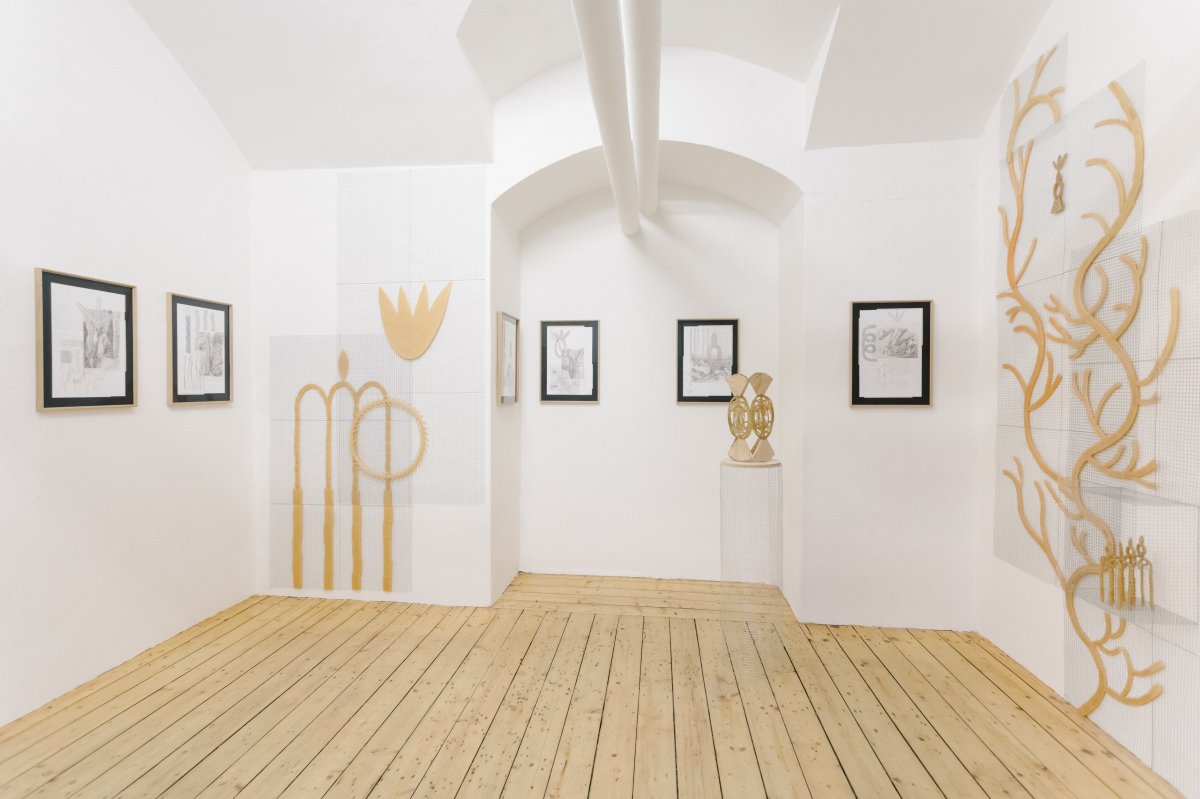
A similar approach can be found in the work of Barbora Vovsová. She shows processes such as emergence, growth, circulation and the composition of matter in their elementary form; she breaks complex large-format works down into modular elements and reassembles them, achieving an important conceptual shift between the study of the whole and the study of its building blocks and pointing to the parallel between architectural and natural principles.
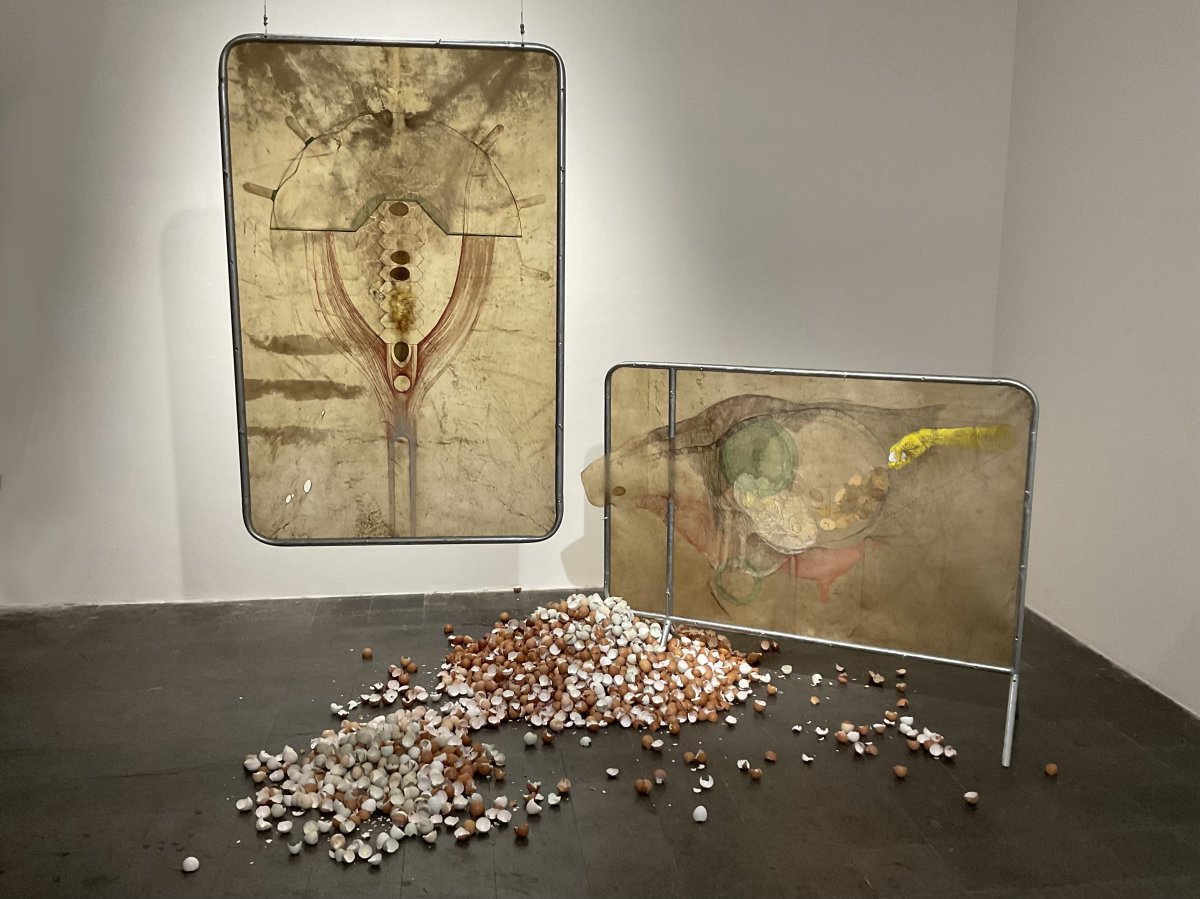
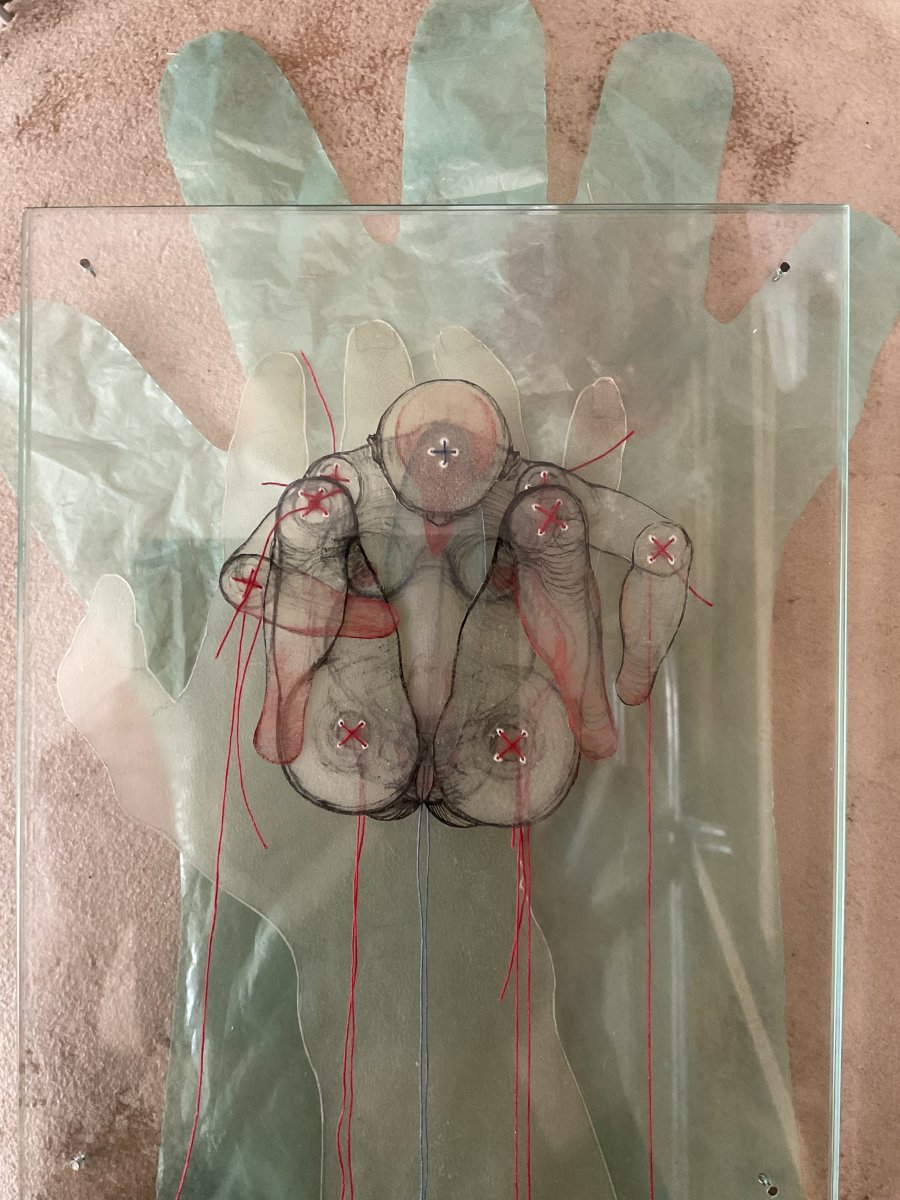
Tereza Holá also works with the boundary between the organic and the artificial. In the installation Otvorem v bachoru, olíznuté zevnitř (Through the Opening in the Rumen, Licked from Within) she brings together the themes of ecology, motherhood, partnership and the body. In her work the body no longer appears as a whole with firmly drawn boundaries; embodiment becomes a landscape, a movement, a space in which relations are formed. Pole těla (Field of the Body) then pushes this further, pursuing motifs of human autonomy in which the human subject appears in all its vulnerability.
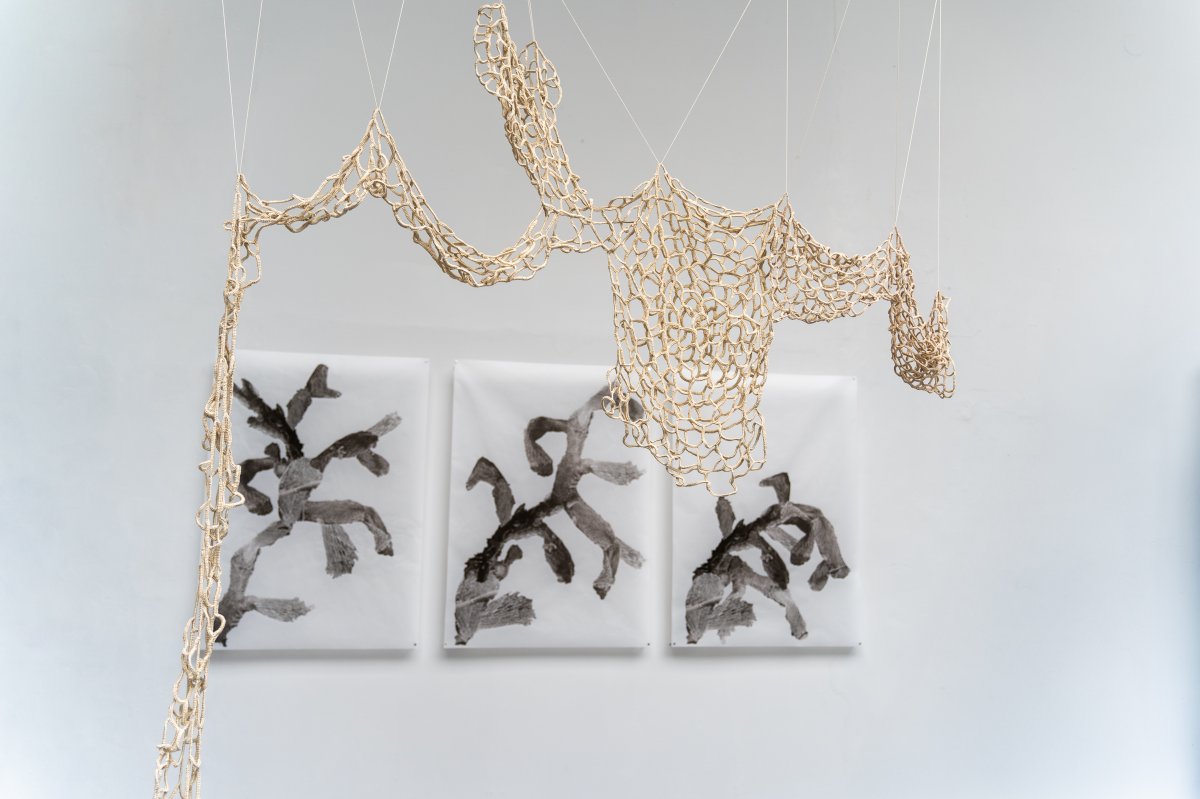
That vulnerability echoes in the work of Klára Samcová as well. The installation lost sharpness again works with the harmony of organic structures and with the autonomy of matter in the creative process. At the same time the artist addresses interpersonal and social tension, intimacy and their mutual dependence.
The body appears as an object of social attention, weighed down by expectations from outside: third shift and is it possible to resist normative roles?
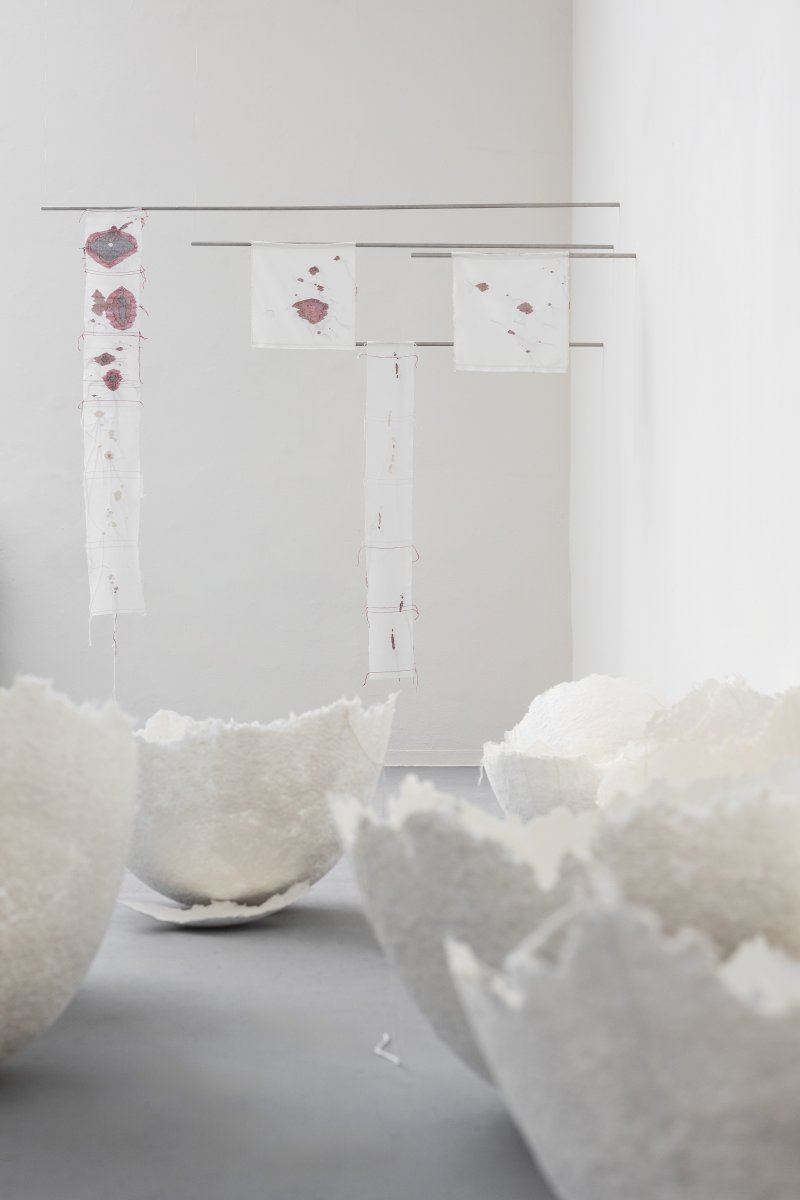
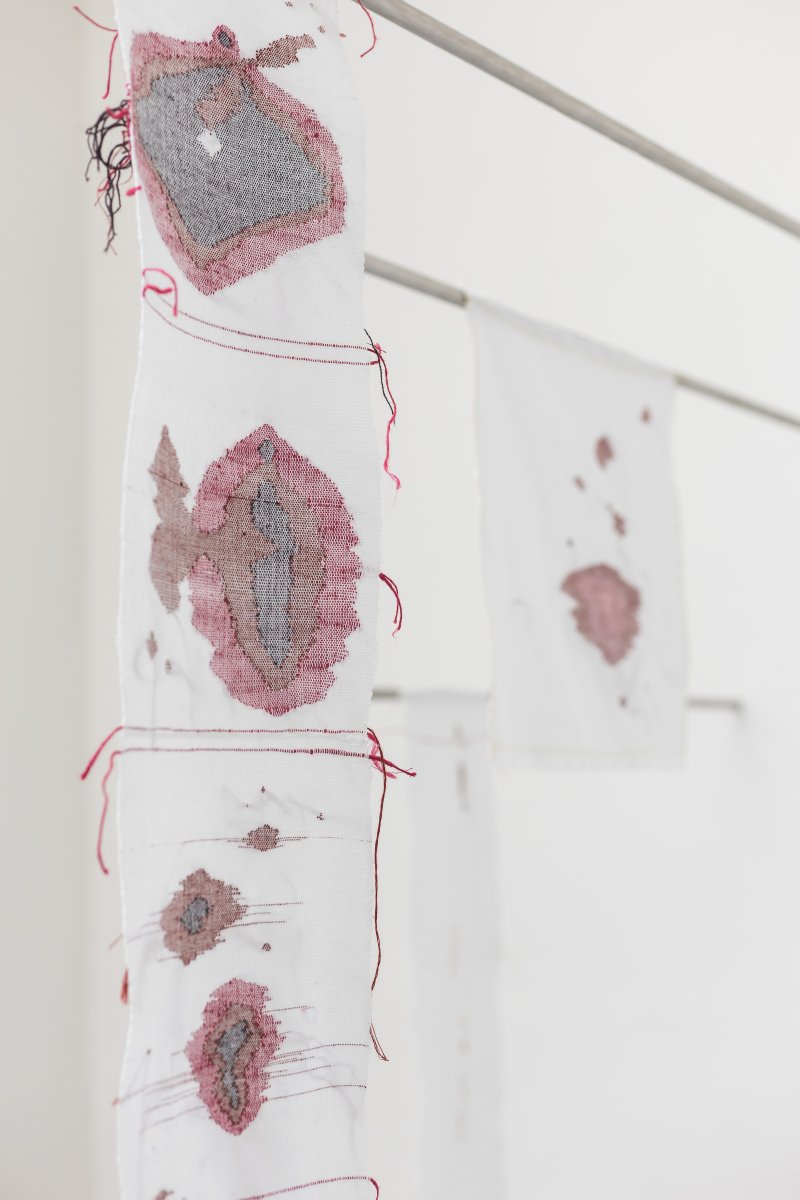
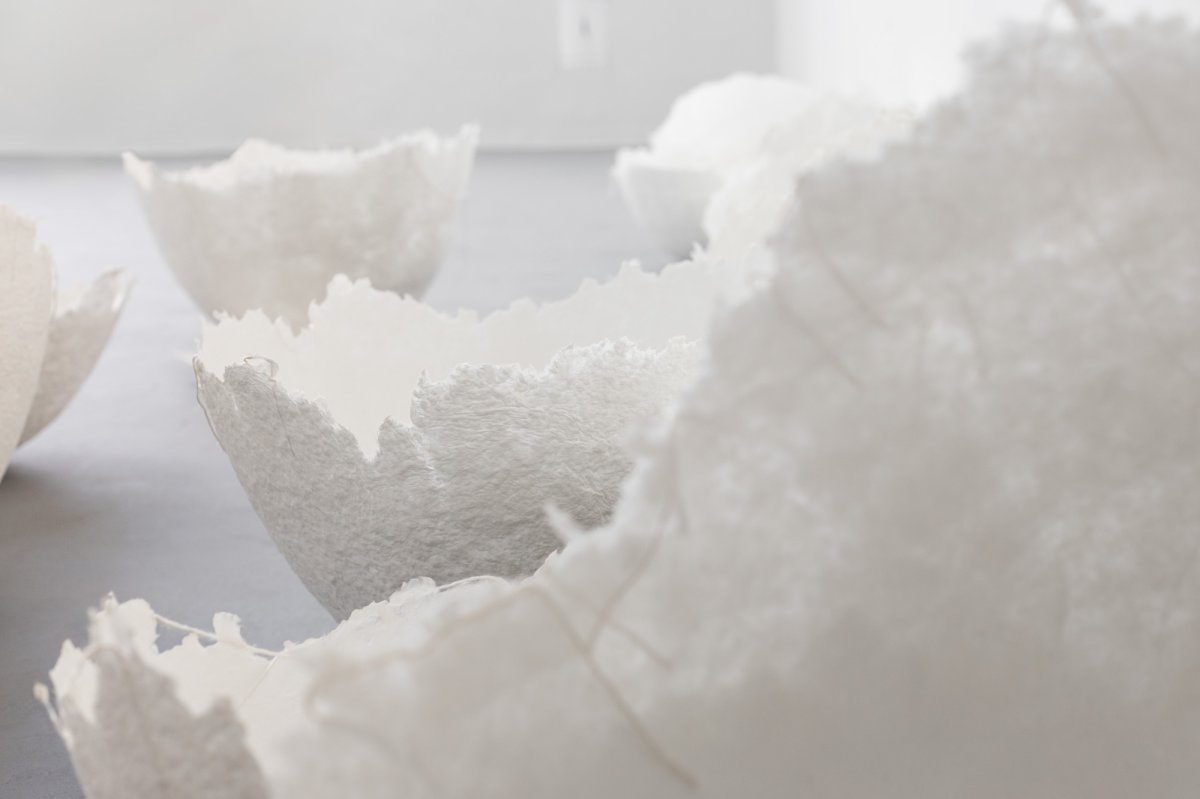
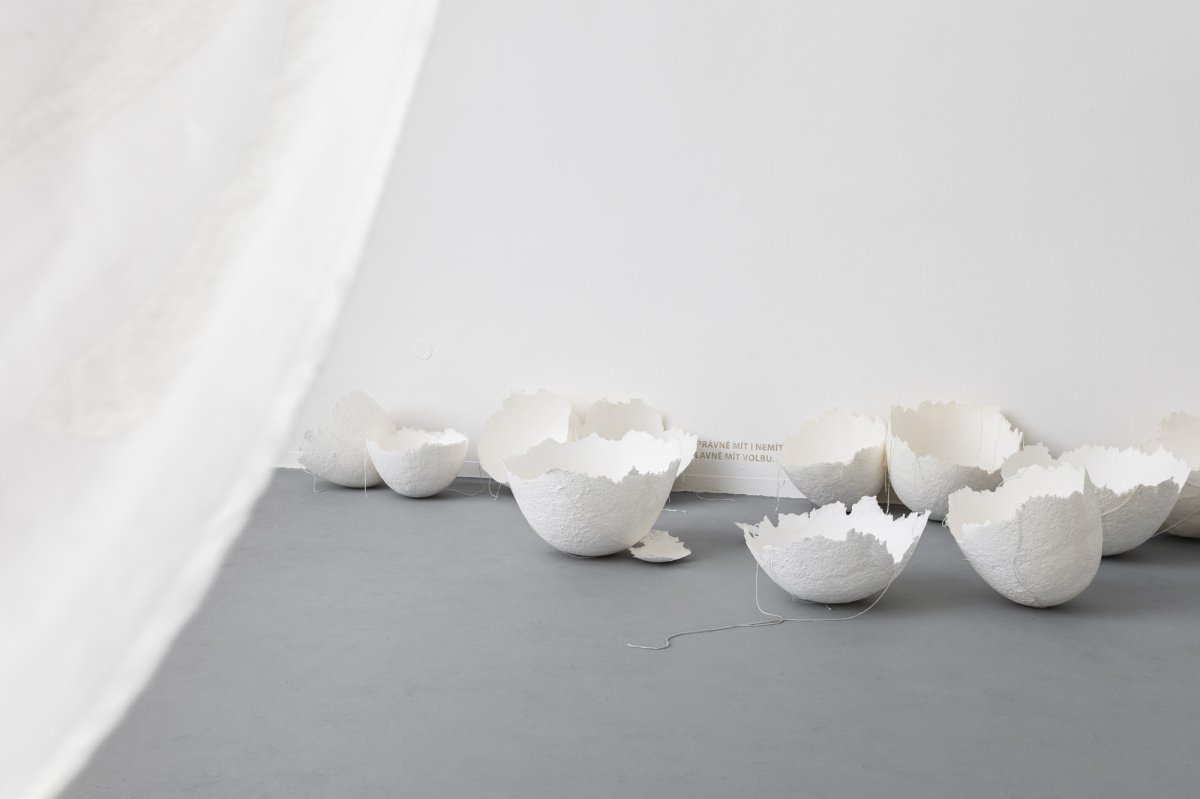
Viola Starzyková returns in her work to figure drawing and takes her formal inspiration from medieval manuscripts. She works in pastel wash on canvas, a technique that sits between drawing and painting. Her Portrét (Portrait), which engages the broad theme of human identity, forms the point within the exhibition at which all the preceding questions gather into a single body and a single gaze.
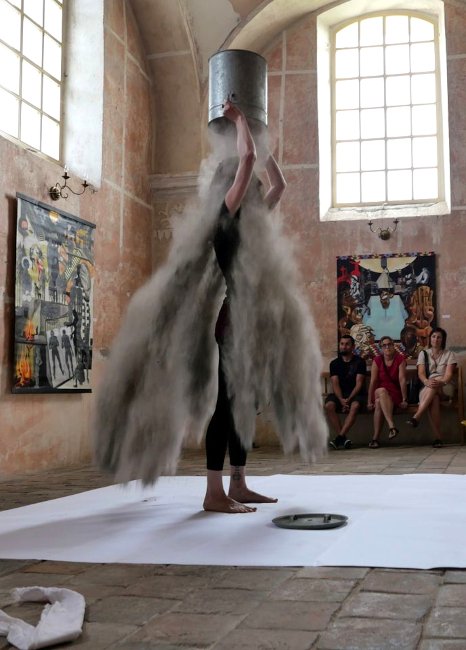
The exhibition is complemented by a return appearance by Lenka Jirková Táborská, whose performance O přijetí (On acceptance) leads the viewer definitively away from the physical object and towards relating: towards accepting one's own body, another person, one's own place in the world.
Buničina does not set the human against nature. The exhibition is conceived as a sequence of transitions; material becomes object, object becomes body, body becomes landscape and landscape becomes psyche. These transitions do not run one way: everything enters into relationship and everything acts on everything else. What seems fragile may at the same time be violent; what looks natural may be the result of a cultural intervention, and what we call our own body is in fact permeable to the environment, to other people and to other organisms. Buničina offers a view of the world as a web of relations in which every form is temporary, every body permeable and every material a carrier of experience; between closeness and disruption, between the human and the non-human, a space opens up in which the works can transform one another.
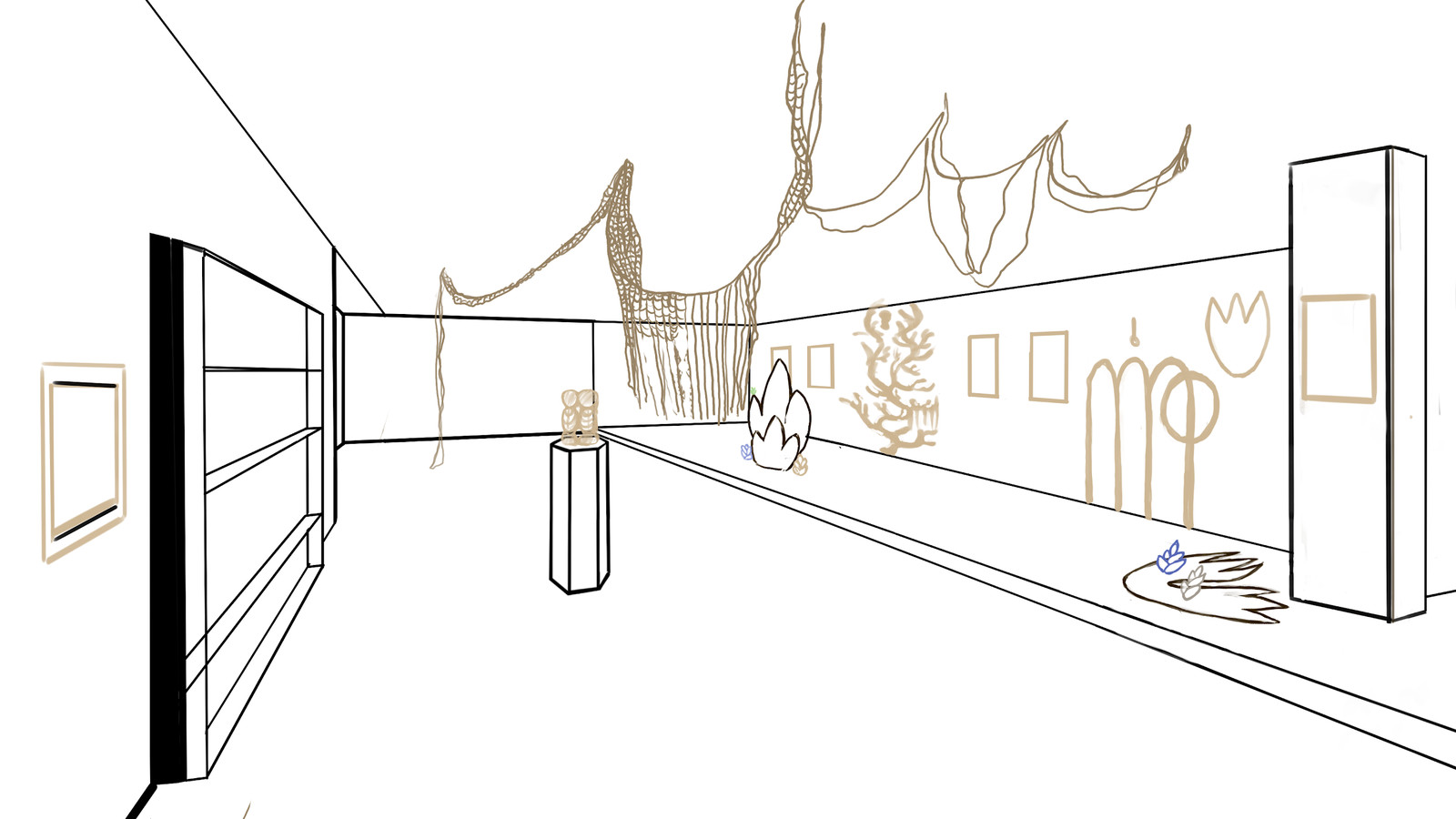
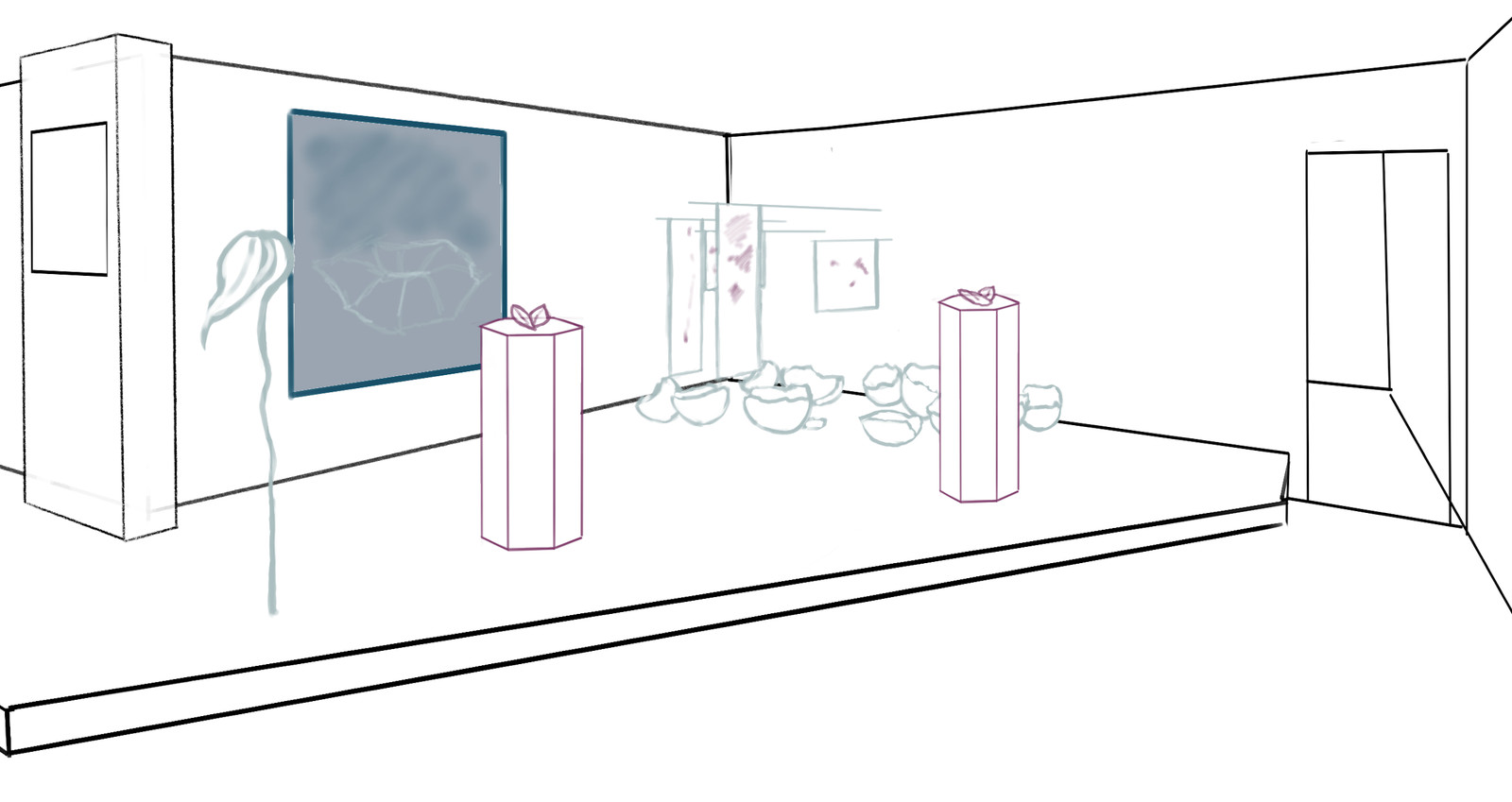
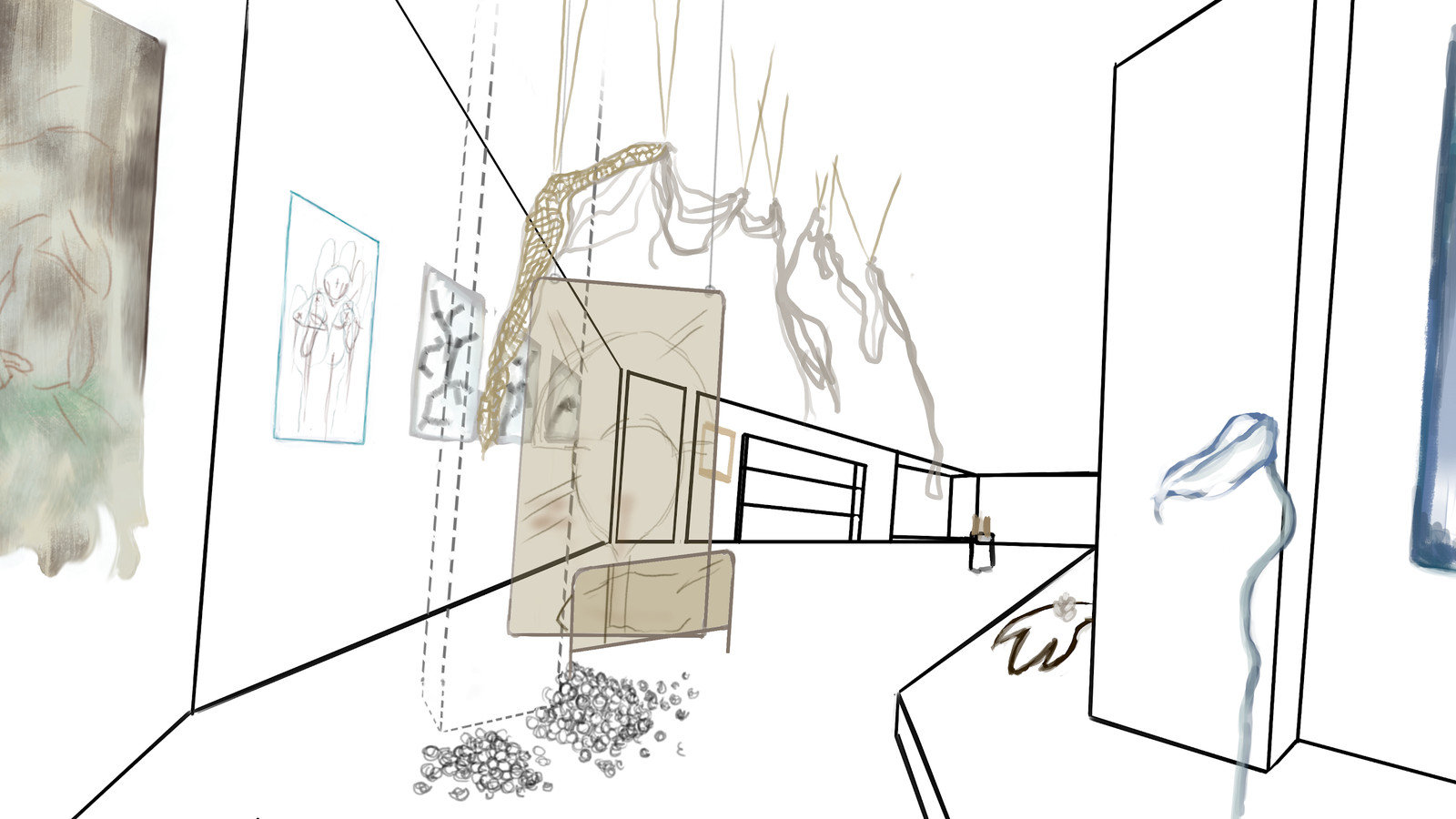
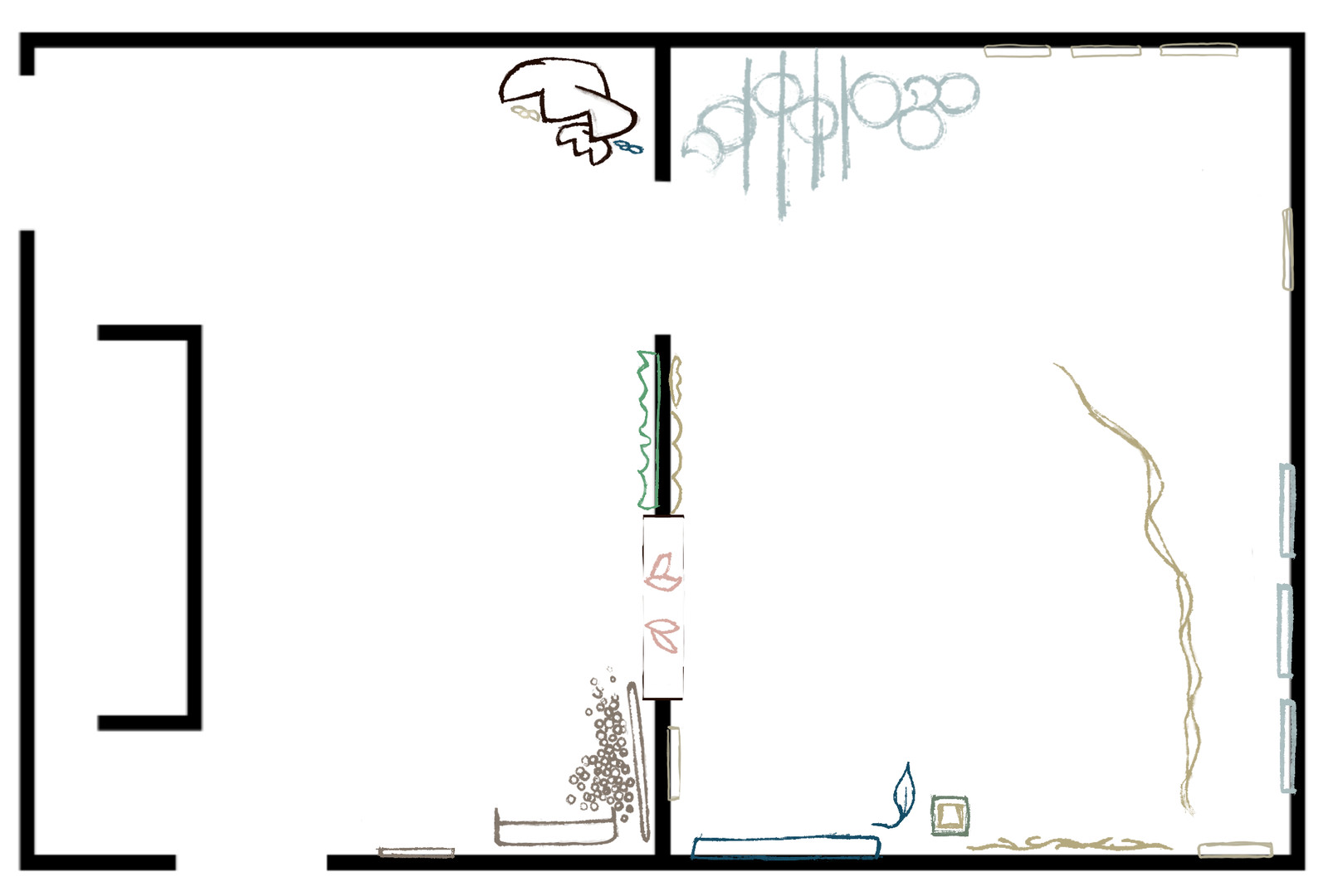
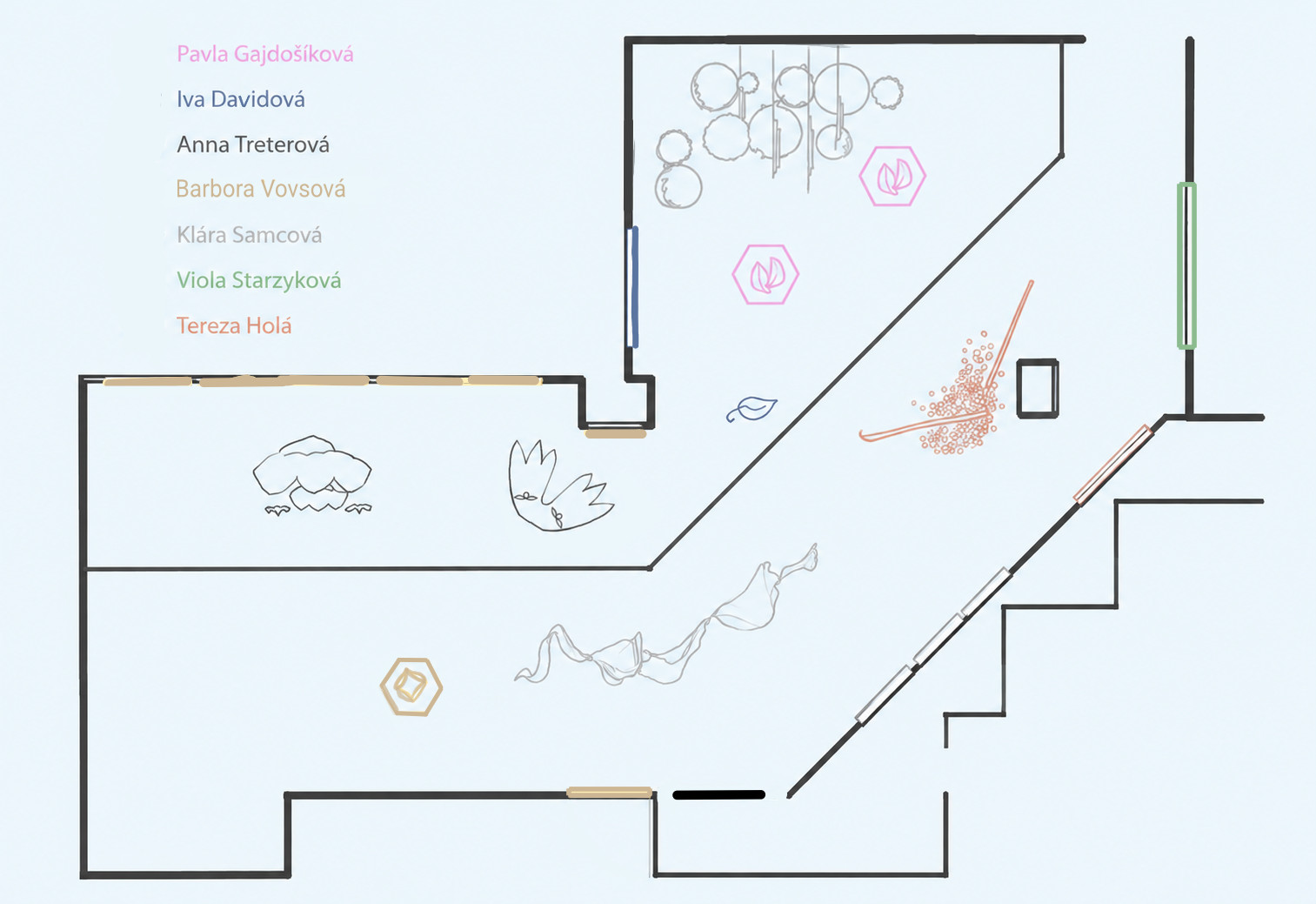
The project also includes a proposed layout of the exhibition for two specific Brno venues: HEX Gallery and Galerie Ponava.
Editor's note: Kateřina Sochorová was the only participant in the open call who asked for the floor plans of both galleries on her own initiative and verified that the exhibition could actually be installed in them.