Read more about the ArtGraduates Fresh Edit open call and the other selected projects.
With the birth of every human being, a new Worldline is added to existence, a path running toward a determinate destination whose end is veiled from the one who walks it. Each time that person stands at a fork in the road, parallel worldlines come into being. To Decide is to choose one of these worldlines along which life will go on. And it is our choices that carry us from one worldline to another. But which choice, which worldline, is the good one? We do not know.
Sometimes our worldline meets a Disruption, and that disruption sends us, against our will, into another worldline. It is not our choice, not our decision, not something we welcome. We do not know where it came from, why it came, or what will happen within the new worldline it has imposed upon us.
It arrives and carries us elsewhere, beyond our control: the loss of a loved one, the collapse of a deal, the end of a relationship, a misplaced key, a car that will not start, and everything else we call Misfortune.
That disruption is a blessing; it is Kheir (Arabic and Persian: good).
“…You may dislike something while it is Kheir for you; and you may love something while it is bad for you.”
In this exhibition, we have sought to stage this concept in three acts: first, a passage at a scale beyond the human, through which intuitive insight is gained; then, a descent into the human point of view and the felt reality of lived experience; and finally, the hidden mechanism operating behind the curtain of existence, revealed through paintings and installations.
Act I: Unveiled
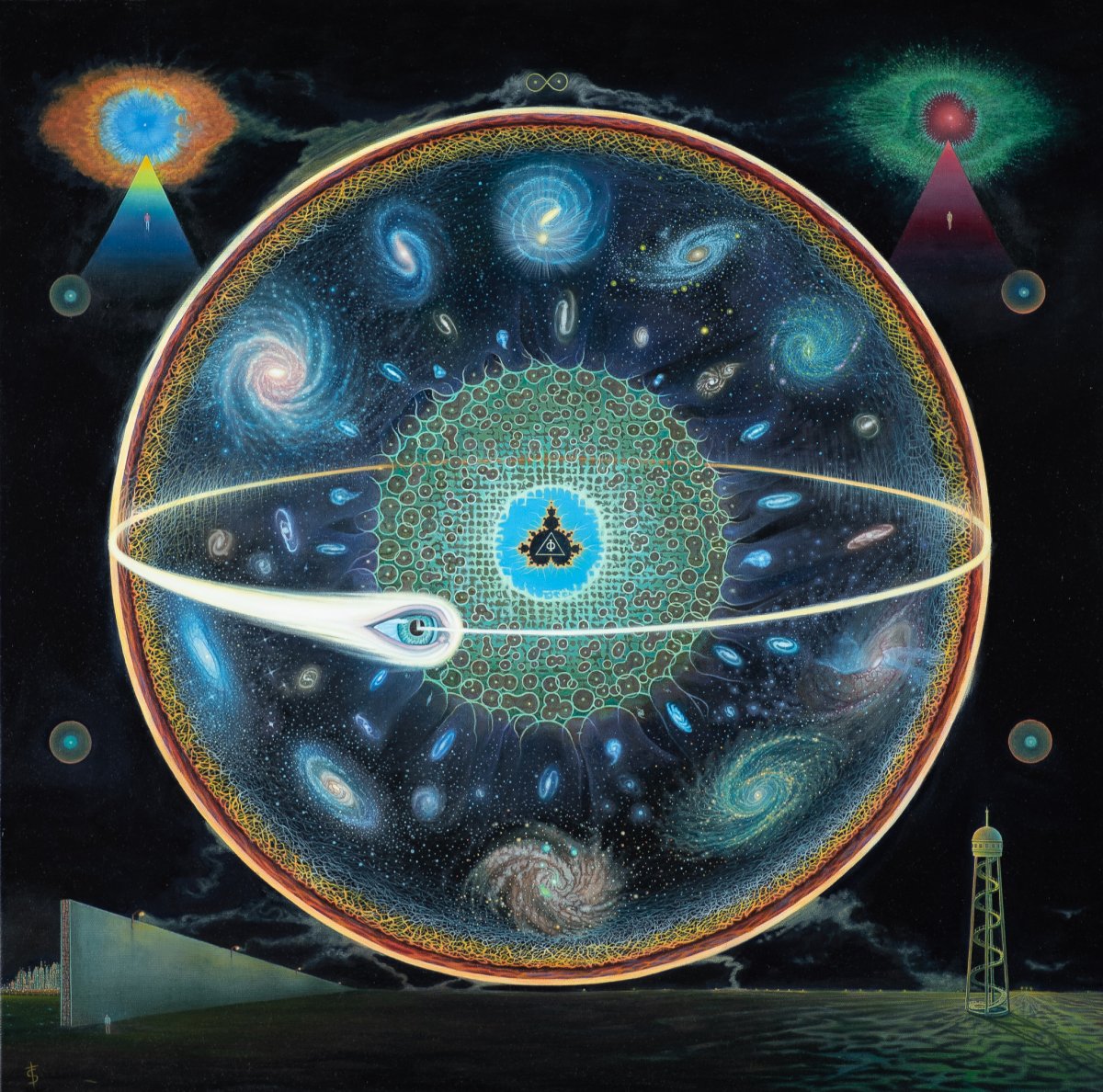
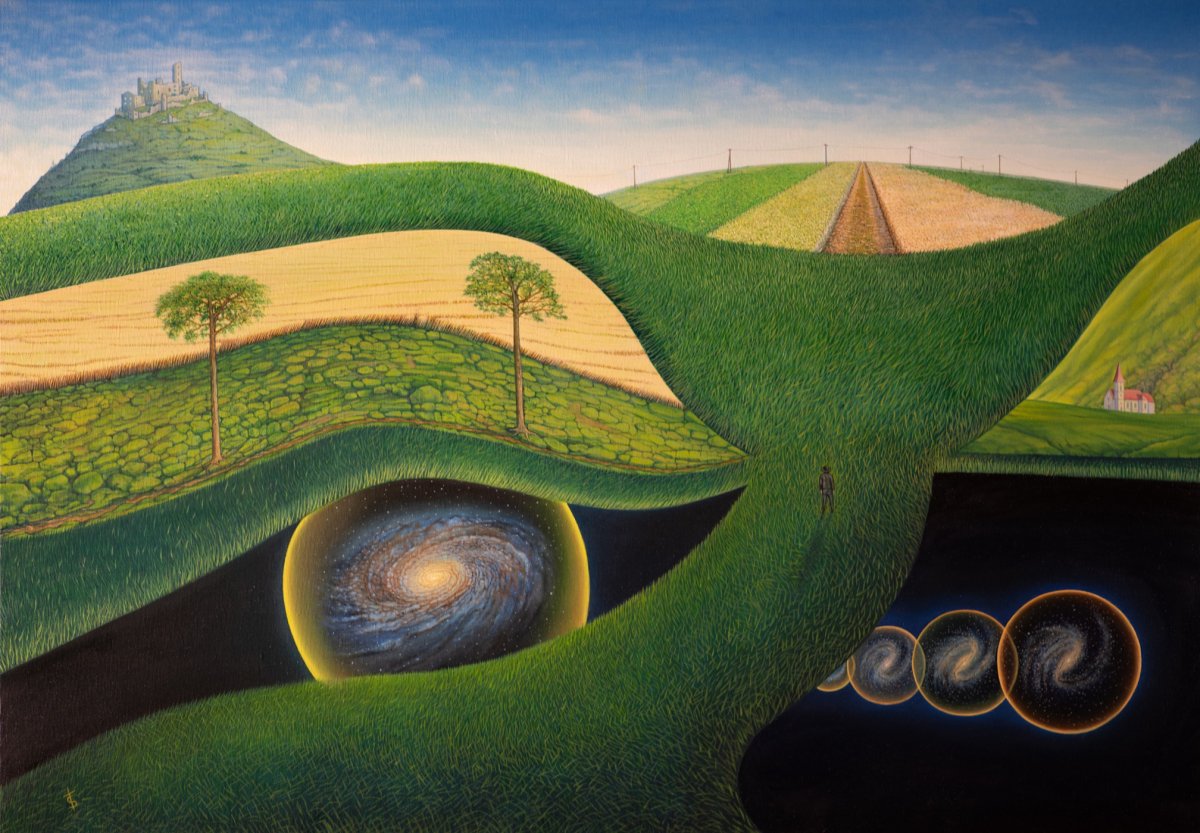
The exhibition opens with a selection of works by Tomáš Sejkora, an artist who elegantly encapsulates the concept through geometry and color: choice, junctions, destination, and the hidden dimensions of existence underlying them. In Pneuma he depicts the coexistence of infinite worlds within a single simultaneous frame of time, while each human being contemplates only the worldline they presently inhabit, unaware that the others exist at all.
Have they chosen the right worldline for reaching an ideal or desired destination? What would happen if they chose another? Every choice is an entry into another worldline. In artwork Transcendence of Landscape, a layer representing the current green path is stretched across a sequence of galaxies, symbolizing the cumulative outcome of lived worldlines, the journey traversed by the human soul thus far, set against the paths that lie ahead.
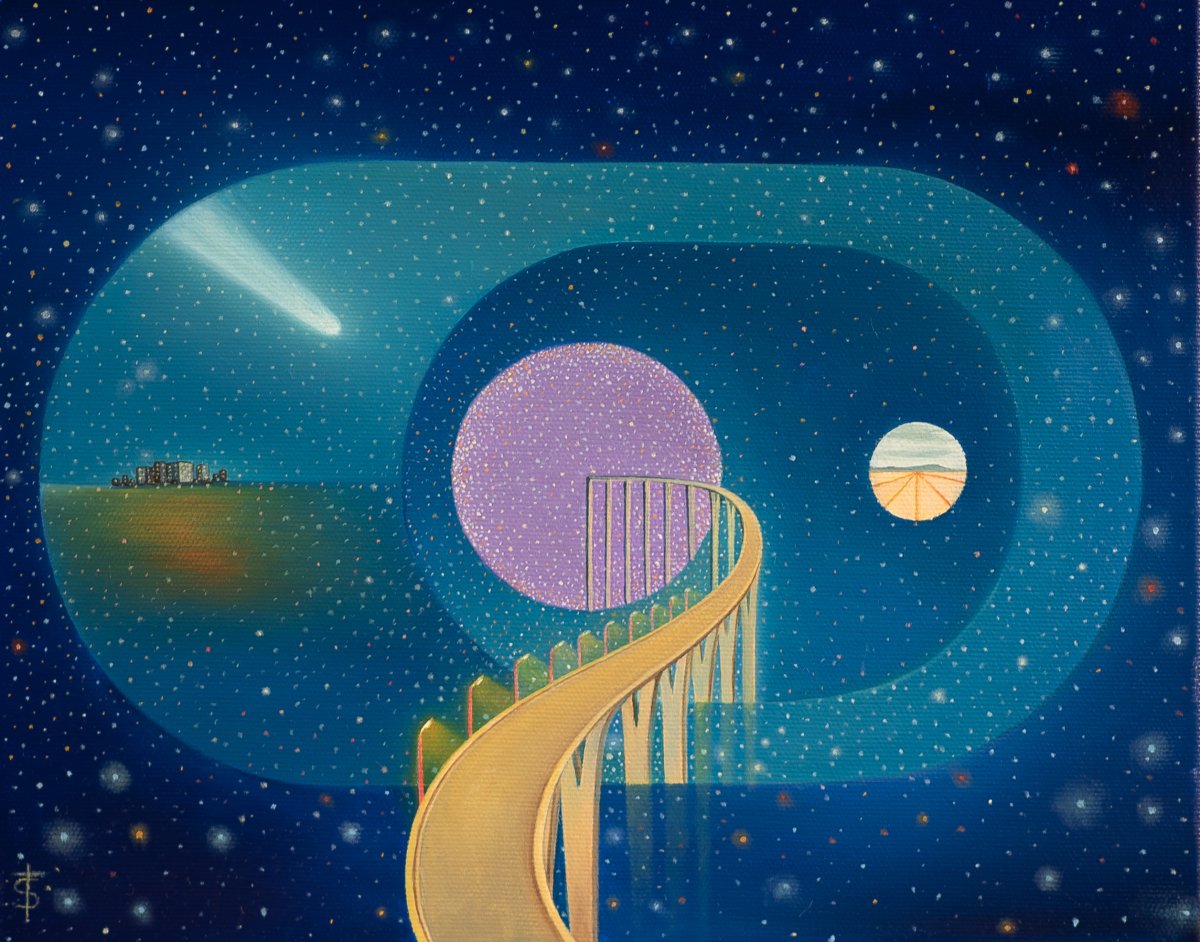
In artwork Journey, overlapping oval frames resemble temporal windows that expose the layered structure of reality, as though traveling along this road is a passage through various planes of existence. The combination of deep blues and lapis night evokes a feeling of levitation. A yellow road terminating in an unknown violet objective leaves a trace before our eyes, drawing us closer to our human viewpoint.
Act II: The Performance
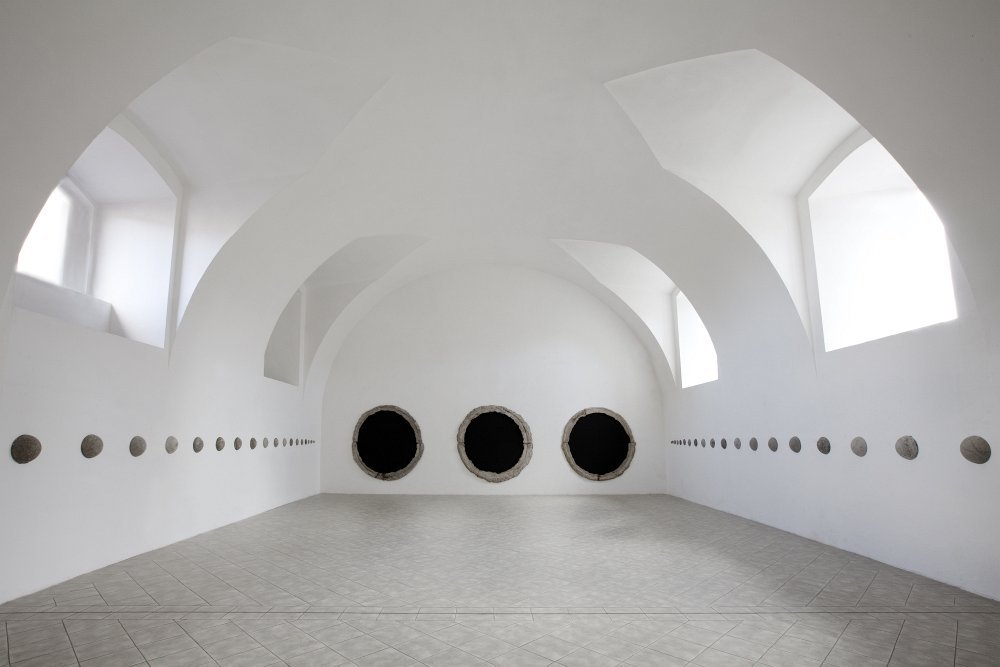
Following the trace left by the previous work, we move into the next hall. Gradually, the background of the final painting dissolves, and a curtain comes while the viewers return to their human body. The viewer steps into a space stripped of detail, color, and complexity, entering FORM IS EMPTINESS, EMPTINESS IS FORM by Tomáš Polcar. Dark apertures set against a seamless white wall invite the viewer’s mind to perceive presence through absence, apertures opening into the unknown. It is precisely the inner sensation of being faced with a choice: the point at which worldlines are born.
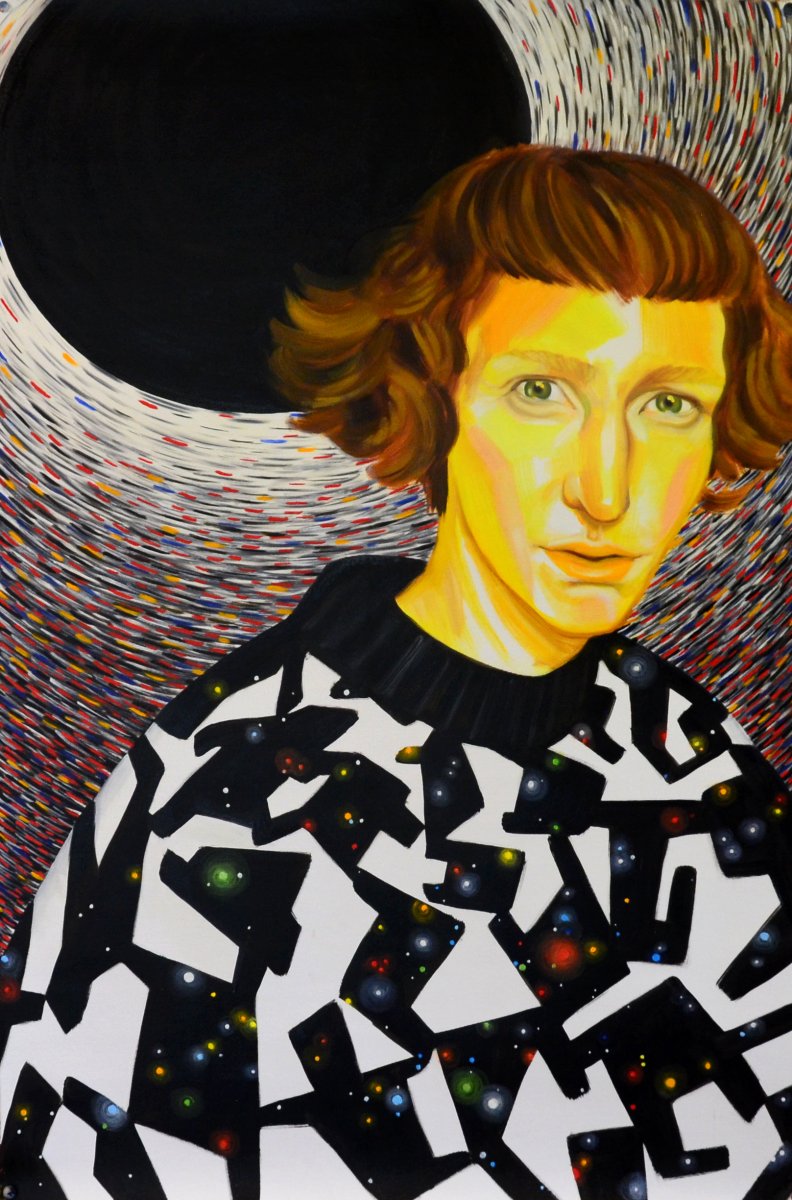
Behind this absolute darkness lies the possibility of a second birth, of a new level of awareness. In Self-portrait with a black hole, Lenka Jirková Táborská has painted herself looking at an uninvited black hole behind her own back, an instant before she crosses the Event Horizon.
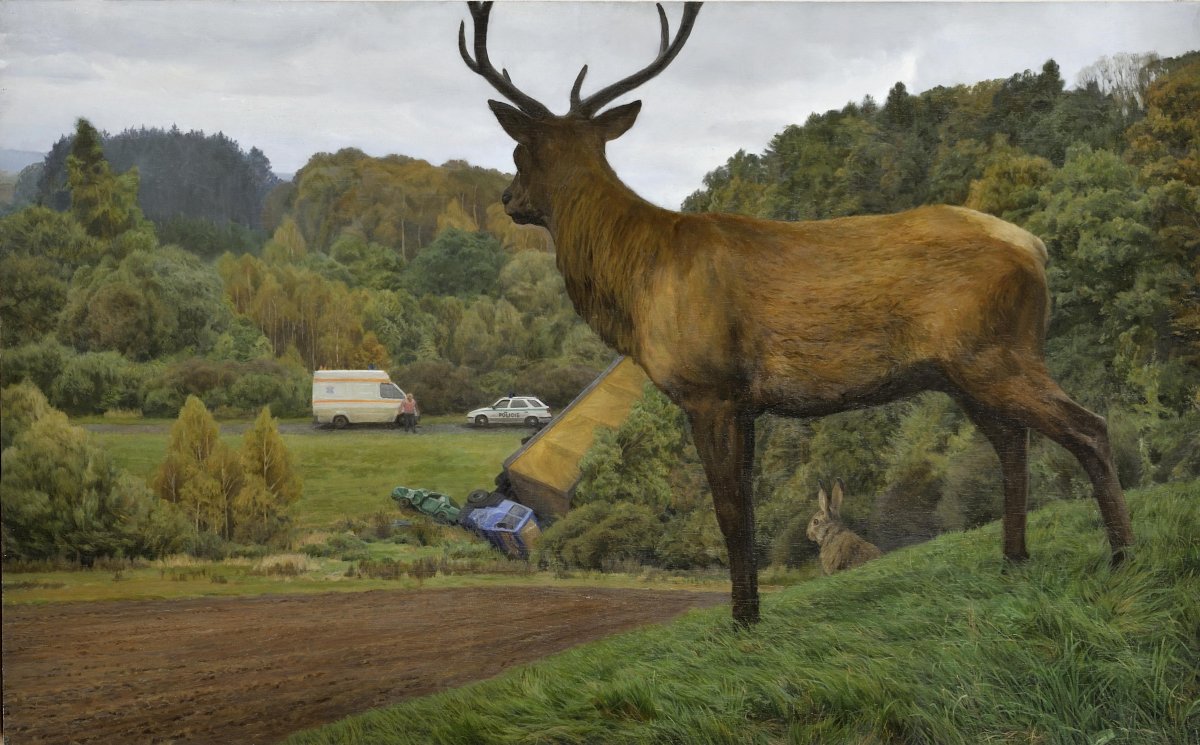
At this moment, we also pause and look back one final time at what we labeled as disaster and misfortune, at a collection of worst-case scenarios frozen in a forest landscape by Zdeněk Daněk in Lying in Wait and More bad luck. Here, we confront absolute loss of control; the crises and unknowns are not the result of choice, but the consequence of pure chance and the uncontrolled chaos of the universe.

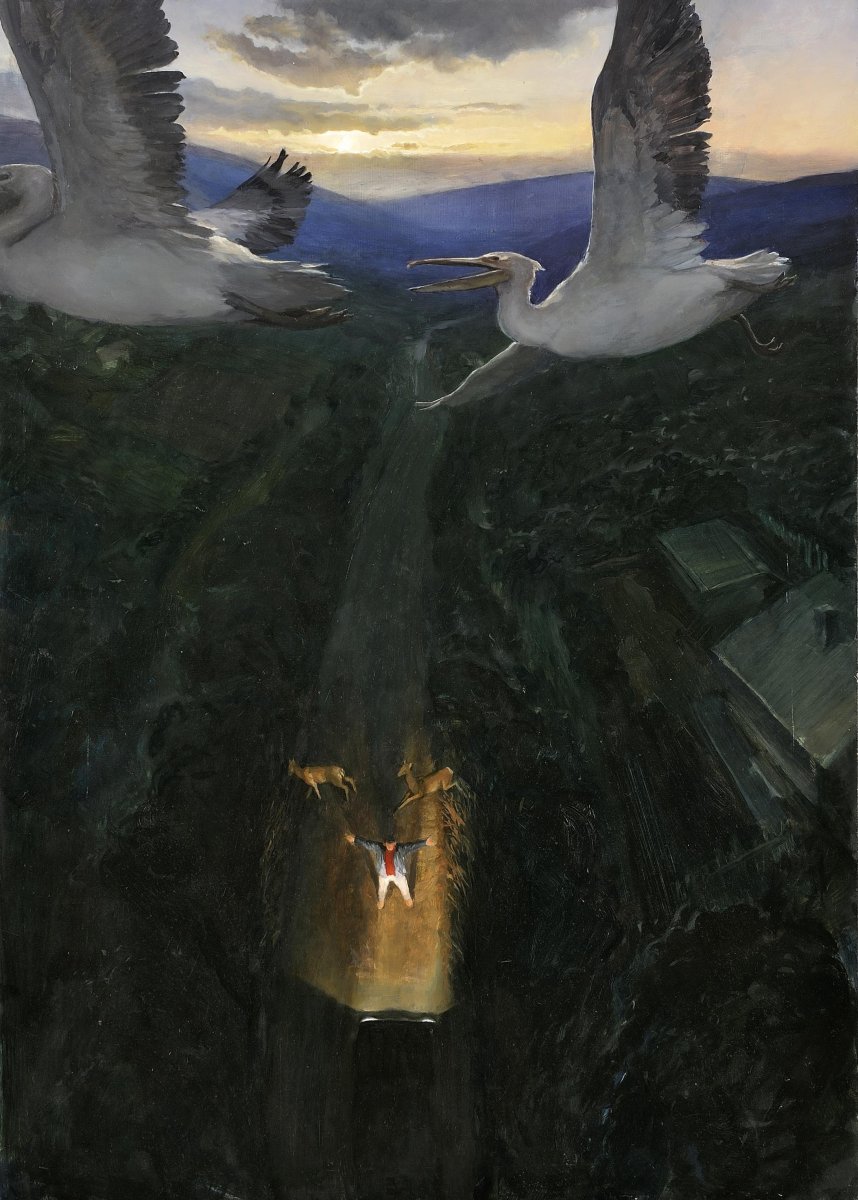
In his other artwork In the year 2000, a large-scale canvas fully immerses the viewer into the real position of this moment, as if we ourselves are driving the vehicle casting light onto the scene. Yet in the companion piece of the same name, In the year 2000, the artist shifts the perspective 180 degrees to depict the scene from a bird’s-eye view. This presents a powerful contrast between two layers of reality: through the ground observer’s eyes, there is drama, suspense, shock, and an unfolding event; to the eye of the sky, there is stillness and eternity.

Act III: Behind the Curtain
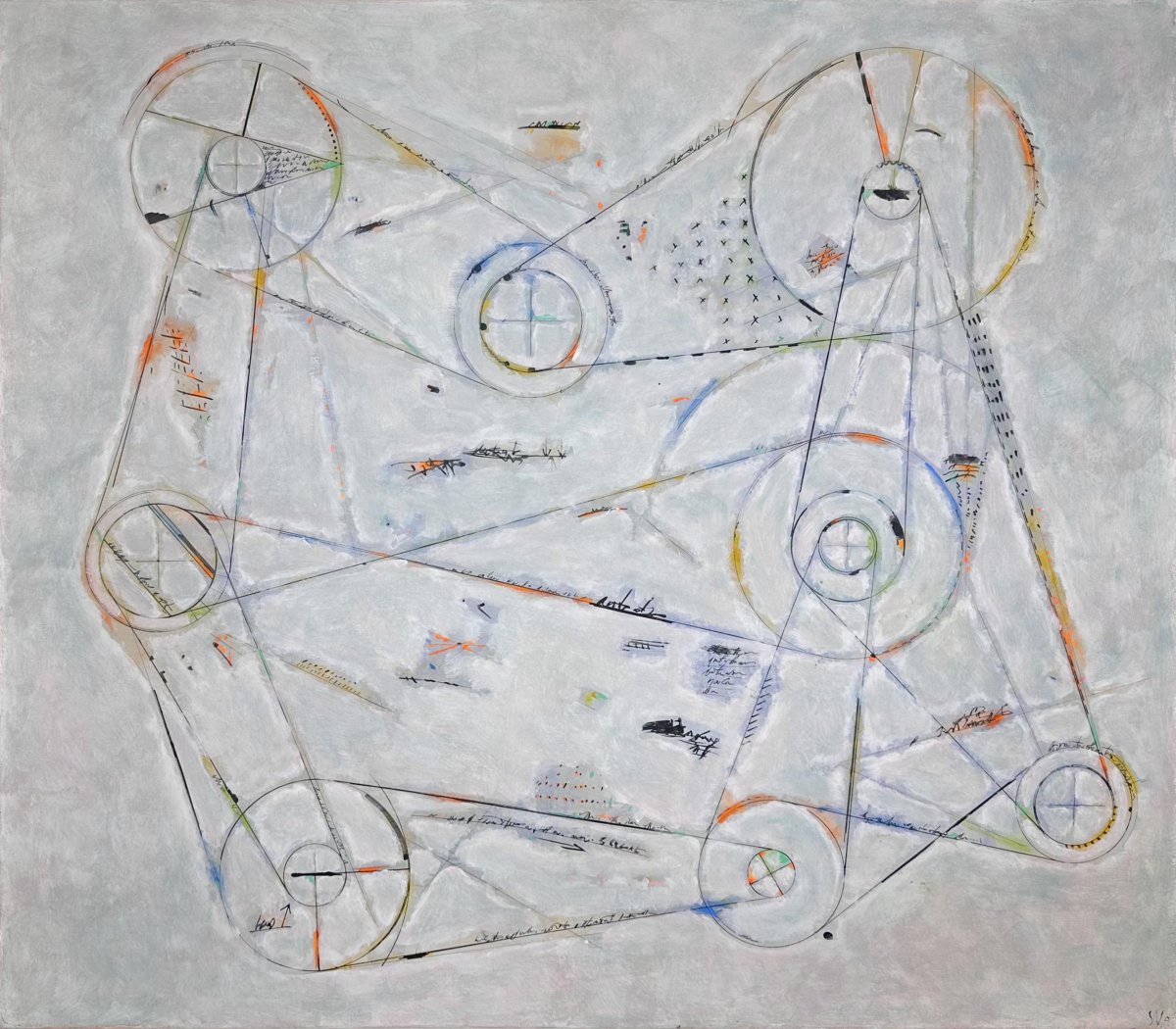
We draw the curtain aside, and we see the blueprint and the driving engine of the system, laid bare by Jan Svoboda in Deus ex machina. Rather than witnessing the event itself, we gaze upon the hidden mechanism governing fate, chance, and sudden resolution: the god who arrives to detach us from this worldline and carry us into another.
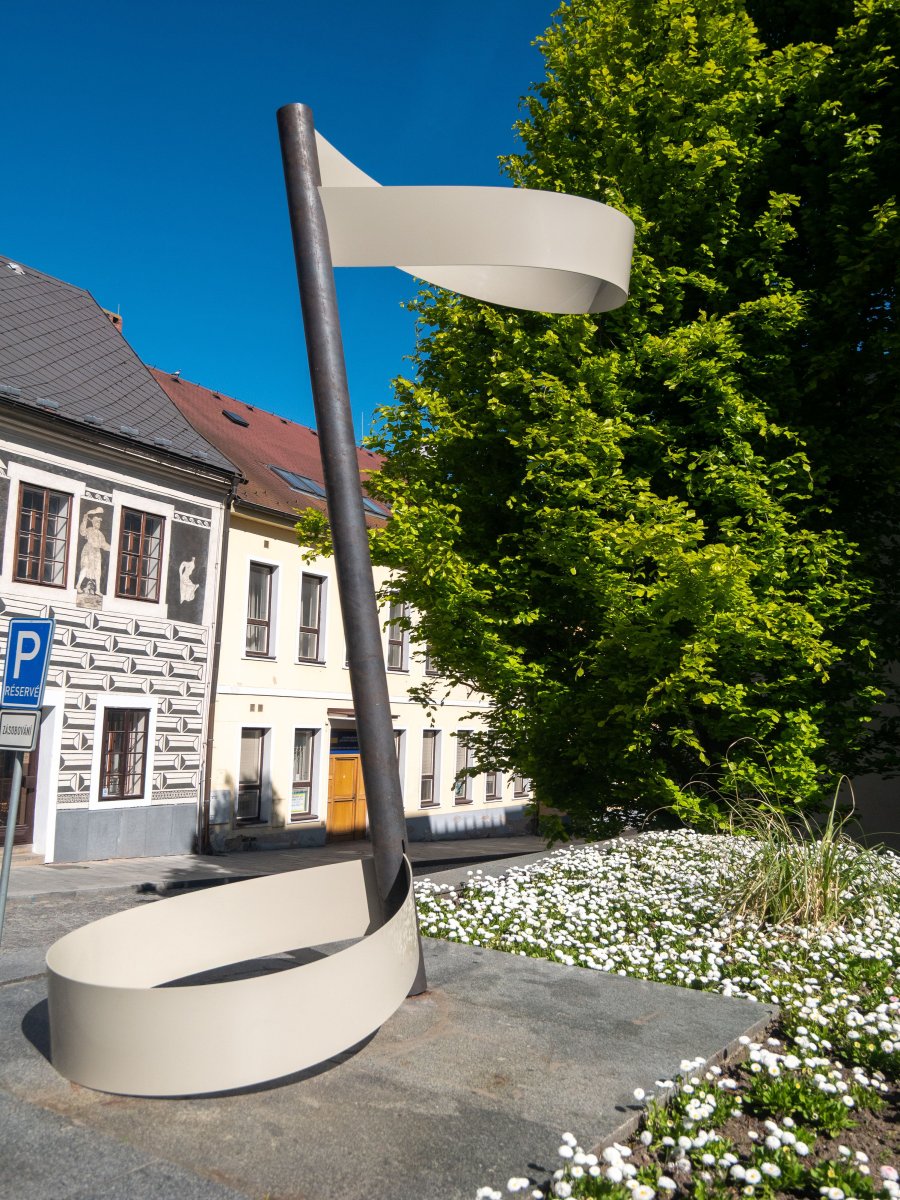
Jan Turner’s Ribbon Bow seems to transfer us in the same way from one strip, or ribbon, to the next: two plastic strips, standing for worldlines, joined by a single metal rod.
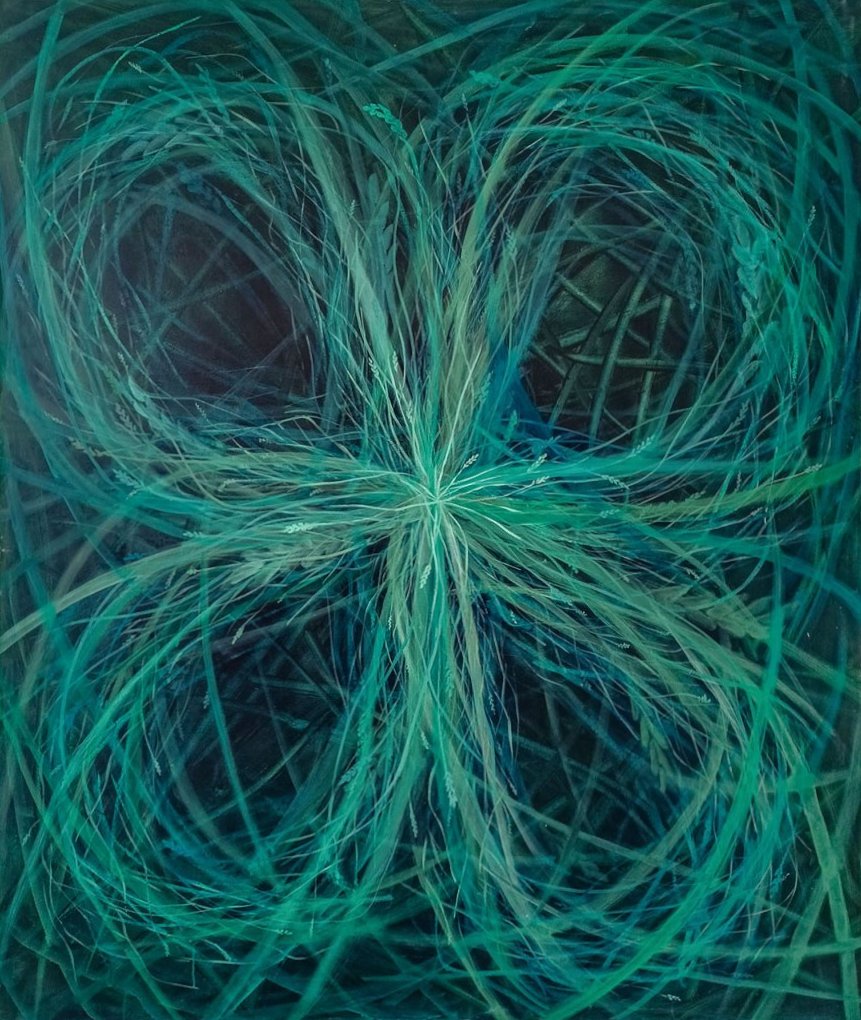
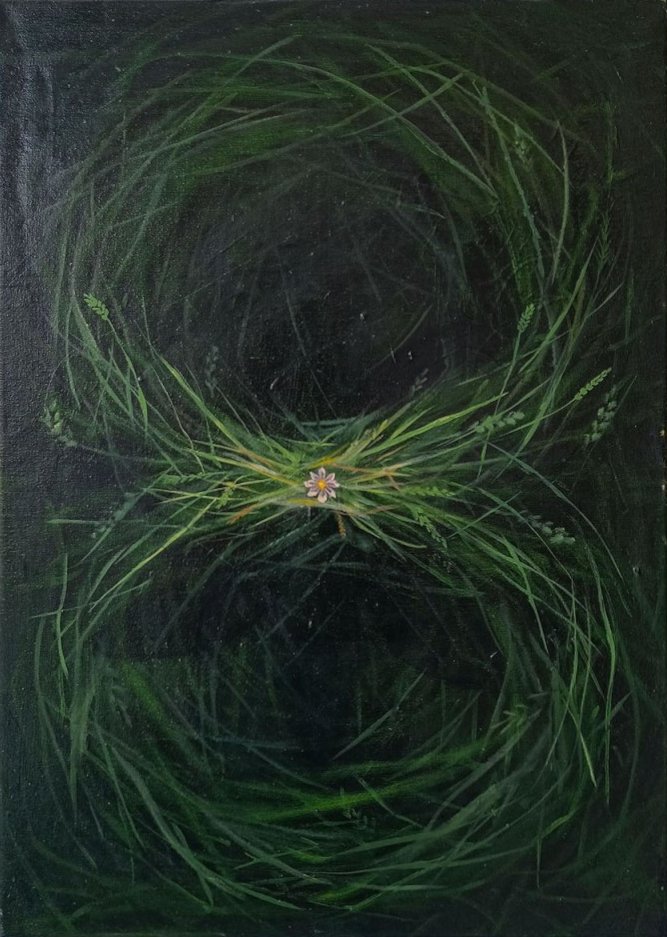
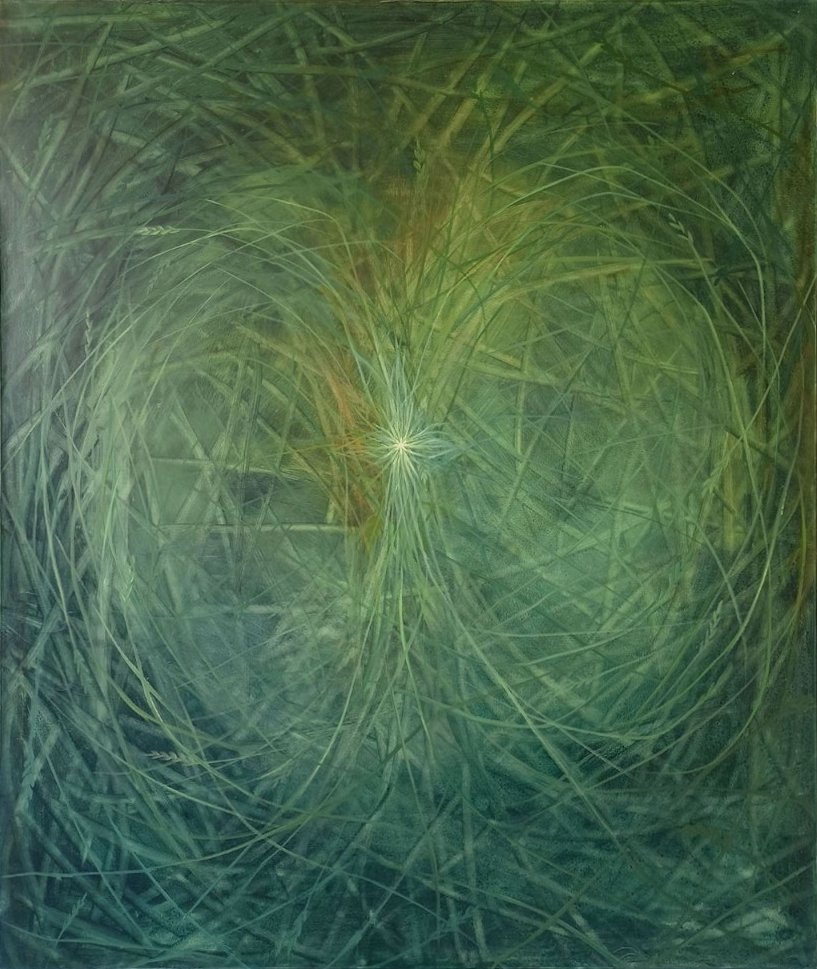
The human being is continually moved among these ribbons. For a visual embodiment of that force which no ordinary eye can see and which nevertheless shapes the courses of our lives, we turn to the works of Anna Treterová.
In Magnetic Fields, curving and intersecting lines of turquoise and emerald converge upon a single luminous center. At the heart of the unknown, at the heart of the black holes, there is not an end but a beginning: In Bloom and Birth of a Star.
Conclusion: Re-Centering the Observer’s Perspective
After traversing the distinct layers of the exhibition and exiting the gallery space, the viewer is no longer an oblivious, passive observer trapped in their own worldline, subject to random accidents, losses, and disasters. At the point of exit they have become a conscious witness: someone who has managed, for a moment, to distance themselves from the linear drama of life and observe the hidden structure of existence from a viewpoint beyond the human.
With this renewed intuition, they begin to seek, in every misfortune, the trace of a blessing in altered form and a thrust toward a higher worldline. Within life’s darkest black holes lie the seed of rebirth and a new sequence of possibilities. They can see Kheirs.