Bytí v diferenci translates as Being in Difference. Read more about the ArtGraduates Fresh Edit open call and the other selected projects.
Being, as a spatial idea, enlists the notion of opposites – up and down, inside or outside, far or near… Our ideas of our place in the physical world and in the imaginary world of concepts move back and forth between these positives and negatives, flitting and trembling in opposing concepts that define one another and so flow into one another.
How else could anything exist than by being in collision and interpenetration with what it is not? For there is no dark without light, and no order without chaos. Such a flow of thought defines the world and us, the familiar against the mysterious, and sets us in the context of our being, in the space of our existence.
In this view of existence as a tangle of some kind of elementary opposites, of rhythms, there is something fascinating in the effort to isolate them, to examine them in their bare, basic geometry. So in the works of Alice Marková horizontal and vertical, regular and irregular rhythms meet, and their encounter holds interest and attention. A curiosity that neither rhythm can arouse on its own, because in its sameness it is left at the mercy of the unconscious, much as the monotonous ticking of a clock comes to our notice only when the striking of the hour interrupts it.


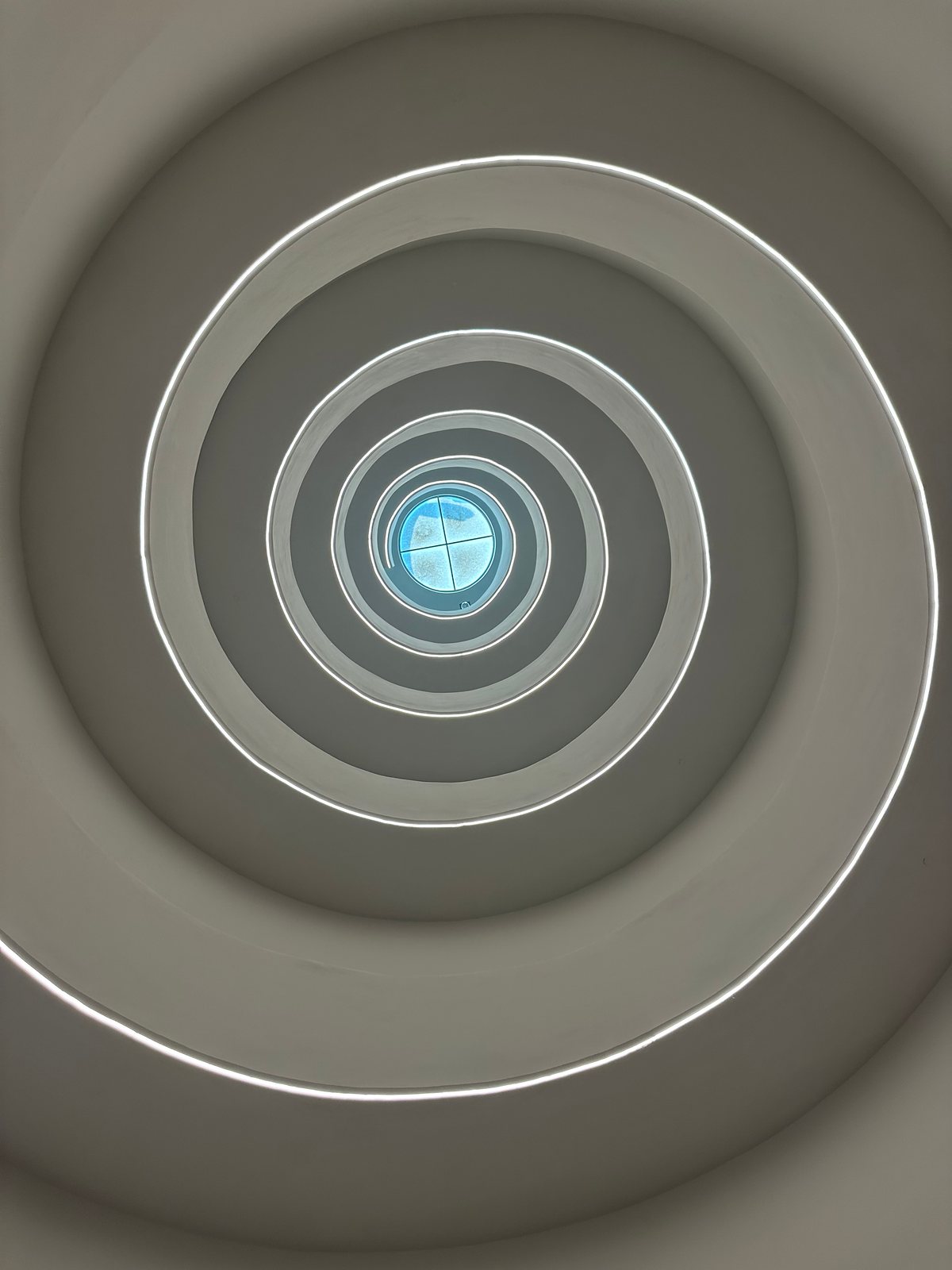
Yet a clash is also possible in which perspective, our own position, creates an opposite, as in the paintings of Helena Ticháčková. The view inward, into the unknown depths of a mousetrap’s enclosure, and the view outward, into the mystery of the outside from an attic window, create a difference between the two views. Yet they place anyone standing before them almost as if on a circle, on which each of the two pictures is a semicircle setting out from us in the opposite direction, the two touching at an end beyond sight on the far side of the circle. In this way they offer us their interpenetration, in the brightness of the unknown. This time the clash of opposing rhythms, at the point where they touch, produces the same tone. Thus the counterparts, it seems, have the remarkable property of reaching a certain balance, of fitting into one another. The mysterious and unidentifiable separates from the familiar and nameable.


But the mind that imagines, that places itself within being through these ideas of differences, longs to describe. Mystery, as an unnameable realm, is drawn into the centre of the thinking being’s interest and, in these cases, into the centre of the pictures too.
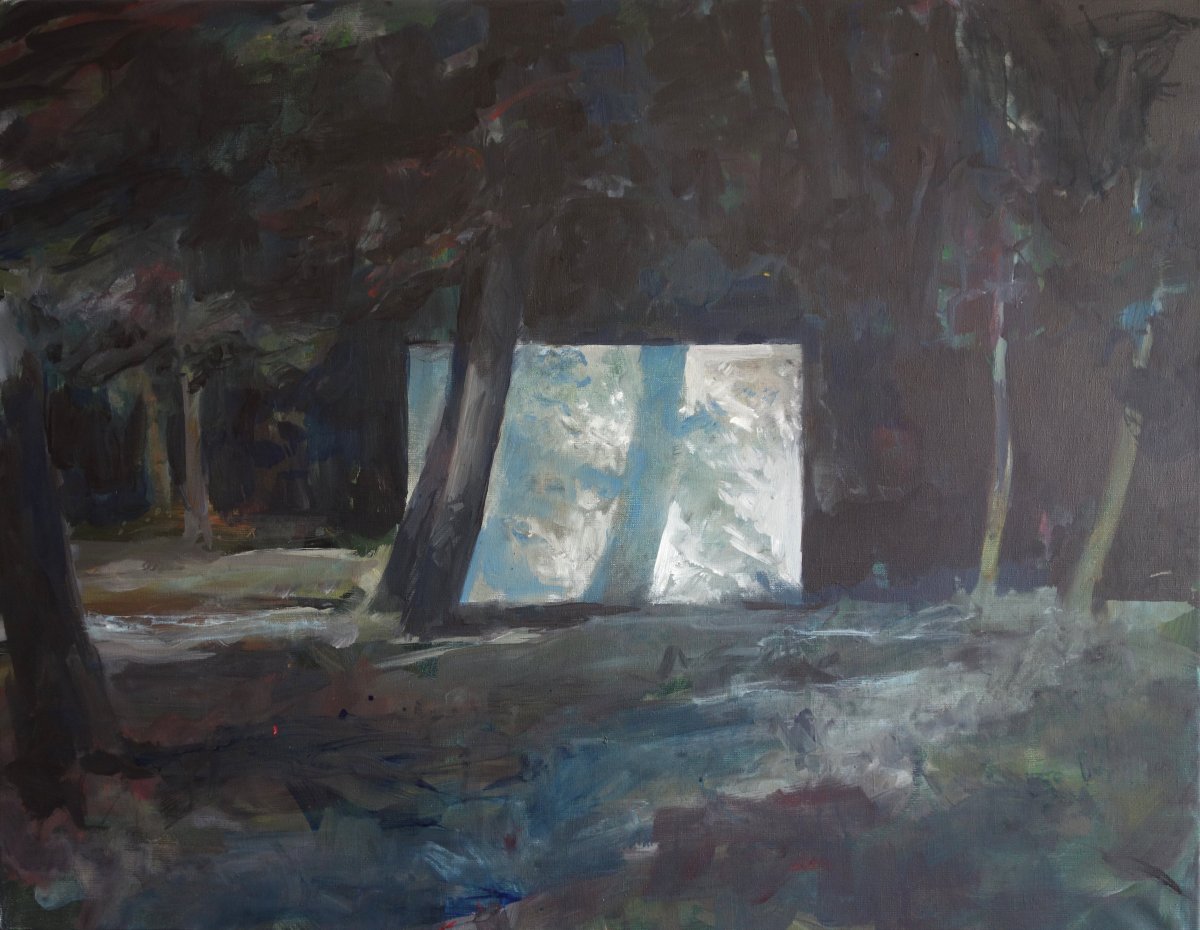
That is also why strangeness set within the easily recognizable fills us with curiosity and excitement in the painting by Karel Řepa as well. The familiar, uneven lines and the shadow of the trees seem to be trying to grasp the unknown, artificial edges of the white object, as if they wanted to merge with it into a single landscape. And the unknown object, in this conversation of opposites, which is never one-sided, answers. It unsettles with its regular angles, and with the brightness of the mysterious it turns the forest landscape into something strange and unknown.

This, then, is the landscape of thought, which names and situates, which determines opposites and finds its bearings within itself through their clash and their boundaries. And because it is human beings who are defined by precisely such thinking, they too, in trying to name themselves, become one side of the coin. So the joy of perceiving and interpreting brims with curiosity about its true opposite, that is, about something unnameable, unrepresentable, a kind of mystery beyond the limits of thought and imagination: the white object in the forest, or the gentle glow emanating from the very centre of our attention.