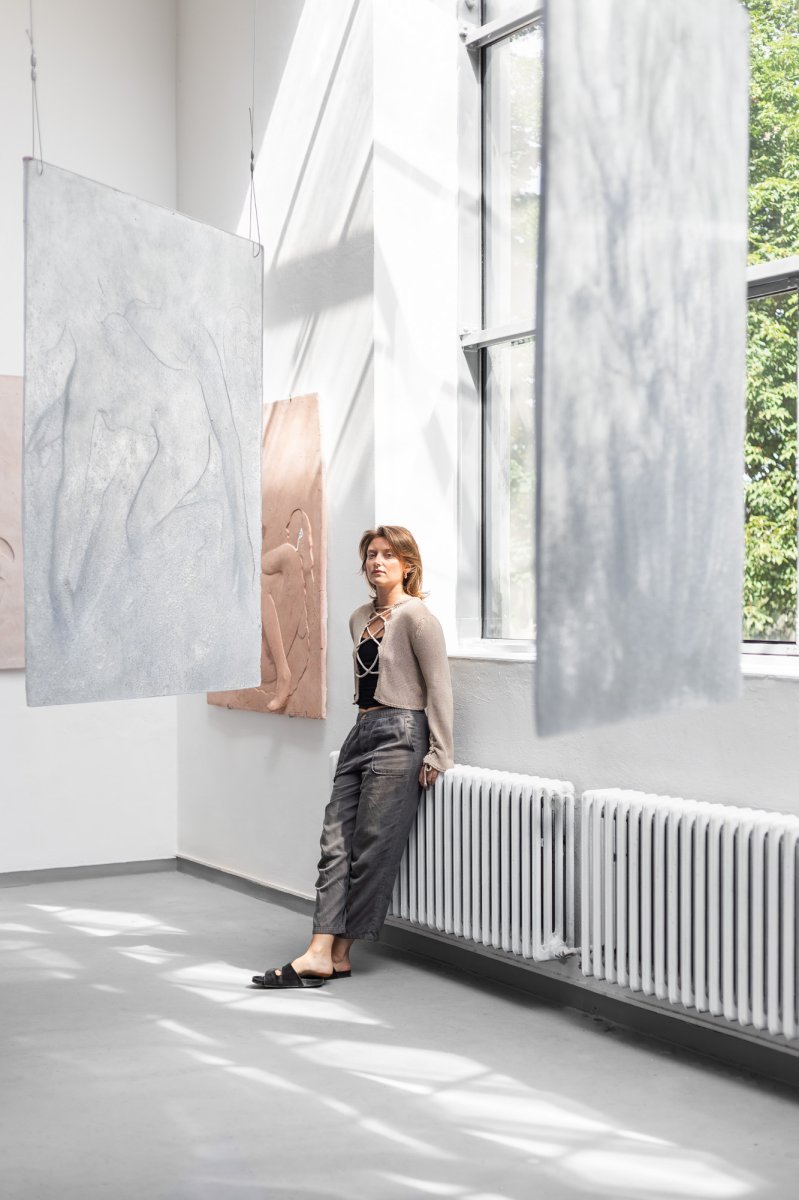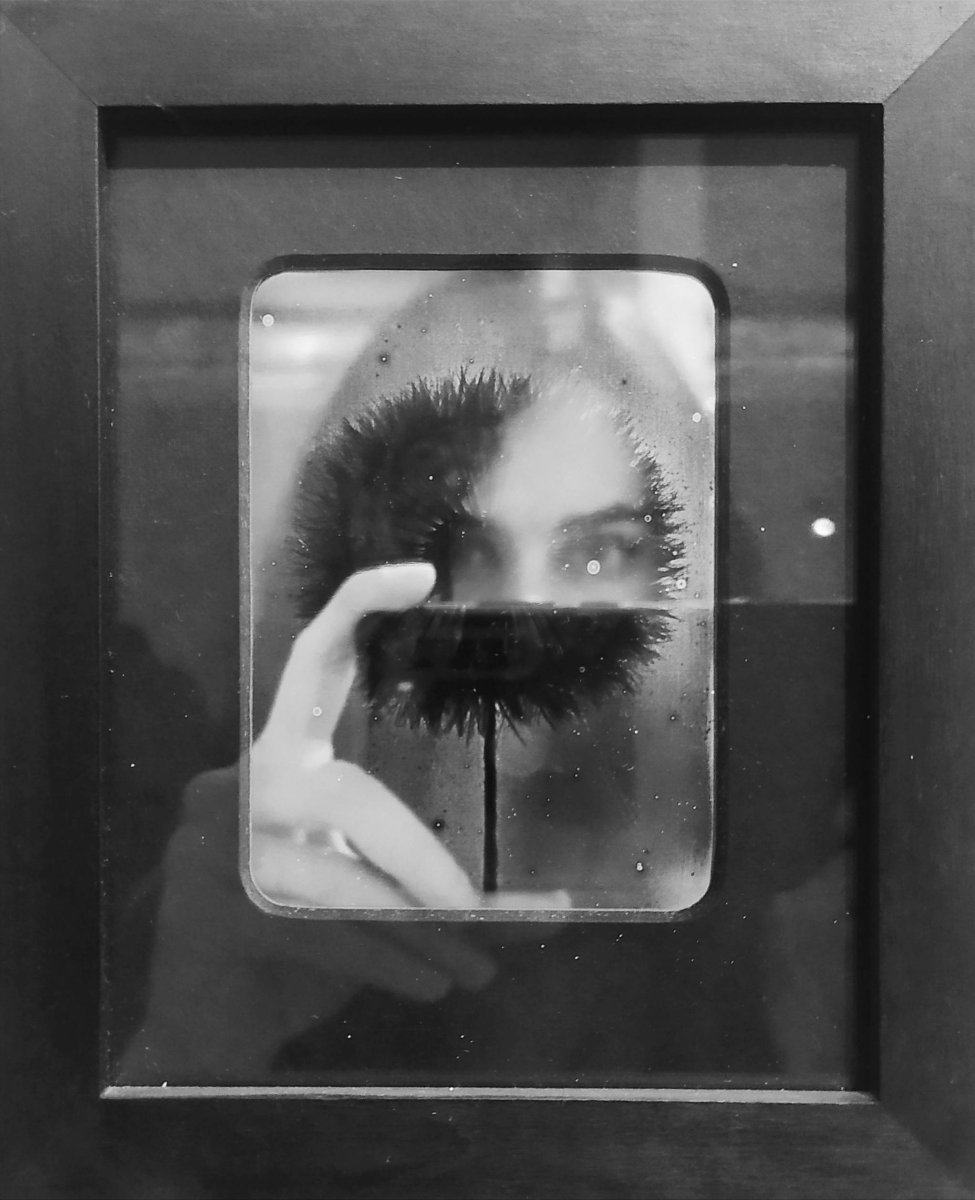
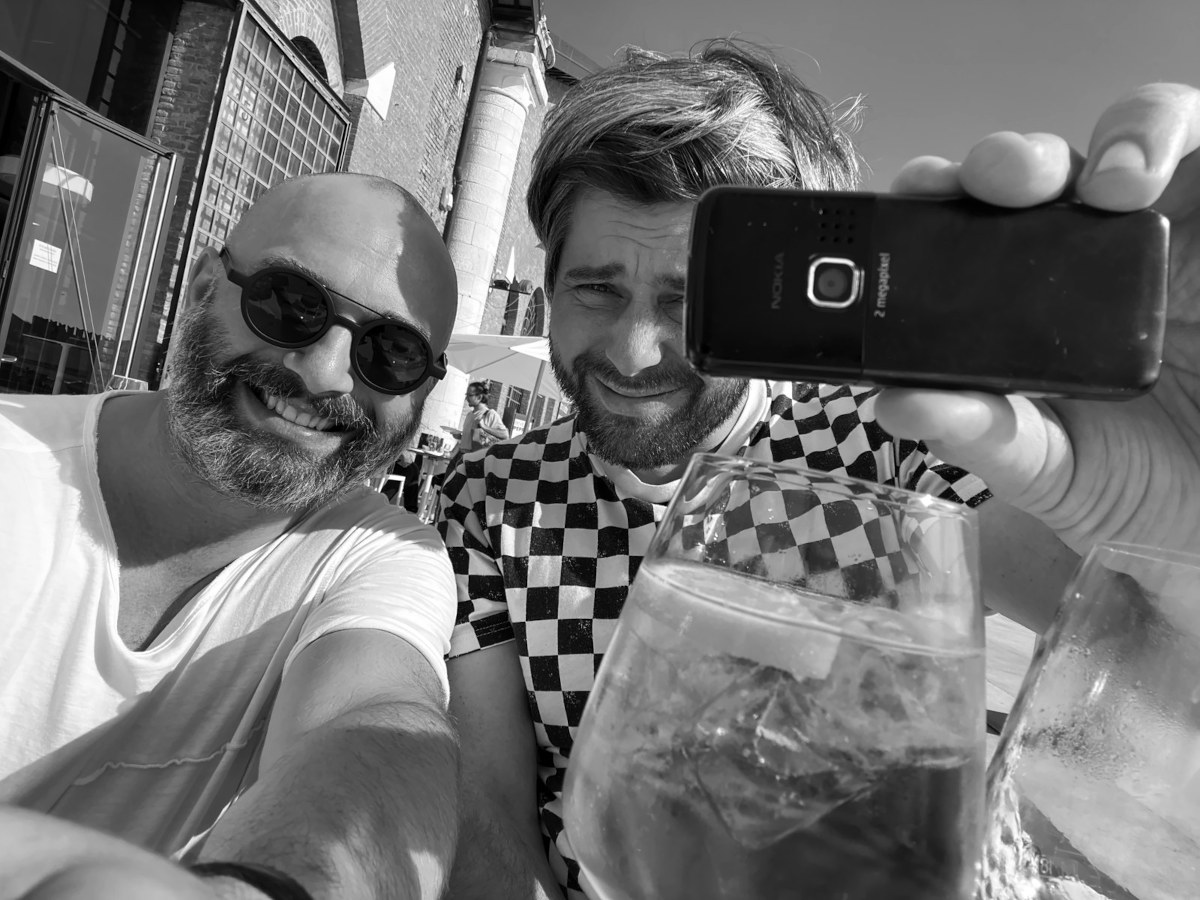
This time the ArtGraduates academic survey heads to the Academy of Fine Arts in Prague (AVU), to the Painting 4 Studio, which has been run by a teaching duo since 2018. The conversation follows the familiar outline of our survey of art academies, but with two such sharply defined figures it does not shy away from more personal and more pointed views on how the contemporary art world runs.
How many applicants did your studio have last time around, and how many did you take?
Marek: I think more than thirty people applied last year. We took four.
Petr: It is worth adding that in recent years AVU has used an online system in which we can effectively see every applicant, so we can choose from across the whole school.
How did you come to teaching? Was it a conscious decision alongside your own art practice, or did it happen gradually?
Marek: It came about because Jiří Černický once asked me to be his assistant at UMPRUM (the Academy of Arts, Architecture and Design in Prague). From there one step led organically to the next, up to the point where Petr and I worked up the nerve to enter the open competition to head the Painting 4 Studio at AVU. So yes, it was a conscious decision. I was more or less aware of what I was doing. But the unconscious shapes us unconsciously, so I cannot be sure to what degree, or how.
Petr: In 2018 I installed my solo show at the Gallery of the City of Třinec two days ahead of schedule, so I had plenty of time in the park to scroll. When I was working out whom to bring into the competition, Marek was my first choice, with Jan Šerých and Václav Hájek close behind. I should add that by then I had a year of lecture-based teaching behind me at ARCHIP, a Prague architecture school, which I now occasionally miss for its clearly defined format and the great deal of pedagogical freedom it offered.
Could you briefly describe the admissions process for your studio? And once students are admitted, how much of a say do they have in how the studio runs – do they have a voice in the content of the teaching, the choice of visiting lecturers, or the studio's overall atmosphere?
Marek: The admissions process more or less follows AVU's established practice. So in the first round we assess the portfolio applicants submit from home. The second round involves a head drawing, a set school task, a studio task, an art history test, and interviews with us. Once students are admitted, they naturally take part in running the studio to some degree. The phrase "content of the teaching" is not entirely clear to me, because the students choose their own goals, and therefore the content and the means as well. We then discuss the process with them and try, more or less, to put their efforts in context. Sometimes we consult them on the choice of guests, sometimes not. Sometimes students are dissatisfied, but not every time, and we try to take that into account. If students start something of their own, we welcome it. We always handle things concretely, case by case. We have no one-size-fits-all answer or formalised procedure. On the one hand students are students, but on the other they are our colleagues, and we deal with each other accordingly.
Petr: Amen.
What one quality or criterion do you personally consider most important when selecting applicants?
Marek: Intensity and a credible interest in the cause of contemporary art.
Petr: Intensity and a credible interest in contemporary art.
Roughly what percentage of your applicants are significantly older students? And what share are foreigners?
Marek: We have quite a few older students. The category of "foreigners" is not really one I am able to pin down. Some students have one parent who was born or lives outside the Czech Republic. Others were born outside Czechia, even if they have lived here a long time. We also have exchange students from other schools and countries. The percentages shift over time. I would say that in both categories they can be considered significant.
Petr: The domestic scene is certainly starting to take on more of a multicultural colouring, which is great and at the same time difficult, in that you constantly have to revise the artistic canon towards which we try to draw the attention of people coming from different countries. The question of finding the right language strikes me as roughly as serious as the effort to hold a dialogue with a generation some three decades younger than us.
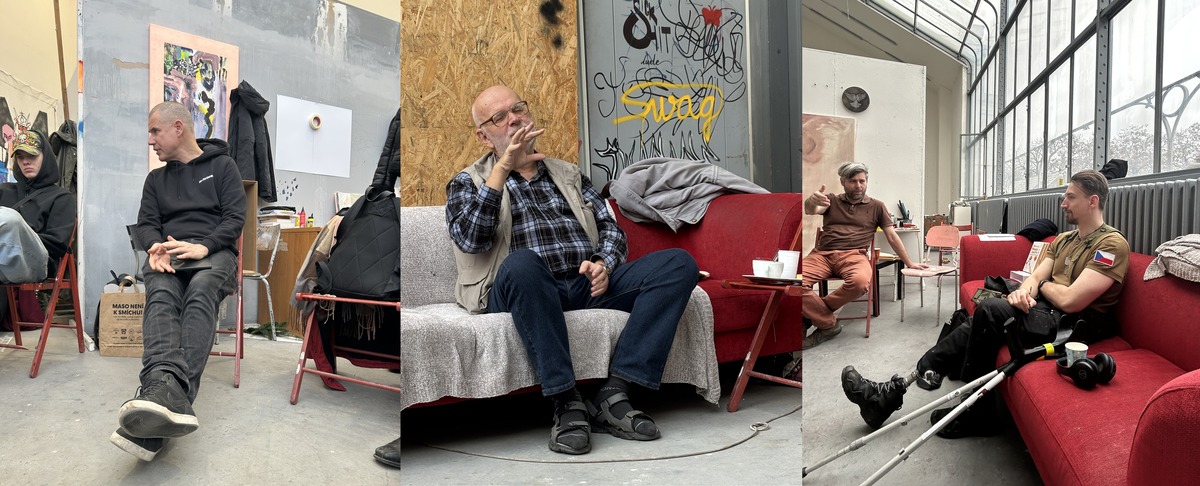
biologist Stanislav Komárek, lecturing on the relationship of culture and nature; science communicator Jan Rota, on the theme of science and knowledge on the internet
Could you name a few of your graduates who have achieved notable success on the contemporary art scene?
Marek: If I am to speak for AVU, then for now the most visible is Lucie Rosická. From UMPRUM I could name, say, Filip Dvořák, David Krňanský or Gabriela Těthalová. I have surely forgotten plenty of them. But it is important to mention that many passed through the studio and then moved on to another one. Others started in a different studio and came to us for their diploma. So we feel no possessiveness about our graduates, and we always try to offer appropriate feedback, as far as our abilities and disposition allow. We also assume that who counts as a success will keep changing over time.
Petr: I am glad to add the names Samo Kollárik, who in Slovakia won the Painting of the Year (Malba roka) award from the VUB Bank Foundation, and János Vámos, who is oscillating promisingly along the Czech–Slovak–Hungarian axis.
Are there exceptionally talented artists among your graduates who, in your view, deserved greater recognition but for some reason did not get it? What do you think stood in their way?
Marek: Of course. In a way, everyone deserves more recognition than they get. At the same time, art is always an uncertain venture, which is both its blessing and its handicap. I will be polite and not name names. What can get in the way is, for instance, a lack of luck, of financial security, an absence of perseverance, tunnel vision, and so on. At the same time, many people are able to turn these and other negatives, up to a point, into positive values. And others the other way around.
Petr: Yes, but… The question is a little misleading, though. The degree of recognition is determined not only by talent or personal effort, but also by a whole range of social, societal and institutional factors. It would be all the more problematic, then, to draw new "lines between success and neglect" by naming those who, in my opinion, deserved more recognition than others. At the same time, it is worth adding that we have only had our second cohort of "our own" diploma graduates, so it is rather limiting to assess our whole seven years at AVU, and in general that is something others should be doing above all.
Do you keep track of how your graduates fare professionally in the years after finishing – for example, how many stay active as professional artists? Does your institution collect any data on what becomes of its graduates?
Marek: We follow it from a distance; we run into each other around the art world. Sometimes we stay in touch, sometimes not. AVU does not collect much data, and certainly not systematically. There is not much of a debate about what counts as success and what no longer does, either. After all, success is a tricky thing in the sphere of art.
Petr: We happily talk with those who want to talk with us. AVU occasionally fills in formal tables to meet the requirements of the Ministry of Education (MSMT). But any real alumni cooperation is, in practice, a mirage, a fata morgana.
Does your programme include any teaching focused on digital literacy for artists – building an online portfolio, working with social media, or self-presentation? Which online platforms do your students most often use to present their work?
Marek: We talk about this now and then too. I think in this respect the students can often teach us a thing or two, or rather me. They mainly use Instagram.
Petr: In general we try to steer students towards building their own online portfolio, ideally away from social media, which we see as a fickle, temporary tool that leaves you no authorial control.
Does your studio actively work with galleries, museums or other art institutions, so that students get a taste of the real art world while still studying?
Marek: I would say rather that we work with individual curators and figures from the art world. Sometimes within the academic setting (examiners, consultants, lecturers), and sometimes beyond it (curators, organisers).
Petr: We prefer individuals over institutions.
In art education there is a lot of discussion about the power dynamics between teachers and students. What mechanisms exist at your institution to prevent abuse of position, and do you consider them sufficient?
Marek: That is a question straight out of Minority Report. You can only ever prevent things up to a point. A school is a hierarchical structure. A teacher always holds some kind of power in their hands, one that applies solely within the given institution. They should abide by the rules, ways and norms as they are applied and interpreted in school regulations, in the legal framework, and as they have settled into the principles of decent conduct. That is what we try to do. For instance, we try to balance authority and collegiality. And many other polarities.
Petr: Ha, ha. If I were to pick up on Marek's Minority Report comparison, then I would say that in a system waiting for a crime, the greatest danger lies in the conviction that we have already solved it.
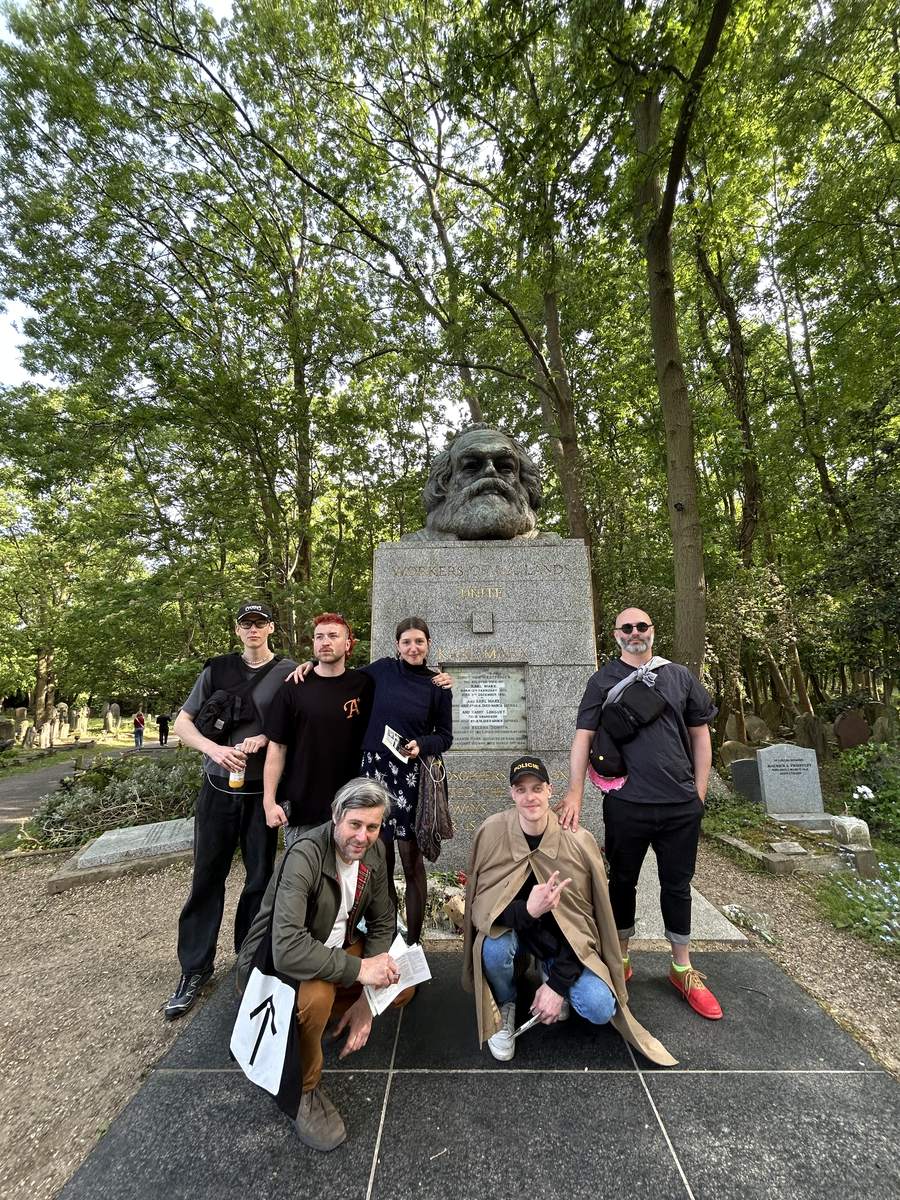
Running a studio as a pair means constantly negotiating a shared position in front of the students. When is the duo an advantage, and when a complication? Does it happen that you fundamentally disagree about assessing a work?
Marek: Our shared position is precisely that we do not have to agree at all costs, and that the disagreements we put on the table can show a student that you can hold different positions on the problem under discussion, on the work being interpreted. Sometimes very different, sometimes only slightly. So yes, it does happen that we disagree now and then. It always depends on how much detail we go into.
Petr: We take pride in a broad spectrum of students, which, in my view, would be very hard to achieve under a single studio head, if it were possible at all. Personally I consider it a benefit of our time at the school, and at the same time I notice that it demands an order of magnitude more attention and pedagogical effort than I remember from my own teachers.
Petr, alongside your own work you have long been engaged with the economic standing of artists – as a former chair of the Skutek Association (a Czech artists' union) and an advocate of the "percent for art" principle, and as co-author of the podcast PO AVU. In 2024 your monograph Oddeleni malby (The Painting Department) came out. What troubles you most today about the way the art world works, and what would you change about it first?
Petr: I am not sure the preamble to the question is not setting up a thousand different excuses, but by far what troubles me most is the digital virtualisation of art. That is, the loss of attention to physical works, the shift into a flickering online environment, and, set against it, the massive commodification of art and the image. Even so, I love the physical image and the experience of painting as a slow medium, because I am still fixated on Walter Benjamin's notion of the "aura". Benjamin argued that the essential aura of an artwork is lost in the age of mechanical reproduction, because the techniques of reproduction detach the reproduced object from the tradition it originally grew out of. Benjamin's "here and now" – its anchoring in a specific place, time, history and ritual context – ought to be key for the coming generations of artists too.
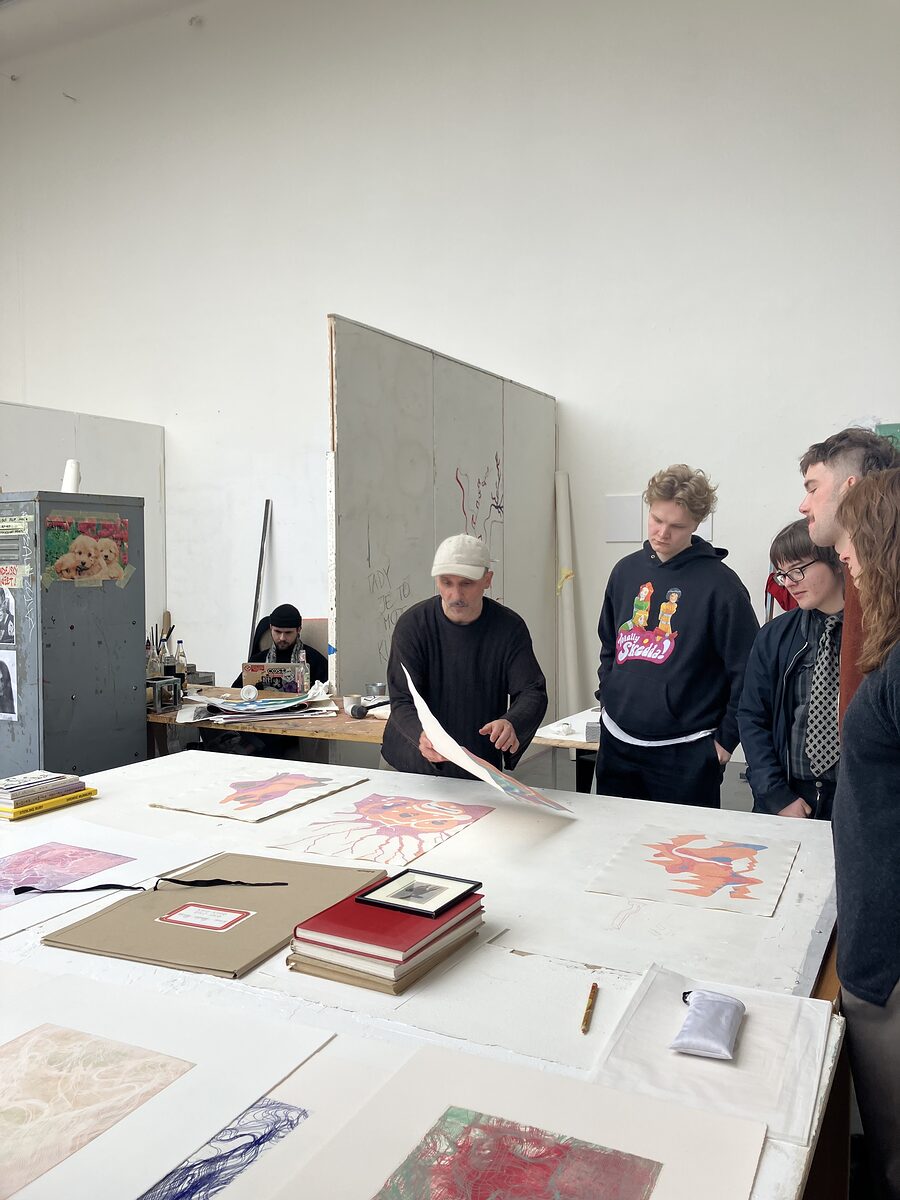
Beyond art, you are a passionate fly fisherman and cyclist, and you take an interest in fashion. What matters most to you personally – what would be the last thing you would give up? And do you encourage your students to cultivate interests outside art as well?
Petr: For me it was always fly fishing and cycling first, and fashion right after. That is the logical reason I applied to art school. (Cue a smile from Jiří David.) But if I am to answer seriously: much as I feel that the updated role of a teacher today is, on the contrary, to draw students' attention to art as much as possible, I think Marek and I both try to show students, from various angles, that "there is life behind the curtain of art too". In practice that means a whole range of people from fields quite other than art have passed through the studio via guest sessions. From a biologist, a legal theorist, a literary translator, a philosopher, a rapper and a YouTuber, all the way to a science communicator. This autumn we are planning an internal workshop on photographing works for reproduction and a debate on pricing for the students.
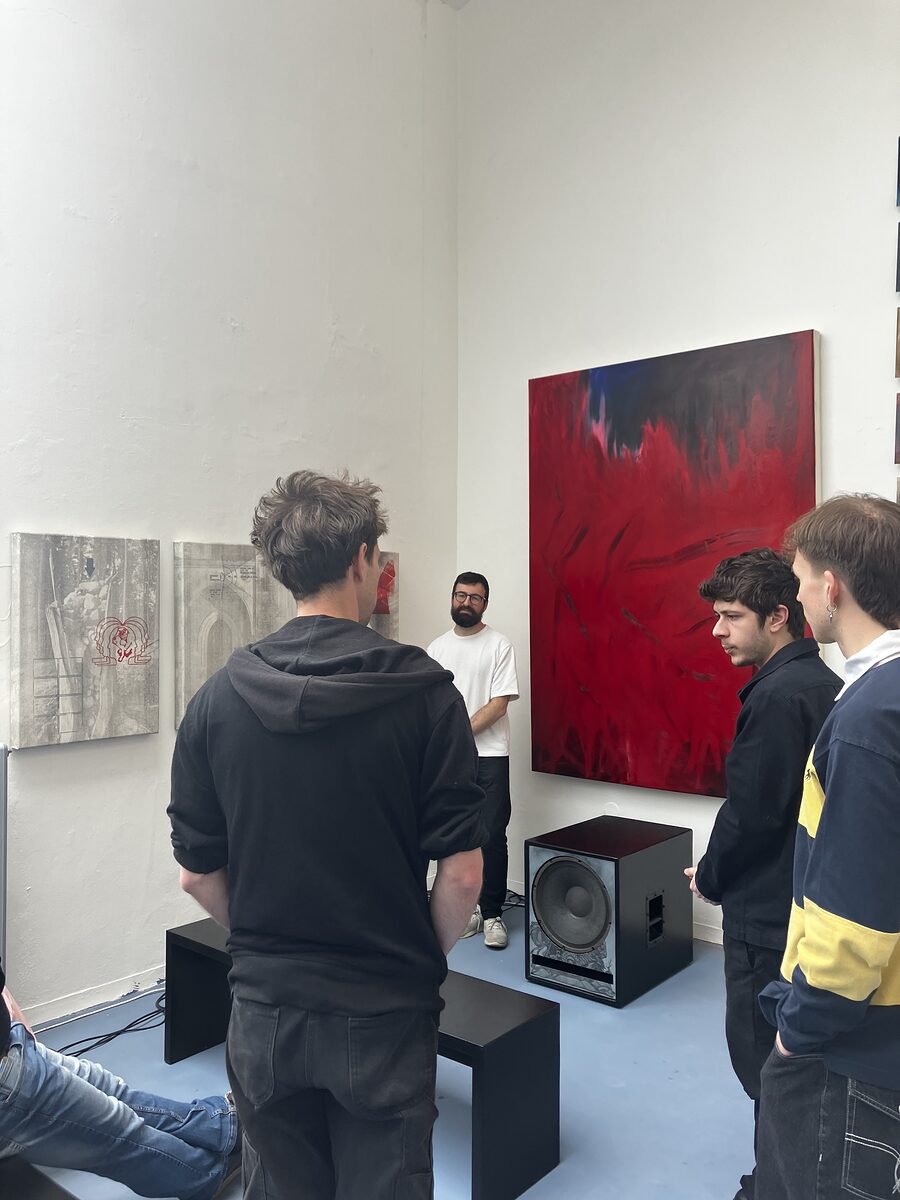
Marek, you are a founding member of the Rafani group, and in your own work you move across media, often with an emphasis on conceptual work with language. How does the experience of the Rafani collective's often confrontational practice feed into how you teach today – and into what you consider meaningful painting?
Marek: Quite a lot, probably, because the work within Rafani was about the constant verbalising of your own intentions and the ability to tune in to someone else's. It is also worth distinguishing Rafani's artistic results, which could often come across as confrontational, from the communication that led to those results and that tried to subordinate the clash of positions to a shared goal set in advance. That is useful in our teaching too. I would also add that I am not interested in meaningful painting as such, but in meaningful artistic activity in general – of which that confounded painting is one part.
In April 2026 AVU's wider leadership issued a statement saying that cultural institutions in Czechia face economic and ideological pressure, and that this amounts to an attack on the foundations of a democratic society. As teachers at that same academy – how do you see this situation from the perspective of the studio and your students?
Marek: Democracy is always an unending negotiation. At the same time, we sometimes talk too much about what we would like, and too little about the tasks we actually have. Carried away by fine words, we also often forget the concrete steps: how we organise ourselves within the school, how the art scene and its players work, which specific mechanisms could be improved. What is always needed is small, patient work, incremental steps and a concern for public affairs that goes beyond your own art.
Petr: The present moment – or rather ANO (Andrej Babiš's populist party), screened by the Motorists and the SPD (both on the nationalist right), and the endless spectacle of rage bait that comes with them – is largely something we, as representatives of the cultural front, have brought on ourselves. It is an unpleasant but logical payback for the years in which we failed to draw a consistent line between defending the fundamental principles of how art works and cheap potshots at the cultural administration of the day. By repeatedly blurring the two, we ourselves helped turn a legitimate debate about the point of public support for culture into a space for glib political shorthand, resentment and provocations that play well in the media. None of which changes the fact that every morning I wake from a bad dream asking whether it is over yet, and I largely realise that a person can only carry the part of the fight they have the room and the tools for. At the same time, I observe that our universities today are far too removed from social reality, and from the challenges of the present, and that their self-governance really does need a proper overhaul. The difference between living on a (self-)critical island of positive deviance and merely surviving on a musty, (self-)referential island in the middle of the academic swamp strikes me as essential.
Finally – what advice would you give young artists at the start of their journey? What does it take to stick with it and build a sustainable career in contemporary art?
Marek: Enthusiasm, stamina and common sense.
Petr: To believe that even the seemingly worthless things, in society's eyes, have a value that is hard to replace by any other means.
Thank you for the interview!