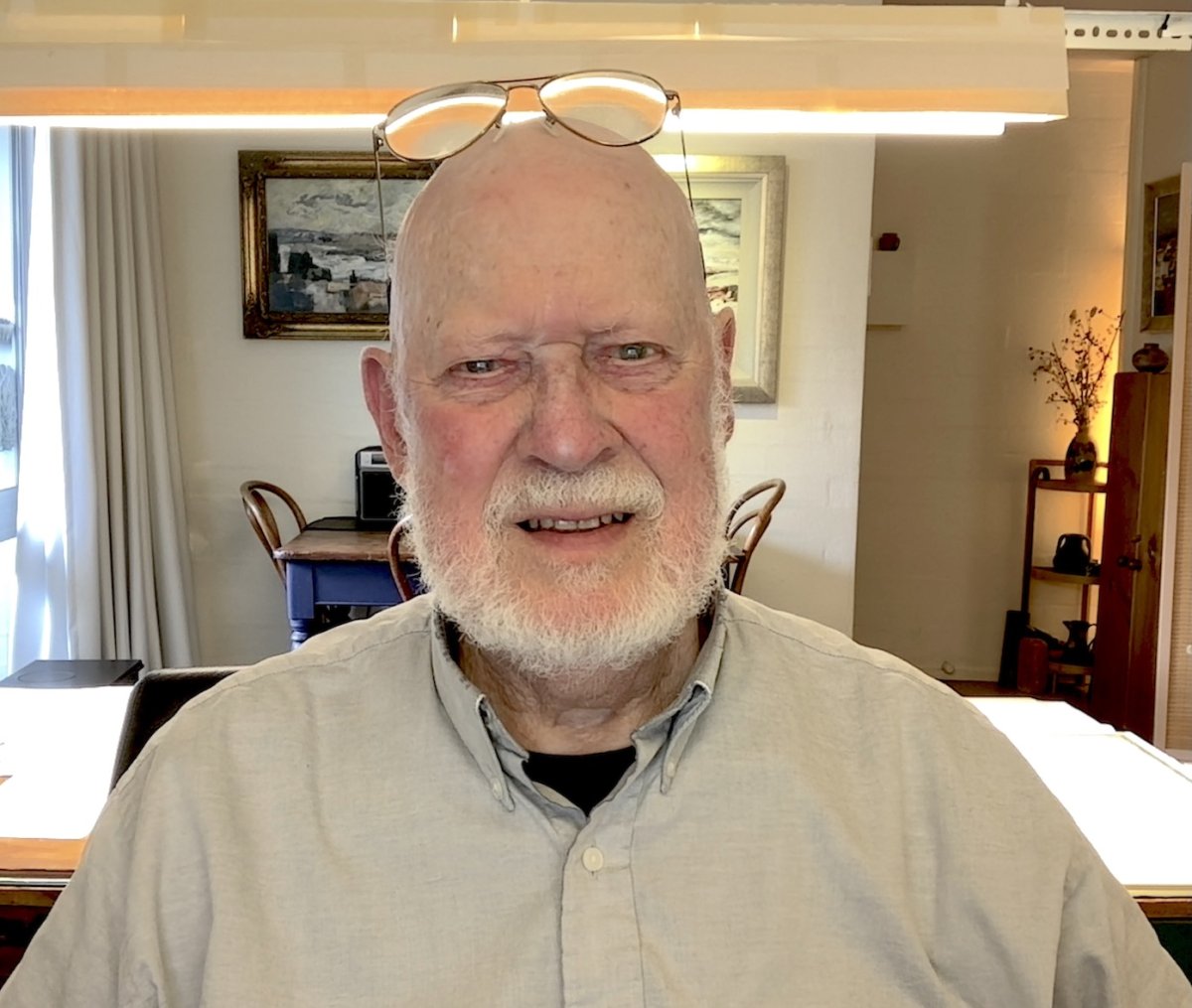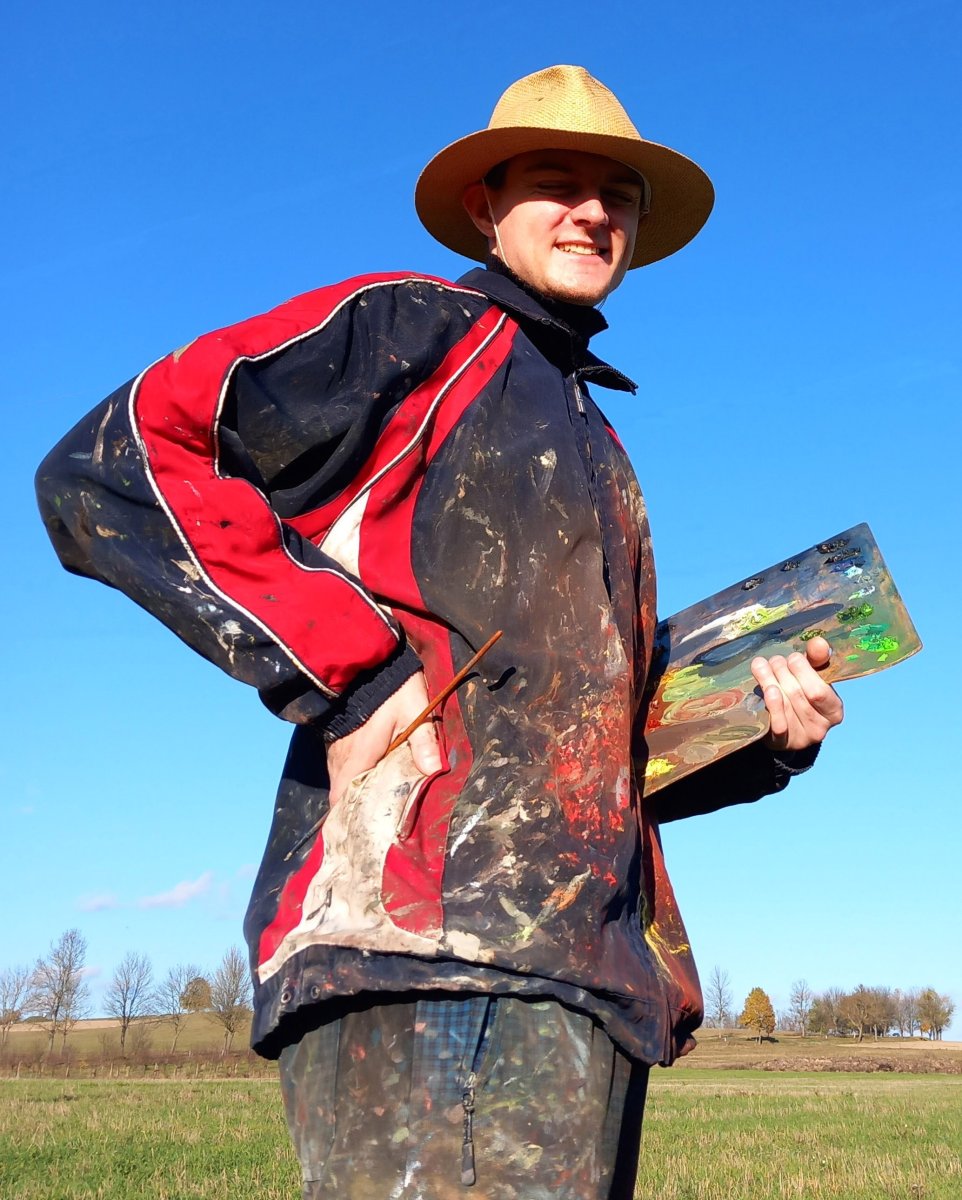
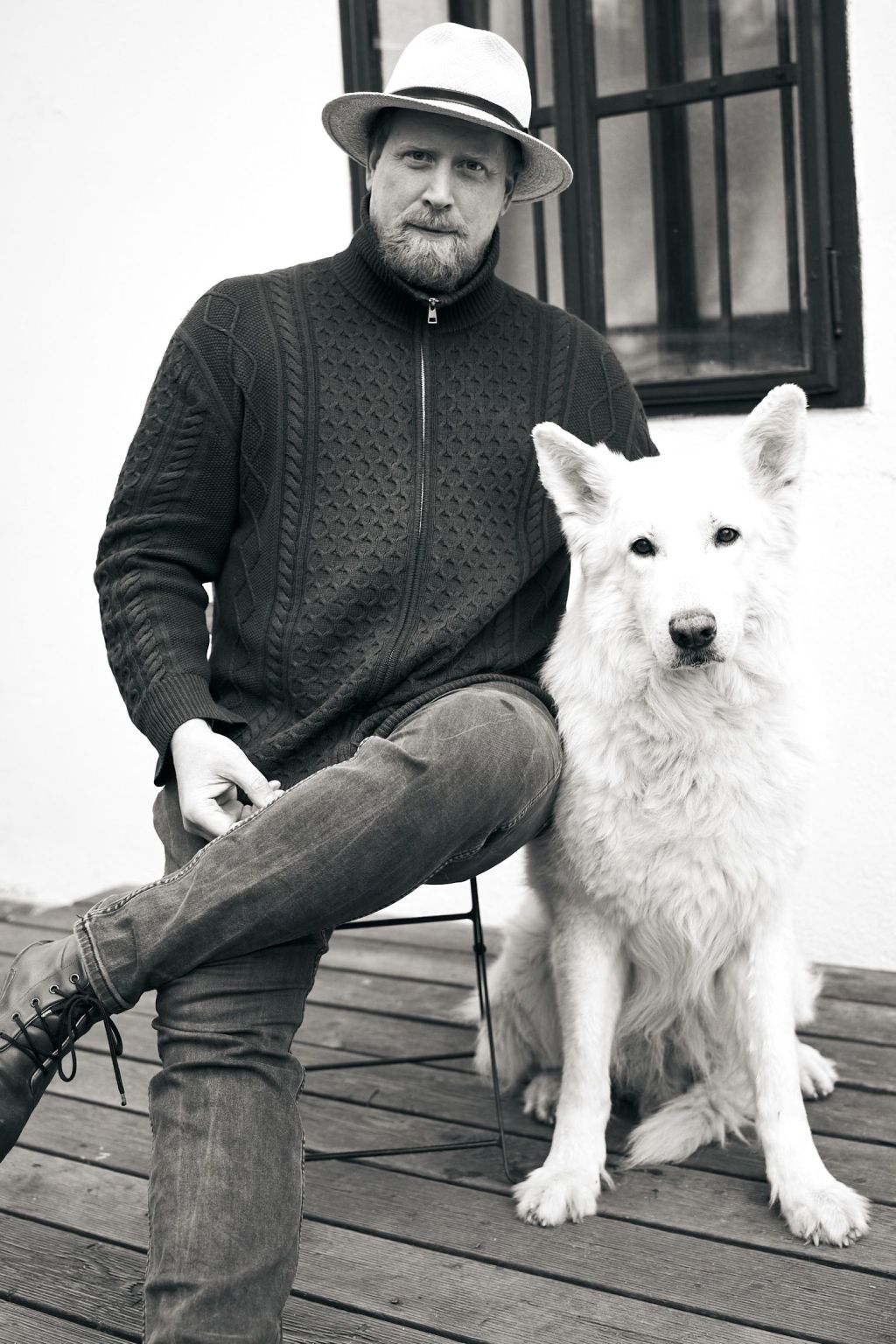
Vít Kalvoda is the founder of Ponava, a café and music club in Brno’s Lužánky Park, organizer of the multi-genre PonavaFest, and co-founder of the Brno Association of Club Music. A former finance professional who has spent more than a decade living for independent culture – running festivals, operating the online Ponava Radio, and building the international music platform UFMC. In this interview, he talks about what it costs, why he won’t stop, and what keeps him riding the wind.
When was the first time in your life you organized something for other people – and why?
When I was about four, I used to put on puppet shows for the girls next door. The memory is tied to this image of us walking barefoot across freshly paved road in the summer, asphalt sticking to our heels – and then I’m performing the puppet show, the girls are laughing, hiding under the bed, and I’m happy. I probably did it because I liked those girls, or maybe I just loved their joy and laughter, those happiness hormones flying through the air. I did it out of love and for the joy of it.
Another image is from September 16, 1998, when I read that it was Vladimír Holan’s birthday. I borrowed a key to the music room in a former Piarist college from the headmaster of the Kyjov grammar school, Miloš Malec, and organized a reading with a small musical interlude for a tight circle of culturally inclined teenagers.
It seems that a cultural vision, in an age-appropriate form, has accompanied me since childhood.
When did it become a profession? Was there a turning point?
In 2009, someone at the Czech National Bank planted the idea in my head that it might be good to create a financial literacy series. So I started writing a book of short stories about financial scammers, predators, and manipulators, and in 2011, thanks to a tip from Hanka Chalupská and collaboration with my bandmates from Les Yielles – Honza (Oliva) Orava and Radovan (Draxx) Kramář – I managed to secure a decent grant from the EU’s Operational Programme for Education to produce a TV series called Hvězdný prachy (Stardust), in which we shot a challenging series based on stories from my book, combining often shocking documentaries by FAMU students with an animated-live action framework by Zdeněk Durdil.
Unfortunately, we completely failed to fit the drawn-out 26-minute TV documentary format. Czech Television never aired the series, and it ended up on YouTube. It documented seven types of financial market fraudsters and linked to a website with a comparison tool for actual retail products on the market.
I clearly felt that this project had simultaneously sawn off the branch I was sitting on in the financial industry. I’d angered absolutely everyone and had no choice but to leave as a persona non grata and look for other paths. Following that white rabbit led me in 2013 to establish a free currency initiative and the eco-cultural association Zahrady soutoku (Gardens of the Confluence), and in 2015 onward to cultural programming at Ponava.Cafe.
Can you make a living doing independent culture in Czechia?
I’ve been trying to figure that out for eleven years now. I’d love to know myself. If I don’t manage it, I’ll be a little disappointed but not terribly surprised. For now, I believe I can at least earn enough for shelter and food. I’m still searching for a principle that would let me keep something for a living from the sometimes considerable resources I pump into the veins of the cultural bloodstream – because simply put, the more you keep for yourself, the less there is for others, and the events suffer for it.
Art that focuses on genuine inner value seems to breathe more inward than outward, and so it rarely reaches a wider audience. Those who do it to please end up stinking or sinking into the blandness of the expected. Those who don’t do it to please will only win over small circles of lovers of the authentic, seeking spirit and talent – but making a living then becomes a tricky moment, because in those circles, some consider even the fact that you have anything left over from this work a transgression.
What does someone who runs non-profit cultural projects live on?
Above all, on their own frugality. Last winter, mainly on legumes and various kinds of flour and grain left over from when I shut down the kitchen operation during Covid. Right now I’m on sorghum. These things don’t spoil easily. Trading gold helped too.
Otherwise, from selling coffee and beer, from grants, and from the ability to sell your visions and ideas to those in power and convince them it benefits society. Sometimes also from donations and borrowed money, or from side jobs in other fields you know well. But there’s less and less energy left for those side jobs over time.
Let’s stay on grants for a moment. What’s your experience with them? Any practical tips?
It’ll sound banal, but the principle is truly simple: the authorities give money to organizers and projects that align with their goals. So if you want money, do what the funding is for, and do it well. If what’s being supported doesn’t align with who you are, don’t force yourself into it – you’ll suffer.
By trying to please, you lose authenticity and independence. How far are you willing to go in the effort to please and in your readiness to be a meritocratic tool for stabilizing power? Past a certain line, you may be becoming a politician, if not an accomplice to organized violence – political power. If the funders’ ideas and your plans are in alignment, then communicate those ideas to them – as clearly as possible and regardless of the often stupid forms.
The more complicated the project administration, the less you’ll be doing the project and the more you’ll be doing the paperwork. Past a certain point, you become a bureaucracy. Is that what you want? Maintain your standards, even if it’s by the skin of your teeth, because grants don’t go to the destitute, lest they squander them. The argument “we did it badly because you didn’t give us enough” interests no one. You must not be afraid to invest – whoever looks like they have nothing gets nothing, and if you’re scared, stay out of the woods.
The price you pay for some money is too high, and those projects aren’t worth doing. I’m talking about the point where you stop being yourself because you’re twisting your ideas to fit a funding category through compromises. That’s a guaranteed recipe for burnout and extra work – enthusiastic visionaries can turn into embittered bureaucrats.
Project ideas sit in cells like bee eggs, waiting for nourishing royal jelly. An egg with bad DNA won’t be helped by a lot of jelly – something useless or harmful may grow from it. But great DNA without jelly dies, dries up, amounts to nothing, and won’t get more jelly next time.
Do the things you know how to do and want to do, with people you want to work with and who work well with you. There’s nothing sadder than a heap of royal jelly with a dead egg floating in it. That, incidentally, is often the image of Western society in general. Up to their ears in jelly, but without a vision. That’s why I always follow the living idea of a living community, extract the vision from it, creatively support and connect it, lead brainstorming sessions and meetings, maintain the project community’s momentum, keep pedaling, and try to find suitable funding sources.
I don’t shy away from thanking whoever supports a project, without judging that person. Because money is always dirty, and whoever handles it gets dirty too. The keeper of the manure pile can’t smell like roses, but without manure, roses won’t bloom or give off their fragrance. Over-fertilizing, though, burns everything. Consider whether you’re willing and ready, in your line of work, to deal with those who hold political power – those who ultimately decide about the money – and bring them into the game.
Funders usually recognize a good project, but your reputation also matters a great deal – it can raise or lower the credibility of the project. Having an image is important. I prefer to build my image through real action, but professional grant hunters mainly manufacture their PR and reputation through the media and by influencing key people, following the maxim “one ounce of image is more than ten pounds of performance.” I can’t stand that.
Grant committees usually also include people who can tell good things from bad. The question is what their main source of income is, whether they mainly send money to those they already collaborate with, and who nominated them to the committee in the first place. I don’t want to say that big players use influenced officials to stack committees and then pay themselves fees from the money they receive, but such situations do unfortunately occur.
That’s the real and dark path, where monsters lurk. I try to walk the bright path, where the treasures aren’t as rich but neither are the monsters sitting on them: writing real, living words into projects, speaking to committee members in a way that transmits the idea, applying for complex grants where participants are filtered by the quality of the text and the project, and where evaluators are well insulated from those trying to influence them.
Dead words and clichés interest no one. Some, unfortunately, aren’t interested in the living ones either – they don’t study the projects and hand out money based on gut feeling and the opinions of their bubble.
What will definitely help you is maintaining your track record and self-presentation. And the words in your projects must be consistent with that track record, with reality, and with how you present yourself.
Finally, realize one thing: big projects with big money mean an enormous amount of work. Sometimes so much that it’s stressful, grueling, even self-destructive. Hundreds of hours of writing and diligent work, aching back, headaches, and sitzfleisch, with a completely uncertain outcome. Is that what you want to spend long months doing in your project cell?
How many months a year can you sacrifice to work that may turn out to be entirely futile, mentally draining, separated from your loved ones? For every grant, you pay the price of long hours devoted to conscientious intellectual, organizational, presentational, and documentary work that can actually distance you quite a lot from the subject of your activity. To do this, you need an organization – managers, curators, coordinators, administrators. And count on the fact that there’ll be “a little for some, nothing for others…” and the smallest one runs off home, because all they’re left with is debt.
Also count on the fact that once you succeed and you’re holding big money, people will start worming their way in – I call them grant parasites – who don’t want your project but your money, and who are a creeping danger to your project. Without a pre-assembled team that operates on shared values and interests, there’s not much point in doing a project. And that team needs to be ready in advance, expecting that if things work out, we’ll make something beautiful together.
Why don’t you do something more profitable?
I’m thinking hard. Probably because if I quit, I’d disappoint a lot of people I do this for. I’d probably have to move somewhere far away to avoid spending the rest of my life explaining why I gave up.
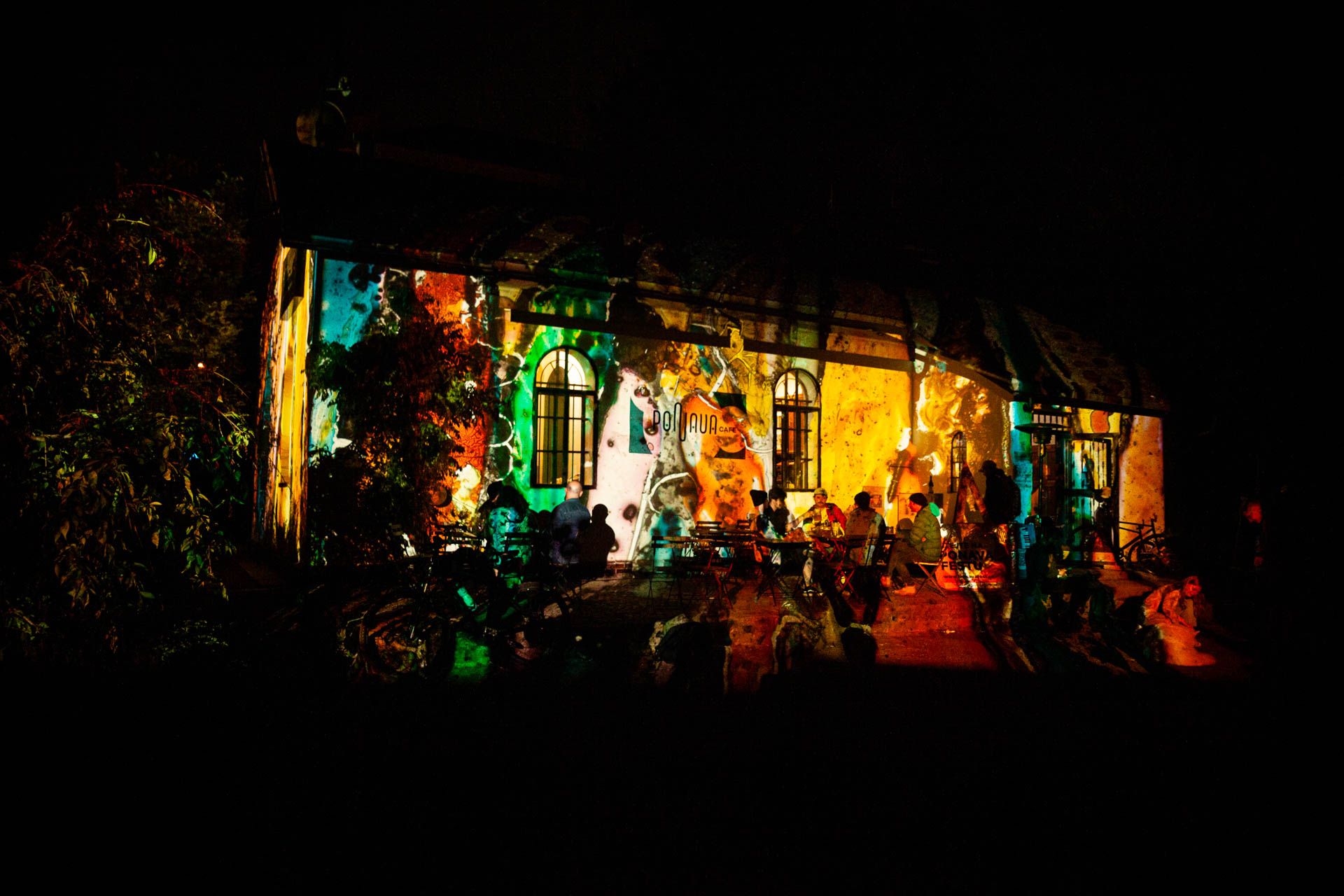
Right now, there’s pressure from above to shut down Ponava’s cultural programming and turn this place – which is a sort of clubhouse for free culture and various projects – into just another ordinary restaurant.
If I lose this battle for my little patch of ground, I’ll go do something more profitable. But that doesn’t mean I’ll be better off. Not much is left of my personal and family relationships after all these years of activity, so taking care of this place on the map that I decided to build as a cultural space is really the main thing I have left, the thing that still brings me joy.
I’ve loved music since childhood – it lifts me up and brings lightness and joy to life. The same goes for good coffee and beer. So I try to take the best possible care of this holy trinity and I don’t know what else I’d do. Sure, I could look after trees, or bees, horses, dogs, or children instead, but fate blew me here and it feels too late to switch.
Perhaps I’m simply incapable of trading freedom for money, and even if the tide of capital were to sweep away my sandcastles, I’d go run some other enthusiastic, culturally evangelizing, crazy venture, because I’ve probably grown too used to that Samaritan reaching of hands toward the sky. When I have to stop, I’ll set out on a pilgrimage and wait to see where the wind takes me.
For now, though, I hope that my improbable enterprise will be preserved – by God, the universe, a good spirit, or perhaps those who hold bureaucratic and economic power – as an improbable phenomenon and a proof of their brighter side.
What has this work cost you?
To dig my way through this tough terrain, I’ve had to give it absolutely everything several times over – all my time and energy, often becoming a slave to my visions and projects for weeks or even months on end. Sometimes feeling like a slave, other times like a partisan locked in a bunker for months, I worked on projects that were falling apart to keep them from collapsing entirely. Often in a state of personal disintegration, I tried to navigate the ship – or what was left of it – into harbor, so that the name and the organization would survive.
Both my mental health and personal relationships suffered, as did the café itself. It’s impossible to write and organize major projects while also caring for yourself and your loved ones and keeping an eye on café staff. I chose culture over consumption and personal life, and there have already been times when culture repaid me. I’m deeply grateful for that, because for others it didn’t – whether because they had less luck or because they didn’t give it everything. And it may well be that I’ll have to shut down the food and drink side under pressure from Brno’s city authorities and competing businesses – but I’d rather not, because good coffee and good beer belong with good music.
I keep wanting to say that this work has cost me above all my personal and family relationships. But I’m not sure which is the chicken and which is the egg – whether I’m failing at personal relationships because I do culture, or whether the projects are really a safe haven from the complicated and painful world of personal relationships. Either way, it’s become a spiral, drilling ever deeper.
Because when you have neither time nor money for your loved ones, you no longer have your loved ones. But is my work to blame, or my character, genes, and upbringing? I don’t know.
What this work has definitely cost me is a heap of money, time, nerves, and health. Liver, back, nerves, heart, lungs, blood vessels, hands, and generally the psyche, the élan vital – those wear out the most. I’ve watched some of my role models die of cancer and other diseases. Cancer found me too, at a time when things were at their most unbearable. The tumor was tiny and they removed it in time, but it was a clear memento mori, a reminder that you need to keep a clear head and not let yourself be broken. I tried to see the removal of the tumor as a cutting away of the diseased part of my story, and I’m trying not to repeat that diseased chapter.
How do you stay sane in a situation where everything is uncertain?
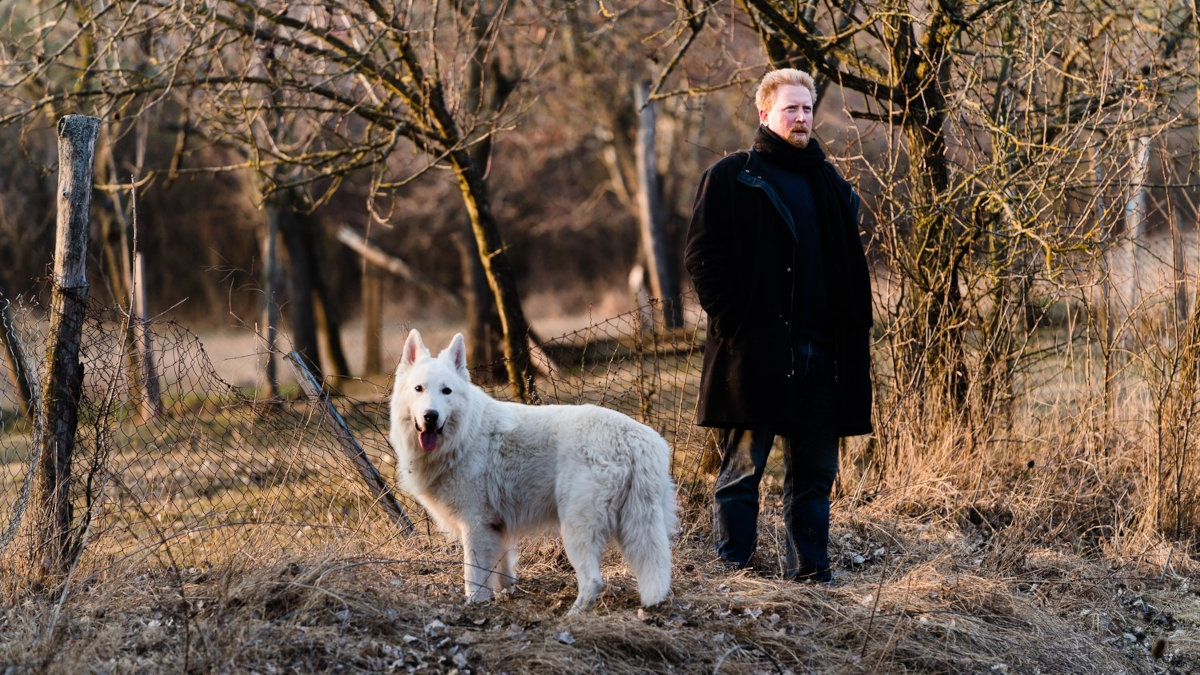
It worked best thanks to a life partner and fellow fighter. A wonderful companion and supporter was also the white angel Akira Finemon, for whom we’re now going to build a singing memorial together with Jirka Pec and Tomáš Vtípil (if the City of Brno’s public green spaces authority ultimately allows it).
Now, with both the women and the dog gone, all that remains in hard times is faith and all the channels of good spirit – meditation, sauna, sunlight, yoga, running, music, the joy of meeting people, massage, and so on. Lately I’m often accompanied by old Jewish songs full of light, songs of a people who overcame the insurmountable and always rose from the dust again and again. When I can afford it, or when it’s necessary, I heal by the sea – that’s what I love most, like a touch of eternity. And when my nerves are in really bad shape, I reach for valerian or phoenix tears.
One dream image keeps appearing to me: I’m flying through the air by the power of prayer, with no destination, no purpose, surrendered to fate, fixing my mind on God to show me the way. That’s how I’ve felt for the past eleven years – apart from a bit of junk, I have almost nothing, just faith in myself and in fate. I’ve saddled the wind with my faith, and on that belief – that whatever happens is right, but that you must fight to your last breath – I’m still flying.
What holds you together when things around you are falling apart?
Good coffee!
Spring sunshine.
The core principle of my personality: doing things for others.
Love, as the principle of life and the only thing that matters.
Ideally for someone, but if there’s no one, there’s still me and the created world around me. As long as my person is still here, there’s still someone to care for, there’s a mission and a legacy from those who came before to those who’ll come after, there’s a vessel to hold together by the force of will, love, and joy, until it’s irreversibly broken.
There is the memory of past beauty, images from childhood full of light that appear all the more vividly the less light there is in present days. I am a relay of ancestors who don’t want me to fall.
There is the memory of a real fighter – my legendary great-grandfather, Bohumil Hrabal’s father and a war hero who survived three concentration camps and a grenade explosion. What are my troubles compared to his?
There is the light of love and life that we carry on – hevenu shalom aleichem. We must not give up.
How did you end up with the café in Lužánky Park?
So one day I’m walking past the building, walking the dog Fin, and I see a friend from the Free Currency project painting the place.
My then-girlfriend Kamila had often been eyeing that building, wanting to put her hospitality instincts to use, and she thought this would be the ideal spot. I said: “Hey, Peťo, is this yours? Good for you. We’d been saying how great it would be to have a place here.” And without hesitation he said, “So come do it with us.” I said, “Really?” And he said, “Of course!”
I ran home, eyes wide, woke up Kamila, and told her everything. That same day we agreed on a partnership with Petr. After a year, Petr and his wife decided to sell us the business, and Kamila and I ran it for about another year before we broke up. After yet another year of mutual torment, I bought out her share.
What is Ponava today – a café, a club, a cultural center?
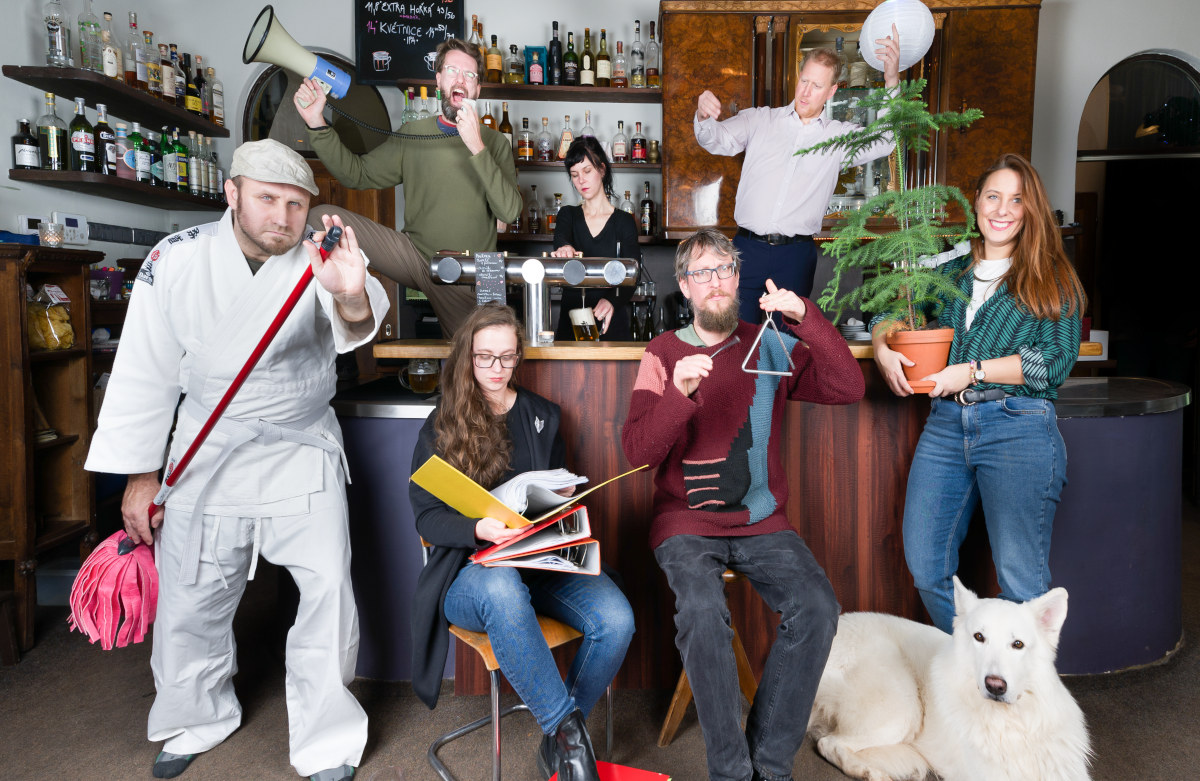
We’re a base for free culture, a music club, and a place with great beer and great coffee.
We’re an attempt at a Brno Hyde Park, a fight for the freedom of culture in public space against constant efforts to constrain and normalize it.
Today, a whole range of projects come out of Ponava and collaborate with it – club programming, three to six festivals (where you’ll often find Ponava as just a modest logo in the sponsor bar), and the curated music platform UFMC / Ponava.Radio.
We’re an attempt to bring together the joy of beauty received through various ports and interfaces. We are BEER&MUSIC CAFE, and these words simultaneously unite (alongside the visual arts, which play second fiddle at our place given the limited space) three domains that are among the most celebrated, most cultivated, and most joyful, carrying a certain essence and unbridled joy of life. These are our three jewels, or if you prefer, our holy trinity.
Many of our readers are students and recent graduates of art schools. What should an artist do if they want to exhibit at Ponava?
They definitely stand a good chance of getting an exhibition. Ponava is a social space, and the artworks displayed here reach people who would never set foot in a gallery. The limited space is a drawback, but we’ve hosted sculptures, assemblages, and more. Exhibitors are certainly treated to excellent coffee, beer, and wine – and if we’re lucky enough to receive exhibition grants again, which we haven’t had in recent years, we’ll also be paying artist fees.
Anyone who’d like to exhibit with us should send samples of their work to [email protected] – our current exhibition curator will be happy to review them, and we’ll schedule them into the exhibition calendar if appropriate.
Tell us about this year’s PonavaFest.
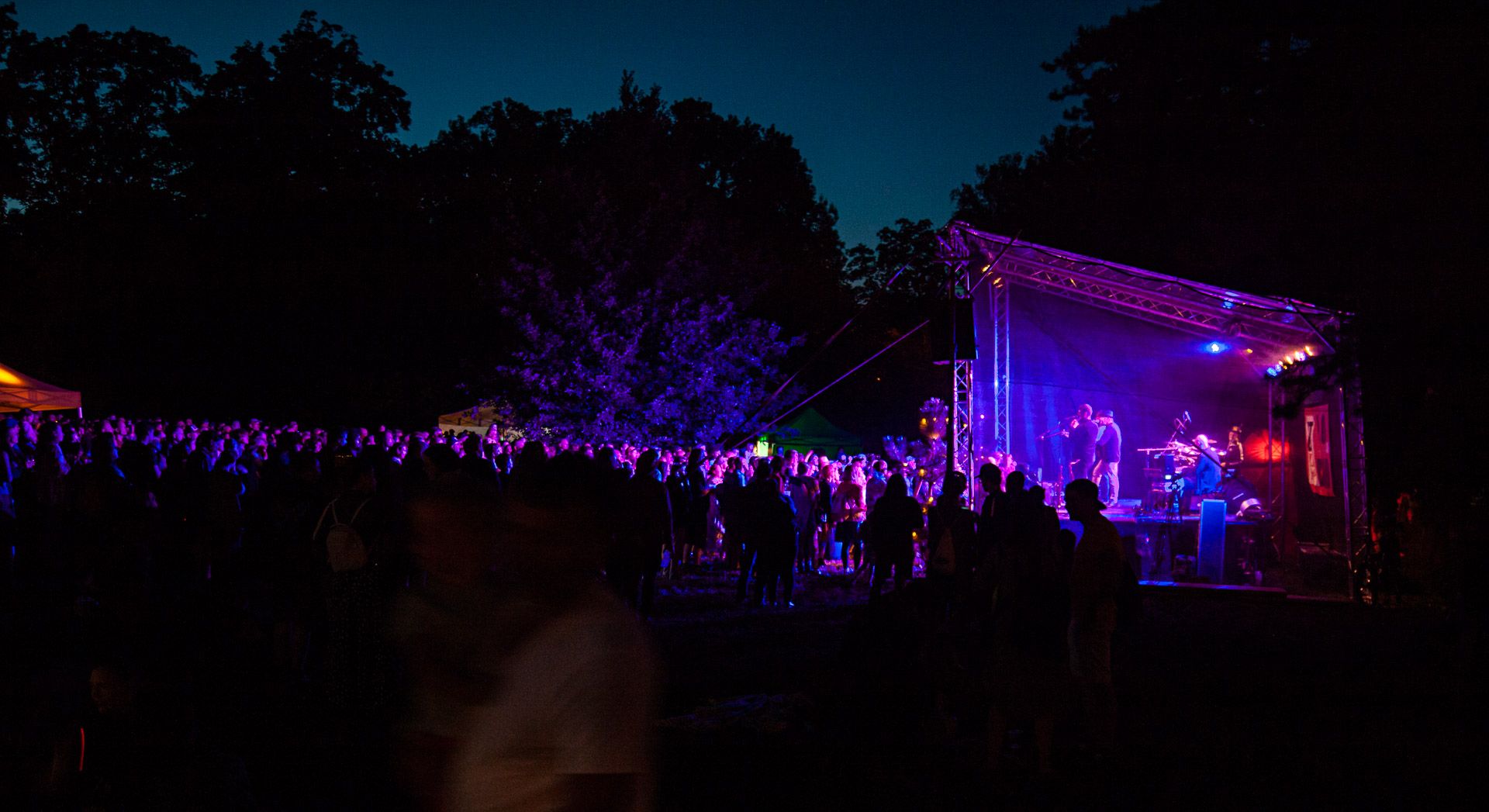
There’s probably no point in listing every highlight here – better to check ponavafest.cz, if you’ll forgive the little bit of self-promotion. Personally, I’m most excited about the outstanding New York jazz guitarist Mary Halvorson and the Greek singer Savina Yannatou – stars fallen to earth, once again! This year also feels like something of a festival of beautiful women, looking at the vocalist of psychedelic-dreamy Den Der Hale and the bassist of the French “house painters” Putan Club. Local legend Dunaj with Jana Vébrová won’t hurt the party either! That this year’s experiences will be stellar is hinted at by the festival’s theme: Park Side of The Moon.
I hardly even look at the program anymore, or only very briefly, because I know the festival curators Honza Bartoň and Radim Hanousek always put together a vivid, lively blend – a great party on one hand, and cultivated craftsmanship and depth on the other. All of this, of course, primarily for listeners – I’m almost afraid to say “a generation” – who still appreciate authentic live musicians from the independent scene playing their instruments superbly, even virtuosically. For me, there’s no better music festival in this country.
It turned out that the electronic music audience, which I personally can enjoy unlike some colleagues, was too far removed from the rest of the festival, so this year we replaced it with an animated film program in partnership with FAMU (Film and TV School of the Academy of Performing Arts in Prague), and the theater program was taken under the wing of the Brno Independent Theatres. I’m very happy about both partnerships, because students of creative disciplines and small theaters are a guaranteed source of programming that hasn’t yet been warped by business thinking and reverse engineering, oriented toward genuine beauty and depth. As usual, there’ll also be performers and poets, workshops and meditations… Surůvka, Gazdagová, Havlík, Olivová, David Helán, Jakub Orel, Postovit, Sedmidubská, Horský, and a bunch of other brilliant mavericks.
Last year you introduced mandatory admission to PonavaFest for the first time. What changed?
We’d always had admission at the festival, but last year we started presenting it as mandatory. Fewer people came (partly because of bad weather), but on the other hand, the ones who came are those who are genuinely interested and who see our program as something of value. In other words, people who only came because it was free stopped coming.
The total amount of admission revenue barely changed compared to previous years – only the overall atmosphere lost some of its openness. That’s also why we’ve made the fencing purely symbolic this year, so the space continues to breathe with the openness of previous editions.
We knew it would be an unpopular move and that it would annoy some people. But mandatory admission was presented to us as a condition for receiving meaningful grants from the Czech Ministry of Culture, so I tried to find the healthy core of this idea, which for me sounds like this: culture is a value, and people should learn to pay for it. In other words, the intangible nature of cultural goods should not be a reason to underestimate their importance for life. The musician Ivan Palacký put it during a Covid-era interview for Ponava.Radio: “Music is something like air to me.”
The program features Japanese noise, Italian brass-metal, Ivan Mládek, and Moravian folk. How does this lineup come together?
It emerges from discussions among the curators as our consensus. We’re drawn to the authentic, the witty, the clever, the juicy, the spirited, the joyful, the flowing, the dancing, the precise, the genuine, the crafted, the revelatory, the transcendent, the spontaneous, the bizarre, the polished and the mischievous, the quiet and the wild, the brilliant and the simply good. Kafka, and before him Krishna (though Franz had no idea), and surely many others have said that a good person walks their own path. Our festival is for such people. That’s the kind of art we want, and the kind of food and drink: authentic, unmanufactured, not created by market analysis but by recording reality.
What’s the ratio between local and international acts – and why this particular balance?
Blending local roots with international ones is essential: first, pragmatically, to get people to come – because few attend shows by bands they’ve never heard of, and non-commercial international music seems increasingly hidden from our little pond; and second, on the principle of cuvée, where diversity of origins and traditions creates diversity of shapes, colors, and aromas, unified in what is universal form and varied in what is the color of origin and tradition.
For me, it’s a bit of a celebration of the universal language of music and the principle of crossing borders of all kinds – borders that are ultimately always borders of habit and history, perhaps borders of power, but not of the spirit, which resides above them.
But these are just my ideas. The real blendmaster isn’t me – it’s the festival’s curators, who fulfill their own dreams and those of other listeners by inviting international and local acts they can afford, assembling a program that’s both revelatory and appealing.
Looking back over those nearly thirty years – would you do it the same way?
I’ve made plenty of bad decisions, and they were necessary for me to learn and discover the truth. So the bad decisions were actually good ones.
As a quixotic lord of beautiful plans and a professional warrior against windmills, I’m perhaps a tragicomic figure, but I probably couldn’t have become anything else. Sometimes I agonize over a life spent in constant battle for fragile principles with too few acknowledged merits and rewards. But what I did, I did out of love, and so I think it was right – and I refuse to let that regret or the tallying of accounts eat me alive. Just step by step onward, “in pursuit of beauty, toward love,” as Robert Nebřenský sings, and “in pursuit of love, toward music,” as Frank Zappa might add – and to take joy in every scrap of light that my days bring.
After all, when death was near, it was precisely my projects that were the reason I came back to life – because a life without real action and without love has no meaning for me.
What would you say to a young person thinking about making a living in culture today?
I don’t really feel qualified to give anyone advice, but when I see someone getting into culture today, I tell them: DON’T DO IT, IT’S A TRAP! Financially, it obviously doesn’t pay, and things will probably only get worse in the coming years. This may not be true for state-sponsored and politically engaged culture – the kind that’s harnessed, serving to entrench power.
But I’m afraid the required degree of selling out will only increase along with the regime’s authoritarianism and the decline of untamed energy in the system, and with war.
I’d advise looking for beauty in everyday life instead, and in your own inner self and in other living beings.
Thank you for the interview, and all the best to you!