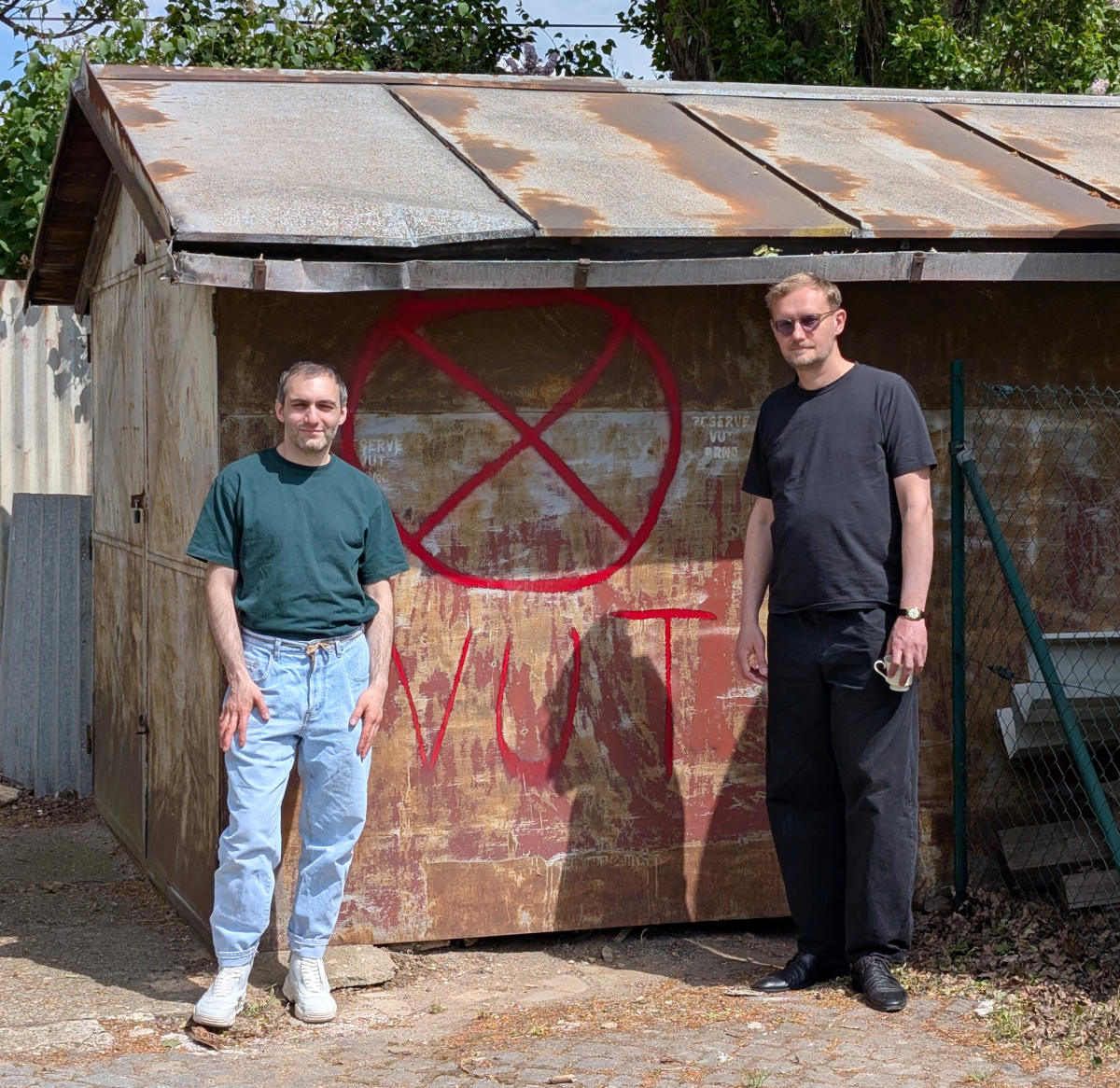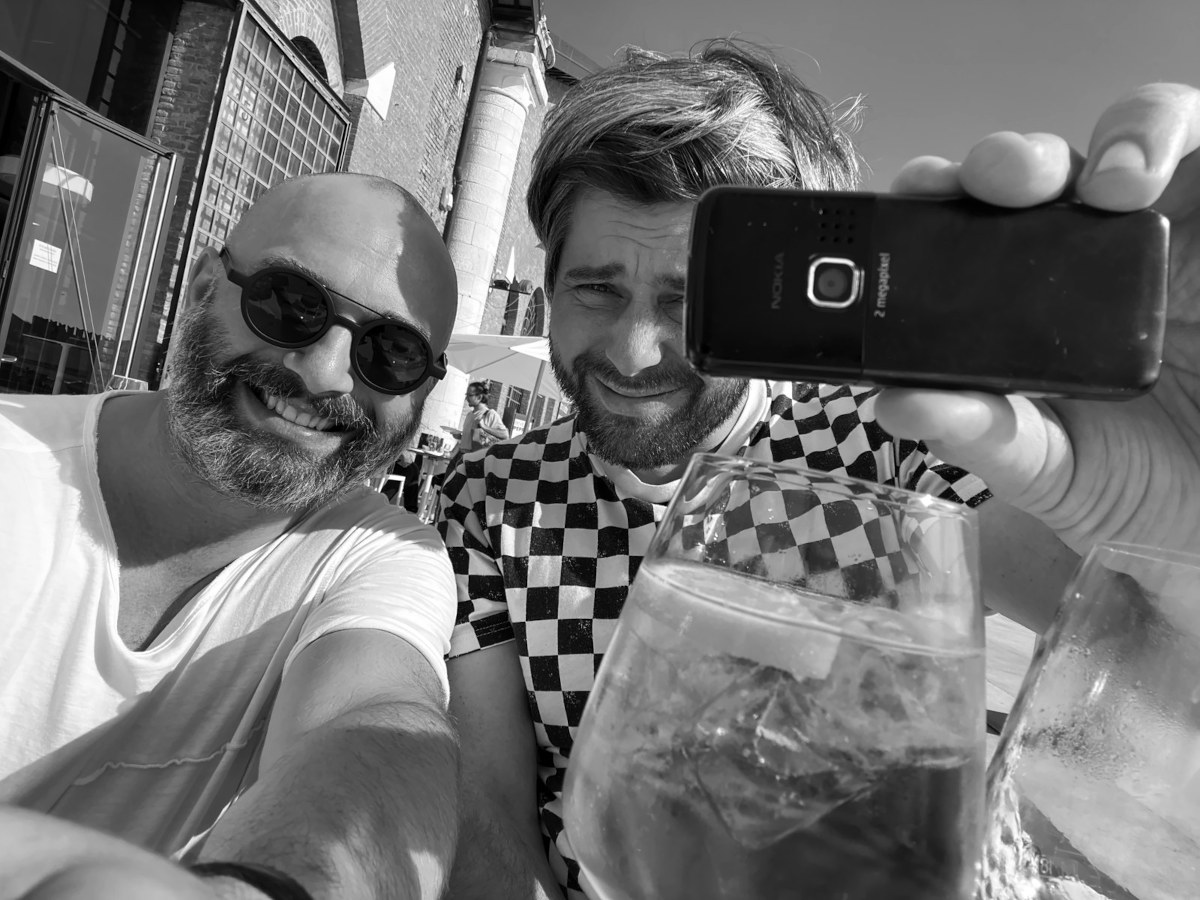
The ArtGraduates Academic Survey this time takes us to the Faculty of Fine Arts at Brno University of Technology, into Painting Studio 1. In this standardised interview with its heads we also touch on dual cultural identity, the differences between painting schools, and the question of what success in art actually means – and whether it even needs to be built.
How many applicants did you have to your studio last time, and how many of them did you take?
Argišt and Vasil: About thirty applicants apply every year. This year we selected and admitted three students.
How did you come to teaching? Was it a conscious decision alongside your own artistic practice, or did it come gradually?
Argišt: While studying at AVU (the Academy of Fine Arts in Prague) I earned extra money teaching at a private school, and I went on gladly doing this at various educational institutions. I probably get my close affinity for teaching from my grandmother, who served as the principal of a primary school in Armenia.
Vasil: It was similar for me. It probably also has something to do with my inclination toward supra-individual practice. Even as a doctoral student at AVU I was working there as an assistant to a visiting teacher, and after my studies I taught at several secondary art schools.
Could you briefly describe the admission process into your studio? And once students are admitted, to what extent do they take part in running the studio – do they have a say in the curriculum, in the choice of visiting lecturers, or in the overall atmosphere?
Argišt and Vasil: The first round takes place online and consists of assessing the applicants' portfolios and motivation letters. The second round has two parts – the first again online, the second in person. Each contains two assignments. The in-person part also includes interviews.
We are open to all kinds of proposals and ideas from students, both in choosing guests and in how the studio is run. They often initiate partial changes to the programme and to studio practice. The studio is made up of its students, and they are what matters most. When selecting new students, we also have to consider how they can complement, broaden and enrich the studio's overall makeup.
What single quality or criterion do you personally consider most important when selecting applicants?
Argišt and Vasil: It really can't be reduced to one quality or criterion. It's usually a combination of various factors that complement each other. What matters is the applicant's own motivation, enthusiasm, self-reflection, openness and, not least, a certain level of painting skill.
Roughly what percentage of your applicants are notably older students? And what share are foreigners?
Argišt and Vasil: At the moment, around 5% are older students and 25% are citizens of other countries, including Slovakia. This shifts depending on circumstances, and in admissions it is not a factor that plays any role.
Could you name a few of your graduates who have achieved notable success on the contemporary art scene?
Argišt and Vasil: That is always rather a tricky question. To name successful graduates presupposes defining the criteria of success. And it inversely creates a space of the unsuccessful. And if we name the talented and the unsuccessful, are we then mapping out the unsuccessful and the untalented? If we measure success by the frequency of recent exhibitions and media coverage, or by success in academia, then among the graduates of Painting Studio 1 we can name, in alphabetical order: Yulia Bokhan, Štěpán Brož, Dominika Dobiášová, Marie Lukáčová, Vojtěch Luksch, Kateřina Rafaelová, Marie Štindlová, Aleš Zapletal and others.
Are there exceptionally talented artists among your graduates who, in your view, deserved greater recognition but for some reason didn't receive it? What do you think stood in their way?
Vasil: Kristýna Fuksová, Ján Arendárik, Dita Klicnarová, Monika Kojetská, Ondřej Horák, Drahomíra Maloušková, Jiří Topinka, Zuzana Martiníková, Gabriela Váňová, Anna Sypěnová, Dominik Forman, Jolana Korbičková, Jana Švecová, Marianna Brinzová, Přemysl Procházka, Kamila Maliňáková, Kristýna Hejlová, Lenka Štěpánková, Veronika Kubátová, Marek Tischler, Zuzana Rišiaňová, Marie Fiedlerová, Kristýna Kyselá, Šárka (Pelikánová) Janeba, Anna (Straková) Fiedlerová, Lucia Janechová, Barbora Bažantová, Martin Gračka, Katarína Maceňková, Jakub Dvořák, Tomáš Kučera, Glorie Grünwaldová, Barbora (Rybníčková) Sapáková, Helena Ticháčková, Kateřina Kábová. It's possible I've forgotten someone. These are only graduates; I'm not mentioning students who passed through the studio but moved on elsewhere during their studies.
I think they are all talented, without exception. The more one focuses on what success means, the clearer it becomes how non-obvious and slippery the concept is. Over the past year I've been to several exhibitions where work by at least eight people from these “under-appreciated talents” was on view. Some of them are fresh out of school, so we can assume that an art career still lies ahead of them. It's of course difficult to gain a foothold on the art scene because the art market in the Czech Republic is relatively modest. Over time, art often becomes a kind of side activity – something one does gladly but without earning enough from it to live on.
Some graduates have started to make their way in other fields (sometimes more, sometimes less related). For example, teaching is common, as is the broader field of culture. Or, as far as I know: gastronomy, insurance, sex work, production work, new circus, tattooing, journalism, illustration, police work, sign-painting, game design, bookbinding, creative writing, curating, music, psychotherapy and the like. And from inside our art bubble we often can't even tell whether or how successful those graduates are in those other fields.
Do you track how your graduates fare professionally in the years after they finish their studies – for instance, how many of them remain active as professional artists? Does your institution collect any data on graduate outcomes?
Argišt and Vasil: We partly answered this in the previous question. Otherwise, the FaVU website states that the faculty currently has 869 graduates of master's programmes, 50 of doctoral programmes, and over 875 graduates of bachelor's programmes, of whom more than 575 went on to consecutive master's studies. The faculty also runs an alumni programme and, after graduation, offers a range of opportunities for continued collaboration and support – for example, post-master's and post-doctoral programmes, or subsidised studio spaces.
Does your programme include any teaching focused on digital literacy for artists – building an online portfolio, working with social media, self-presentation? Which online platforms do your students most often use to present their work?
Argišt and Vasil: We still have gaps here that we are planning to address more thoroughly. We currently consider it important to present artistic activity in digital space at the highest professional level. Of course, Instagram is the most widely used right now, which is problematic in many respects, but that's a longer discussion.
Does your studio actively collaborate with galleries, museums or other art institutions so that students gain exposure to the real-world art system while still studying?
Argišt and Vasil: Every year we have one or sometimes more exhibitions with strong student participation. We collaborate with exhibition venues across the whole of the Czech Republic. We consider it important that students take part in selecting works and installing exhibitions, as this is an essential part of artistic practice and of contextualising one's work.
In art education there is ongoing discussion about the power dynamics between teachers and students. What mechanisms exist at your institution to prevent abuse of position, and do you consider them sufficient?
Argišt and Vasil: As studio heads, it is essential to us to act toward our students with the greatest possible empathy and to create a welcoming environment. We try to regularly track and take on board the students' feedback. And of course the faculty also has the position of an ombudsperson.
Both heads of Painting Studio 1 were born outside Czechia – Vasil in Russia, Argišt in Armenia – and both have lived here since childhood. How does this experience of dual cultural identity influence the atmosphere of the studio? Do foreign students bring something specific to it?
Argišt: Both of my parents are originally from Armenia, but from the age of two I lived in Czechia. The dual consciousness – Armenian and Czech – creates a cultural fluidity in me, and at the same time brings an inner tension tied to assimilation. Perhaps this experience can bring a greater measure of empathy into the studio toward students' various cultural backgrounds, but I wouldn't overstate it. Foreign students in the studio can unmistakably broaden the ways everyone there thinks and sees – and this is even more true for them.
Vasil: For me, the biggest bonus of this demanding experience is perhaps the ability to look at culture, in the broader sense of the word, from a certain distance. Otherwise I'd second Argišt's answer.
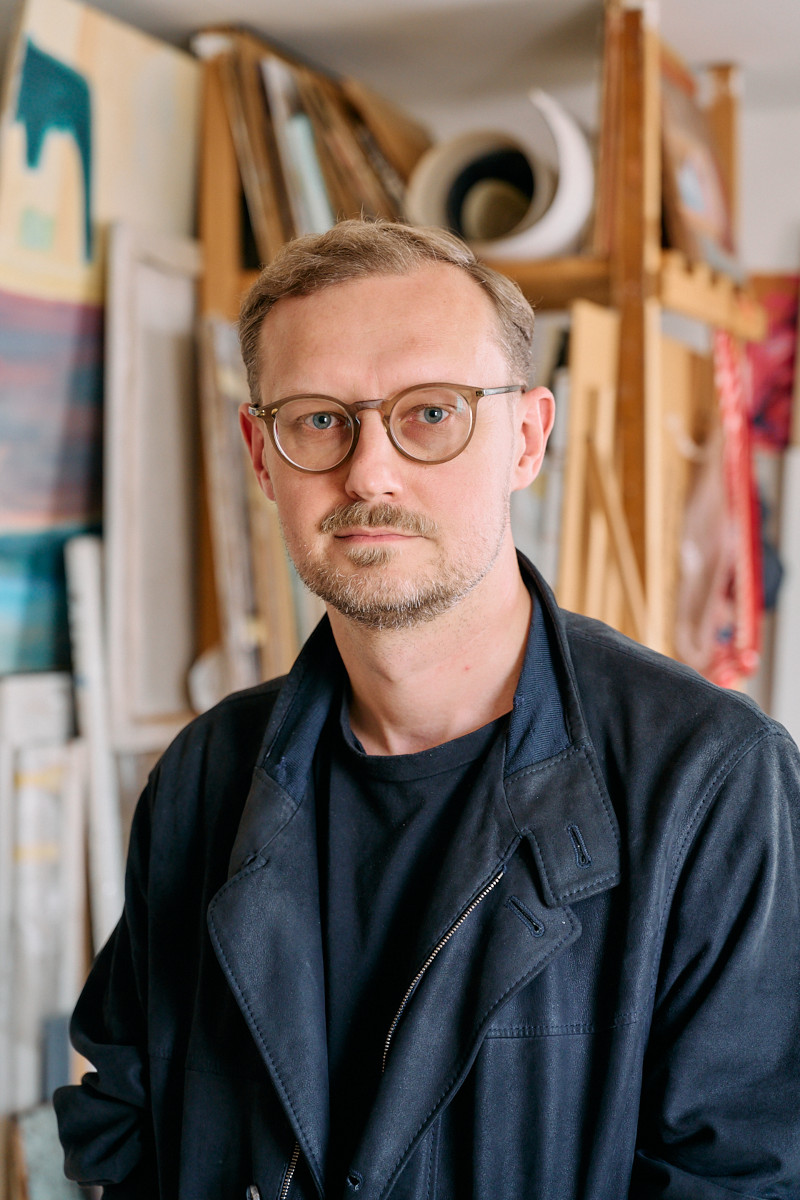
Vasil studied at UMPRUM under Jiří David, Argišt at AVU under Skrepl and Beran. What differences from those two schools do you each bring to leading one studio together?
Vasil: I began my university studies in the painting studio of Pavel Nešleha at UMPRUM (the Academy of Arts, Architecture and Design in Prague), continued with Stanislav Diviš, did an exchange under Vladimír Skrepl at AVU, graduated under Jiří David at UMPRUM, and then continued at AVU with Jiří Příhoda. It's a combination of various influences, and honestly, rather than the difference between two distinct schools, I see different pedagogical approaches in each of those individual figures. Looking back, I tried to take some of their pedagogical methods on board and to push back against others.
Argišt: My studies began at AVU under Zdeněk Beran; after my first year the studio was taken over by Martin Mainer. In my fifth year I spent two full semesters on exchange with Vladimír Skrepl, and I did my diploma in the original studio. But I never wanted to mentally lock myself into any specific studio, and during my studies I consulted with many other teachers. I wanted to approach my studies as a student of AVU, not as a student of a specific studio.
Finally – what advice would you give to young artists at the start of their journey? What does it take to keep going and to build a sustainable career in contemporary art?
Argišt: I had to think about this for a long time, but in the end it seems to me that the key word might be openness. That also includes flexibility – the readiness to make fundamental changes in your artistic activity. Not every artistic strategy is the most successful choice at any given moment, and in a particular context it may not resonate. But that doesn't mean giving in to short-term trends, nor closing oneself off from them entirely – it means simply staying open and listening to oneself and to every possible artistic approach, and then drawing on all of it in whatever way comes most naturally to us.
Vasil: I feel that what matters is not to be too attached to fixed ideas and schemes of what artistic activity is supposed to look like. And for me, there's no shame in not building any career in art at all. A strained effort to break through can even be counterproductive. Just calmly work on your own things and let other people know about them now and then.
Thank you for the interview!