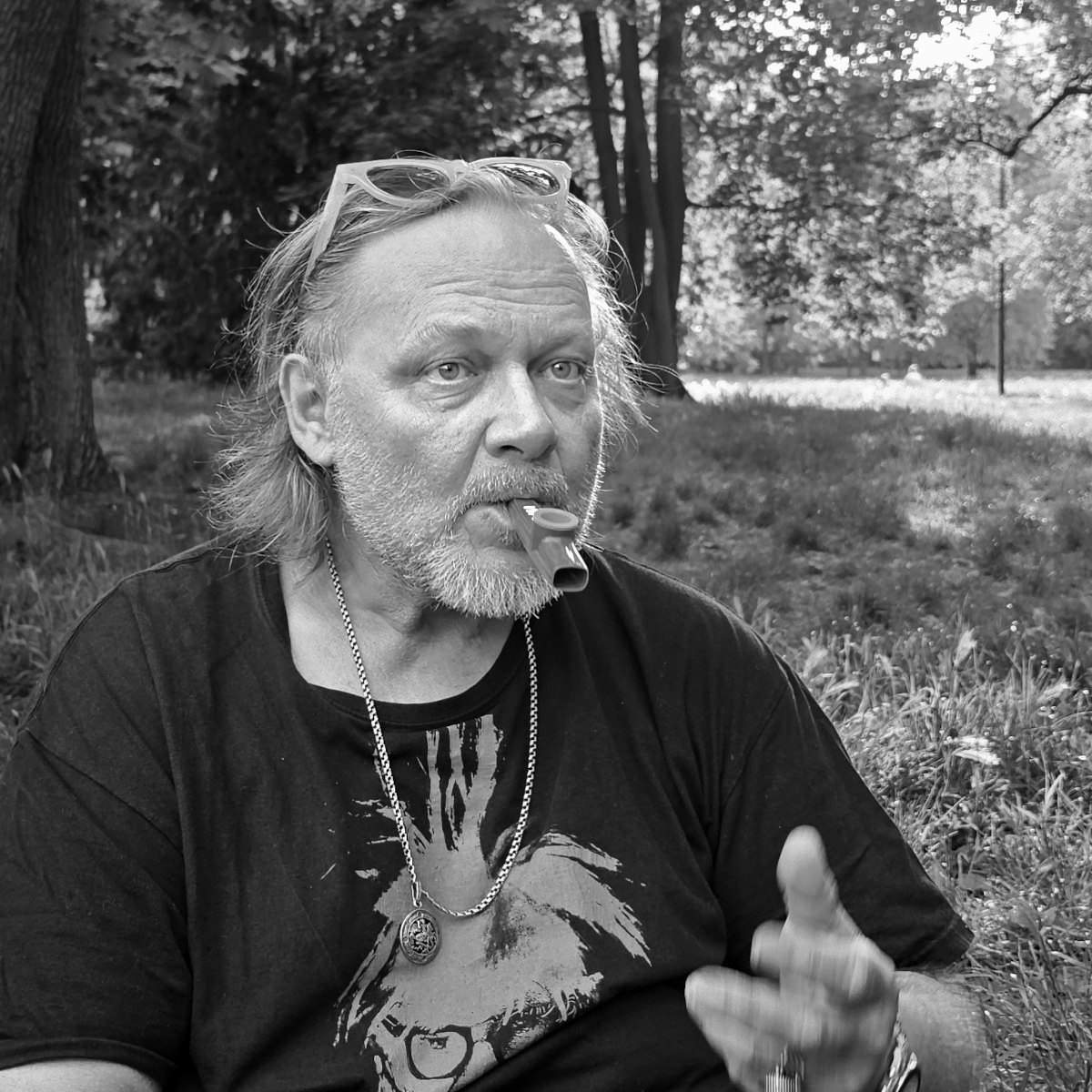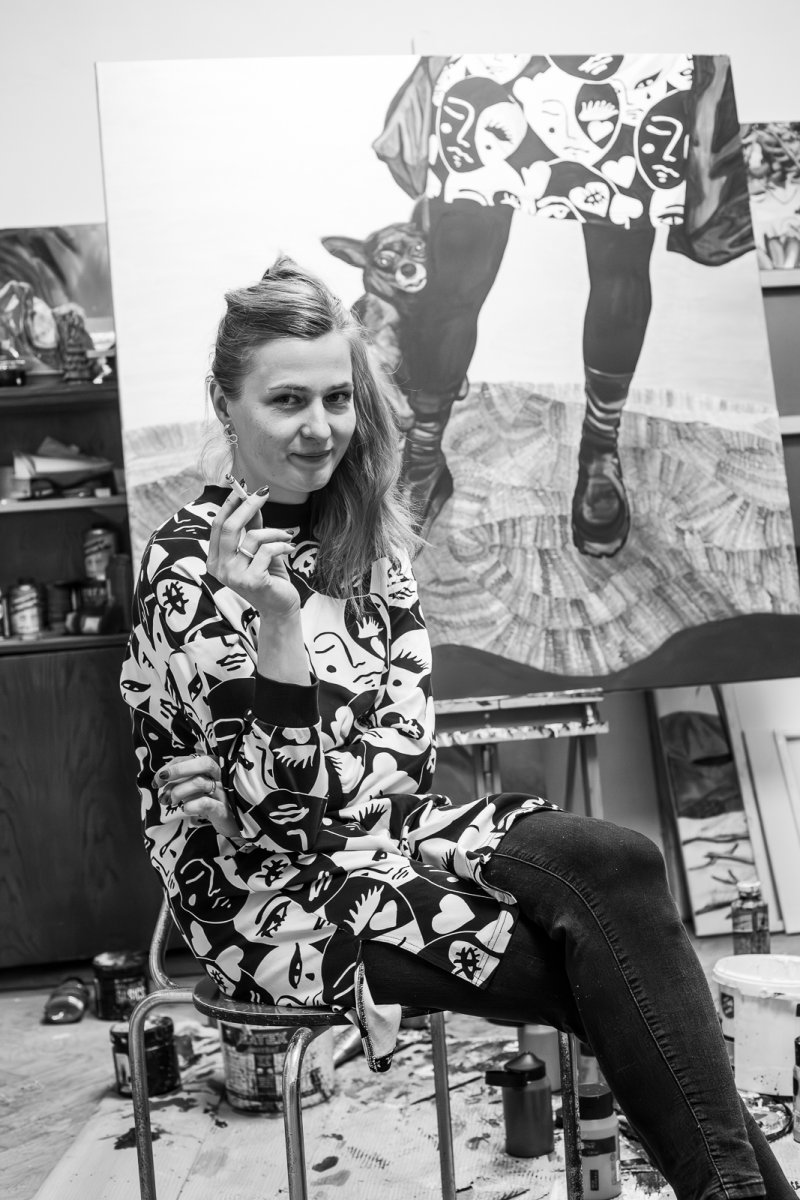
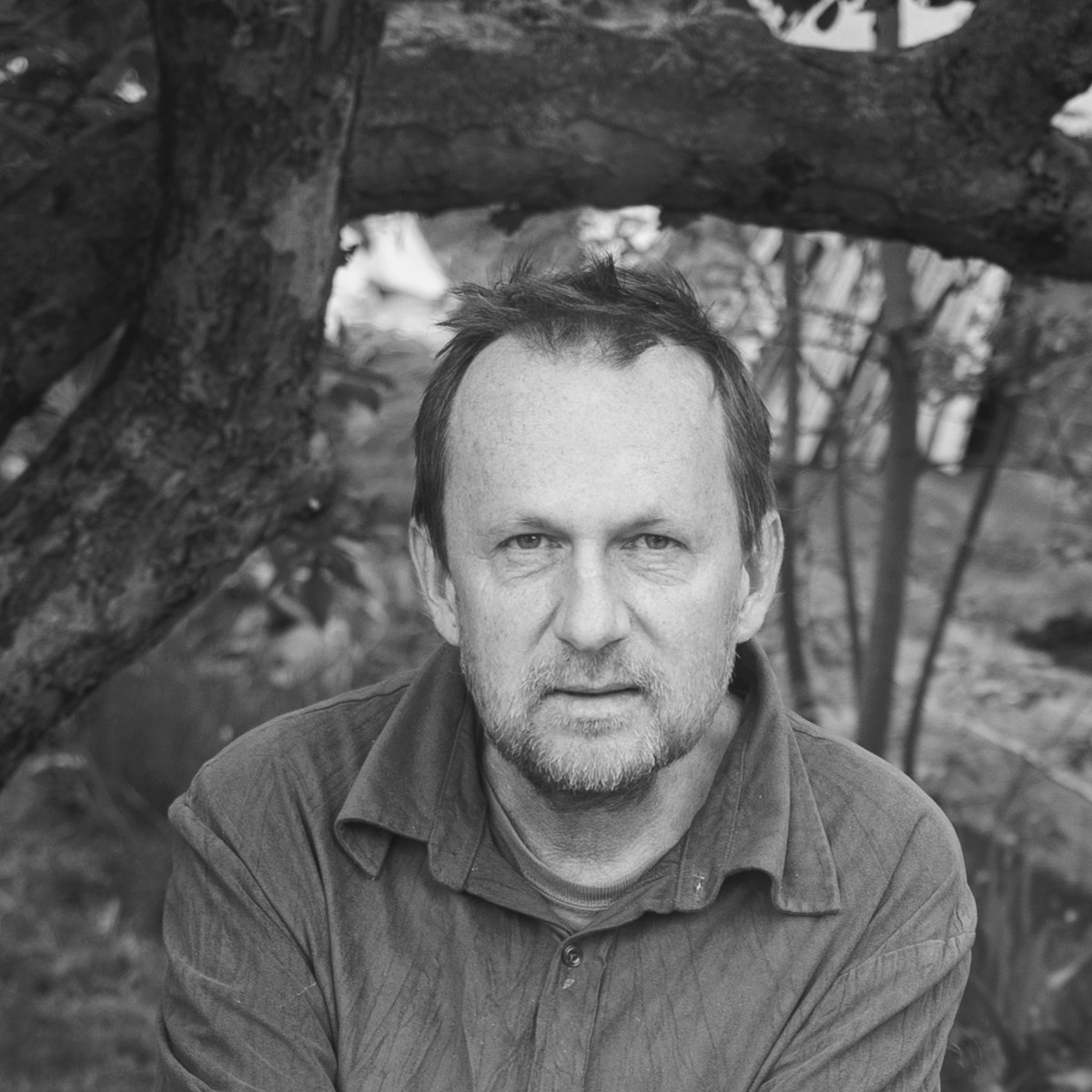
Pavel Preisner doesn’t live online, doesn’t promote himself, and doesn’t chase exhibitions. A friend signed him up to the ArtGraduates directory – he would never have done it himself. In the interview that follows, he shares his credos. Although we are on first-name terms in everyday life, we returned to formal address for the purposes of this interview.
You have become the 100th, jubilee artist in the ArtGraduates directory – but you didn’t sign yourself up. A friend did it for you, the same one who also runs your Instagram. What makes you hand this whole side of an artist’s working life to someone else? And how do you actually feel about being online?
I’m computer-illiterate. I only know the simplest operations: email, payments, and looking at pictures. And YouTube – I live alone, so music, to keep myself from completely losing my mind... I’m essentially old-fashioned. I’m an idealist and a utopian (with a pinch of pacifist aggression – I can only put it as a paradox). The same goes for my writing for the magazines Prostor Zlín, Protimluv, and for catalogues... I try to write about visual artists who exist and whom no one knows about.
And the reproach – the aggression – is aimed at curators who aren’t sensitive enough, at their caution and laziness. What ends up happening is that people who live in the shadows finally get written about by Revolver Revue x years later. They get their own section in the magazine and step briefly into the light. That, I think, is a little late. Nothing against RR – I’m rooting for them.
It makes sense, then, that you found someone for that. What other ways do you try to get your work to viewers? What has worked best for you?
Most often, a painting of mine hanging at the home of someone close to me or an acquaintance gets seen by someone in their circle, and that person starts taking an interest. They come to the storage space and usually buy something. It has also happened to me repeatedly at exhibitions that someone bought something. But now, with the kind help of my friend Jiří R., I’m trying to put things on Instagram. No one looks at my website unless they’re prompted to.
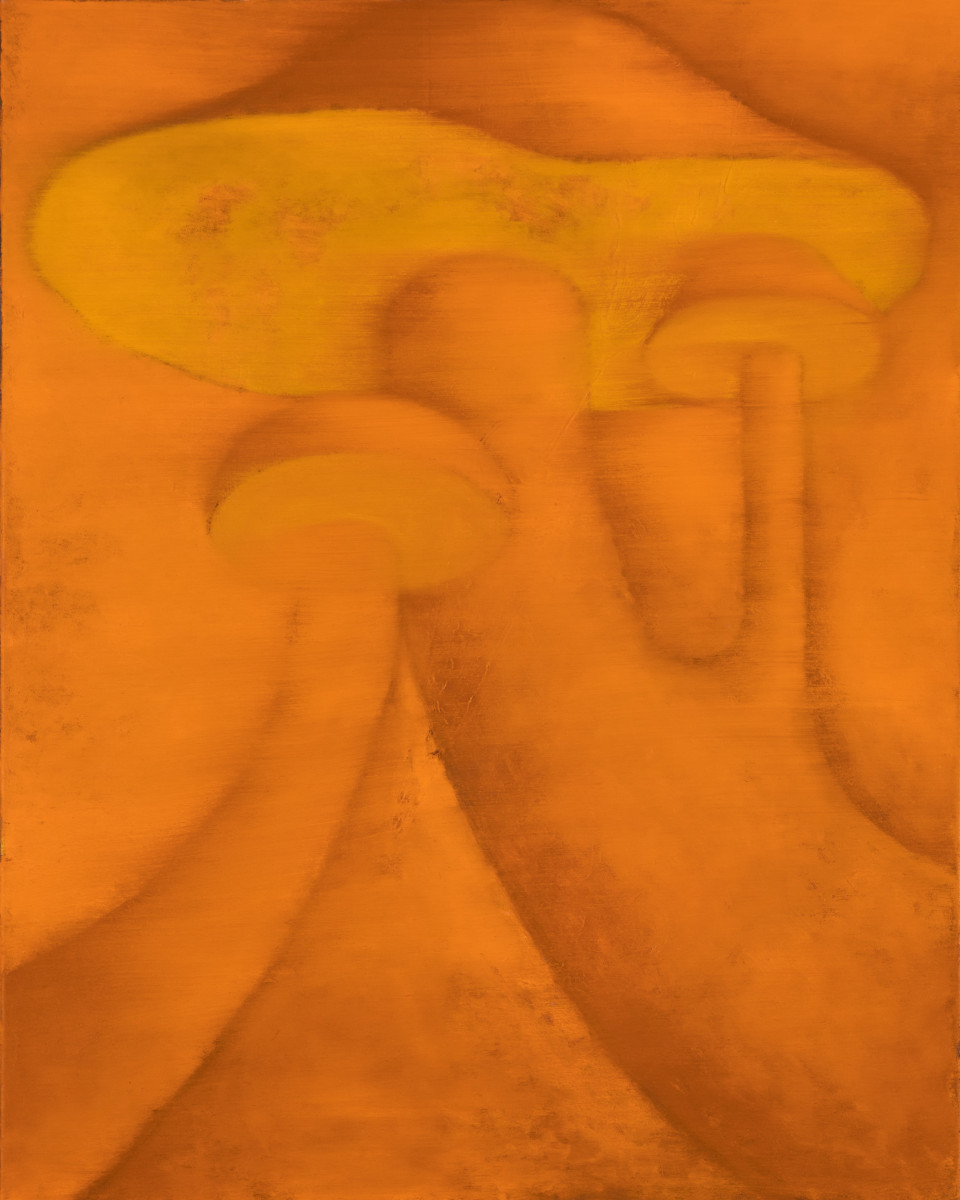
Sales through personal connections, a painting on a friend’s wall that catches the next visitor’s eye – that is, in fact, the oldest and most authentic form of spreading art. On the web, without targeted work, no one really finds you on their own. But what about exhibitions? How do you actually come by exhibition opportunities?
Well, so far the offers have always come to me...
You said that selling art comes down to luck – that the right person has to notice you. Is there a way to put yourself in luck’s path? Can you recall a moment when it played out like that?
Luck does the rounds. How to meet it halfway, I really don’t know. The most important thing is probably just to practise daily and not to try too hard... Doggedly chasing exhibitions somewhere... I just can’t do that.
You taught at the Zlín Private Higher Vocational School of Art for more than twenty-five years – which means whole generations of young artists have passed through your hands. What does teaching give you as a painter? And have the students changed over that time – do they approach art, craft and the reasons for making it differently today? What is the most important thing for you to pass on to them?
First I had to learn how to teach. Then for a while the “teacher”/student relationship was mutual. Back and forth. Today they’re no longer students but pupils – mentally and in terms of commitment, more like middle-school kids. A poet (or a painter) either burns or rots, and right now few of them are burning. It used to be inspiring for me...
When there is something to look at in the critique sessions, I gain visual information I would never have arrived at on my own, and it also forces me to put an evaluation into words, an analysis that surprises even me. And because I’m a neo-Taoist, I rely on insight. Which, after all these years, I do have, at least to a minimal degree. I hope. The “pupils” aren’t to blame for being the way I described above – they have a different, sadly weaker, foundation.
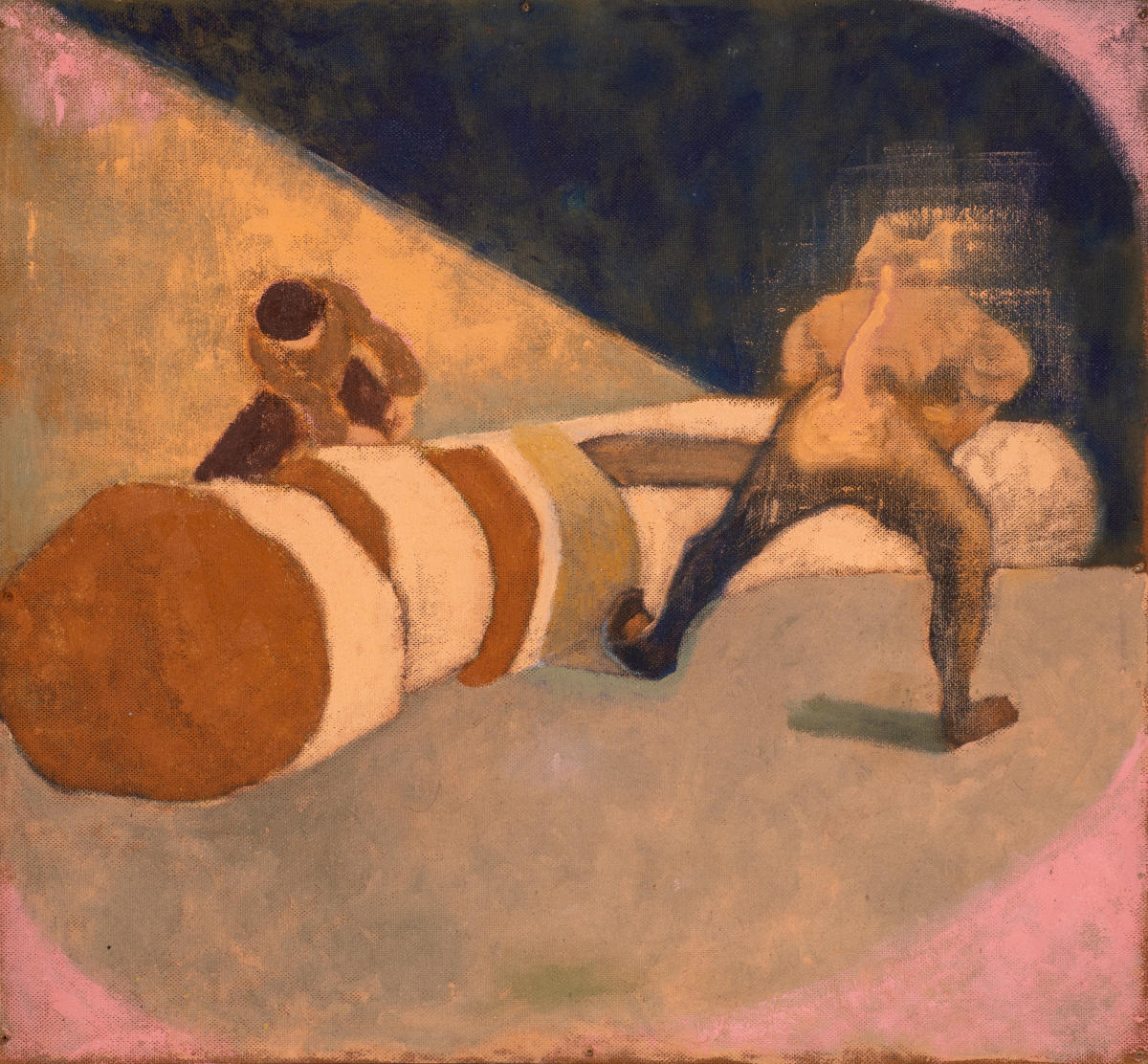
You illustrated your first poetry collection Ulomili yourself, and you named the exhibition “Beauty will be strange or it will not be at all” after a text you wrote specifically for the paintings. Where in you does the painter end and the poet begin – or does that boundary not exist?
The title Beauty will be strange or it will not be at all is a paraphrase of Breton’s line “Beauty will be convulsive...” That boundary doesn’t exist for me – more than that, for me it is an equation. Poetry made of words is equal to poetry made of patches, dots and lines – that is, painting.
My friend the poet Pavel Rajchman and I agree on this: a poet doesn’t even have to write – it is enough to live as a poet. Rimbaud already showed us that. Though it is, of course, a huge commitment.
In your texts and paintings, especially recently, there is a clearly visible strong pull toward the spiritual. How would you define yourself – who are you?
More and more I feel like an autistic person. Warped by my profession... But painting is my life. That’s who I am.
On the spiritual side: I’m a baptised Catholic, but for the last twenty years I’ve been drawn to Taoism and Zen. I’m a Christian neo-Taoist. The Gospels and the Tao Te Ching have a great deal in common. Even with the mental hygiene of Taoism and Zen, I’m tormented by very strong anxieties. I have a partial disability pension; those anxieties have driven me all the way to social phobia (and that’s in spite of the fact that I love people).
But above all I’m a father; I have two wonderful daughters. They live with their mother, but they come to stay with me on weekends. We love each other.
What therapeutic role does your work play with regard to those mental difficulties you mentioned?
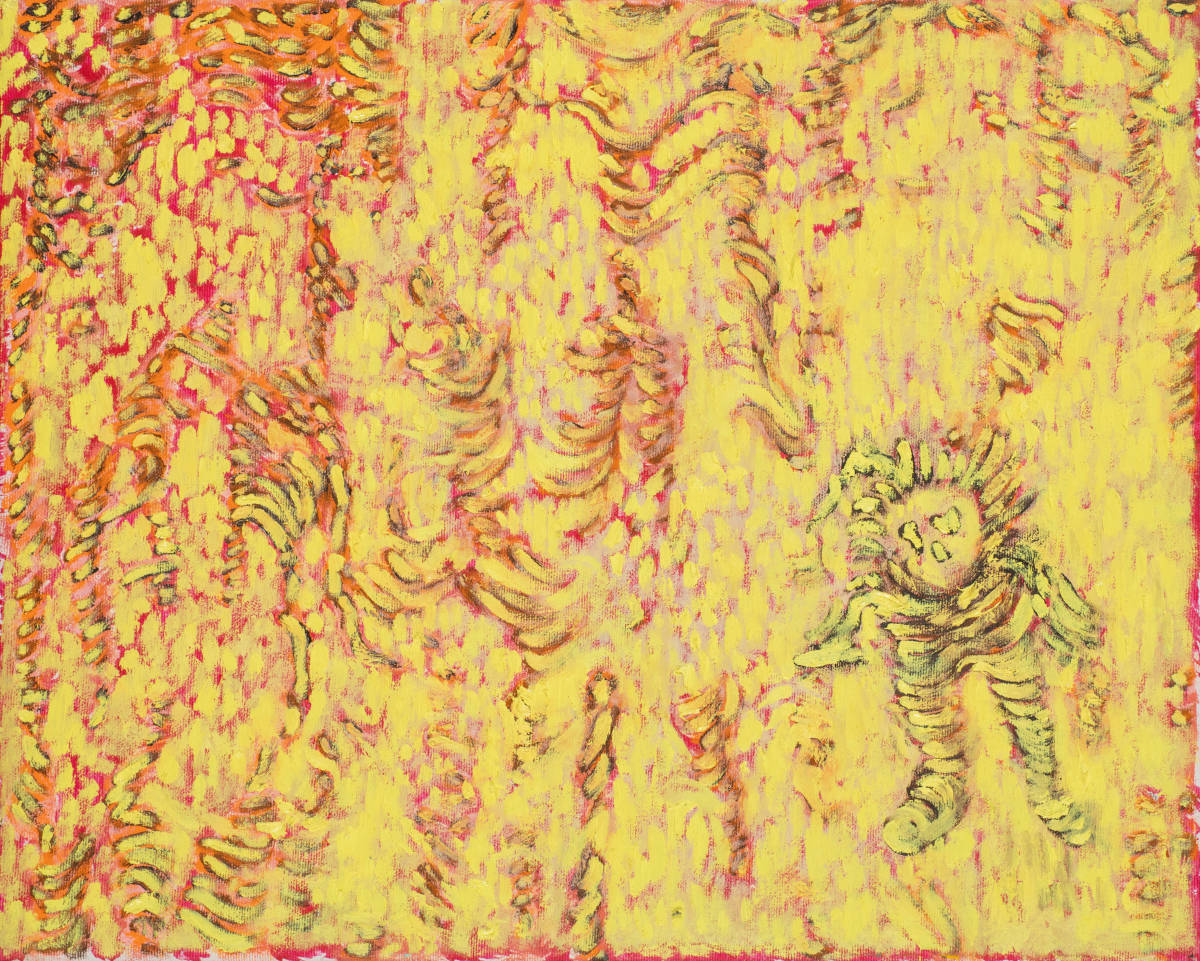
I never had ambitions to win recognition. From the start I just wanted to create, and once I realised I could do whatever I wanted with my work, I gained inner freedom. Not a great deal of it yet, but I felt free. And now the most important thing: in 2003, when I was first at the Psychiatric Hospital in Kroměříž, in the alcohol treatment ward, I felt I could start over. There, in “occupational therapy,” we could do practically anything. I started painting again, with great appetite (in the three years before that I had done almost nothing). With alcohol, my situation is that 90% of the time I’m “clean.” From time to time I have a relapse, and it always ends in the ICU. Disgusting. Soon after I was discharged from the alcohol treatment ward, anxieties surfaced that have kept growing stronger up to this day, when I feel bad most of the time. I see a psychiatrist; I take psychiatric medication and Antabuse. But that isn’t enough. Daily work at the easel is my therapy. The process itself. The result matters to me only after that. When I stand at the easel and work the brush, I am truly, once again, free. A bit dramatic, isn’t it? But the states that torment me are indescribable...
Beyond your career as a poet and painter, you are also an art theorist. How do you approach writing about visual art – what is it important for you to convey, to describe, and what do you make a point of avoiding?
The word “theorist” is too strong in my case. I just write. And I enjoy it. This year it has been 26 years since I wrote my first piece for Prostor Zlín. There is a heap of those texts, and Jiří Riessler and I are preparing a book edition with Malvern Publishers.
I often opened exhibitions, but I used to scribble those opening speeches on scraps of paper, and the vast majority of them are lost. I hope this won’t sound pompous, but I see those texts as a kind of service. I say that because painting itself is a selfish business.
I never write about what I don’t like; I don’t criticise. My former boss used to tease me that I like everything. He’s basically right – I value everyone who actually makes something. With the exception of Kristián Kodet and his kind. What matters to me in this context is Joseph Beuys’s equation: “Capital equals creativity.”
From your answers, I sense your wide-ranging interest in the work of past movements – Surrealism, Tao... How do you see older artistic currents of thought in your own work, and how do you see them in our times more generally?
Dada, Surrealism, and Vysoká hra (the Czech 1930s avant-garde literary group connected to the French Le Grand Jeu) are still current for me. There is still plenty to push back against. Yes, even today we are in that kind of awakening the poet Miloslav Topinka writes about. And when we can, we have to work on our own work. For ourselves. And when it speaks to someone else as well, that is a small victory – a contribution to something so badly needed; I’m almost shy to say it, but here goes: spiritualisation. It doesn’t have to be religious art.
And to circle back to the beginning, the Cubism of Braque and Picasso from 1907 to 1914 is still a great mystery to me. That whole principle of theirs, their laboratory, their non-perspectival way of seeing. And today every art school still teaches according to the Renaissance model... And above it all, for me, hovers Josef Šíma.
Let’s do a little fortune-telling. You’ve been a teacher, you write about artists, you engage with art history. What kind of future should we be “looking forward to”? What worries you, what are you curious about?
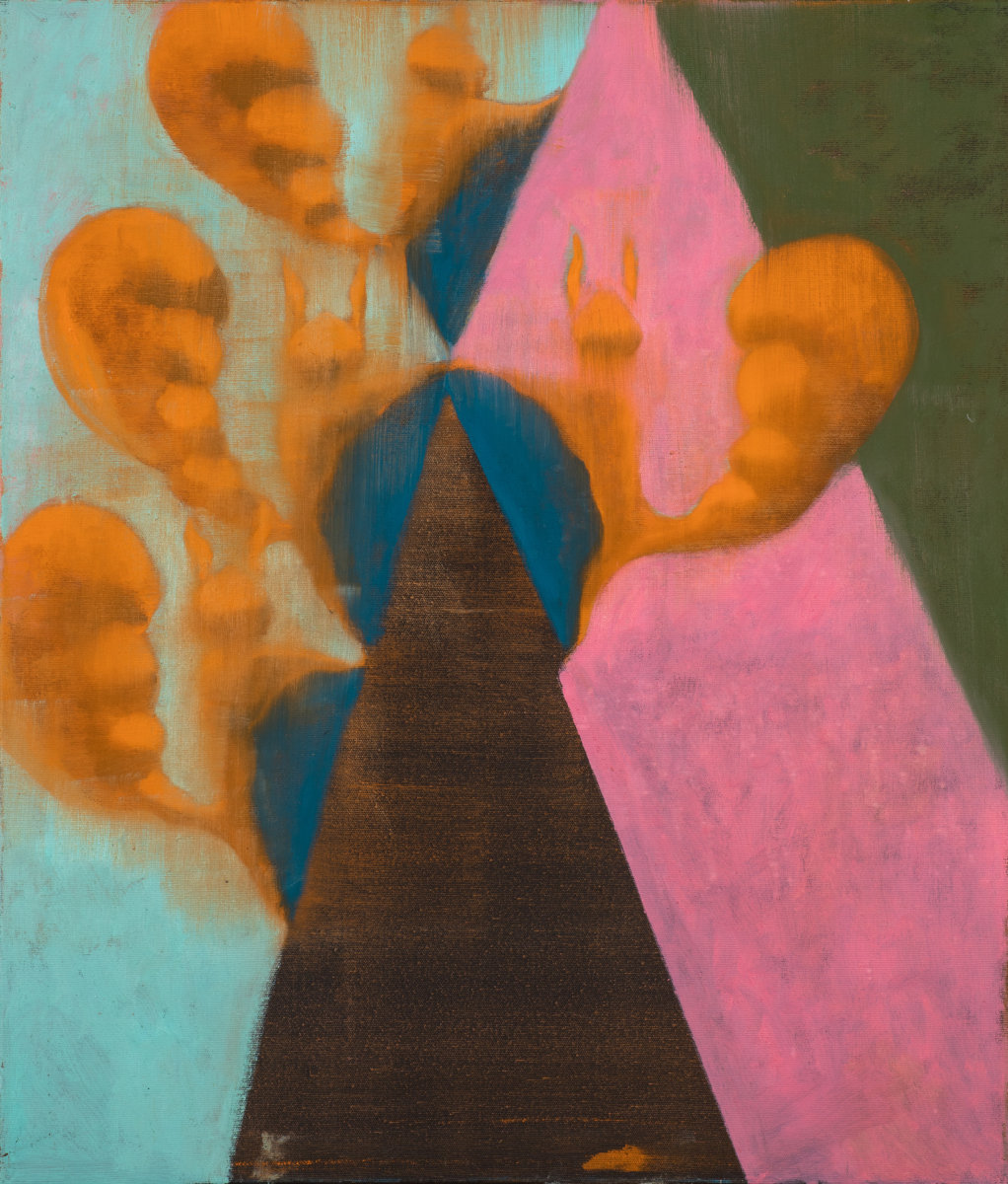
What truly terrifies me is artificial intelligence. Very dangerous! But I do believe that most people with at least some sensitivity will go on wanting a painted picture, a sculpture carved or modelled and cast in its final material, a matrix made mechanically or chemically and then printed – the print. I also like installation when it is strong, and performance when it is strong and performed by a charismatic being.
Just as today, the future will see these media reflecting the time and the world we live in – but perhaps also Hermeticism, where timelessness reigns. And many works speaking about all sorts of things. I hope so...
I only know parts of art history; I love Gothic panel painting and the early Renaissance very much – back then art was still a form of service, while from Raphael to today it has been, with a few exceptions, a competition...
Thank you for the interview!