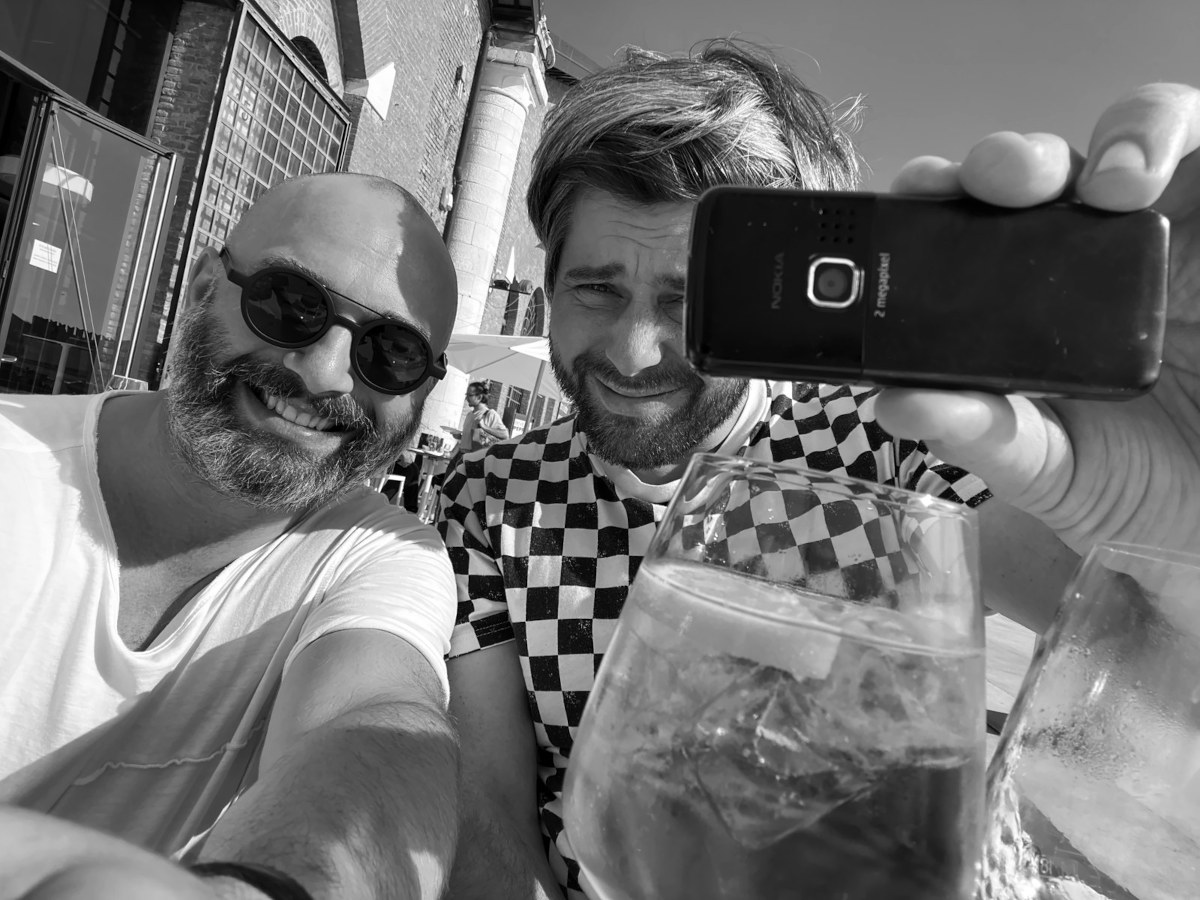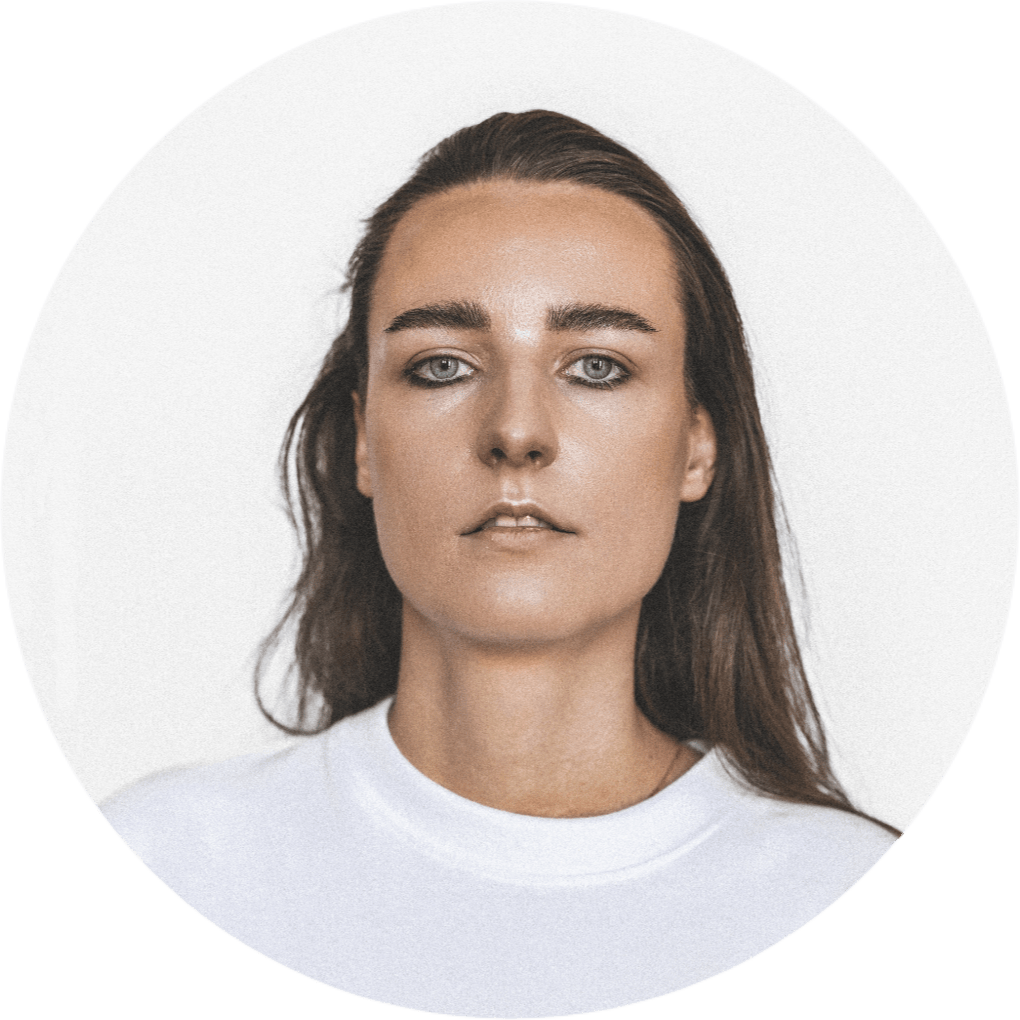
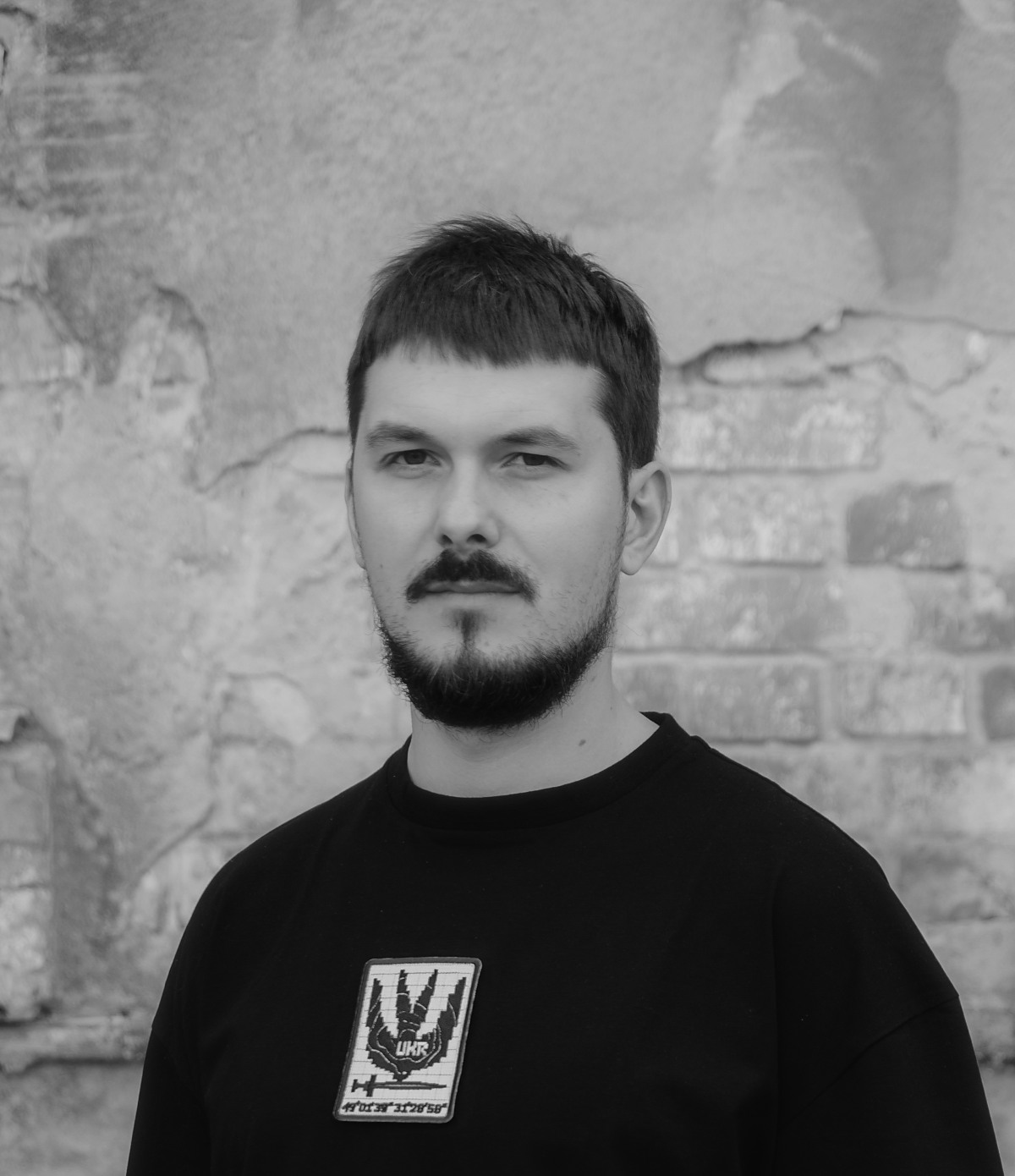
Vitalii Hrekh is a Ukrainian artist known under the pseudonym Dilkone. He lives and works in Ivano-Frankivsk. From graffiti on the walls of Drohobych to exhibitions in Vienna - his journey reflects not only the evolution of an artist, but the transformation of an entire country. We spoke about art, war, and the price of a carefree life.
Vitalii, you started in 2007, as a fifteen-year-old boy, painting graffiti in Drohobych. Today you exhibit graphics and video in Vienna. Describe this journey - what happened between the first letters on the wall and the gallery? How did you come to painting?
If the universe is expanding, then I expand the tools of my artistic language.
Indeed, I entered the world of art with excitement through painting on walls and graffiti culture. However, over time these practices did not fully satisfy my curiosity for creation. Already in 2010 I took part in my first group exhibition. Since then, besides graffiti, and later post-graffiti, I was creating painting and graphics in the background. And from 2018 onward, studio work moved to the foreground, as did my understanding of myself as an artist. In graffiti and mural practice there are many dead ends. I think such a path is quite a common trajectory both on the global and local level.
In 2012, you and your brother Serhii and others founded Kickit Art Studio in Lviv. What did this community mean to you - and what remains of it after the start of the Russian invasion?
We united to carry out joint creative projects and commercial commissions. We divided roles and management, all in order to scale our capabilities in synergy and get more done. This way we managed to realize many murals, exhibitions, collaborations with institutions. The most successful fruits were projects for involving other artists: the Lviv Street Gallery and the graffiti festival Aliarm. That whole stage was important for development. Already in 2018 we definitively focused on our individual creative practices. Therefore the great war of '22 did not affect us as a collective.
By the way, the Russian invasion began in 2014. And when it comes to the events of 2022, I use full-scale invasion.
You live and work in Ivano-Frankivsk. What is happening there on the art scene since February 2022 - are galleries working, are projects emerging, are people gathering around art?
Last week I visited an exhibition at the Asortymenta Kimnata. Due to power outages, each visitor can take a flashlight at the entrance. The temperature in the space is a few degrees above zero. Such is the reality, yet the exhibition is open. Local businesses are in a similar situation, as are the living conditions of the city's residents in their homes.
If we talk about art, then as for any regional center, it lives not thanks to, but despite the circumstances, held up on the shoulders of enthusiasts. In the city we have the already quite experienced Asortymenta Kimnata, which I mentioned above, and the new Promprylad Art Center - two independent private institutions. They are actively working and setting the pace. Our theater is also a joy, and there is a local media outlet Postimpreza dedicated to art. Overall, the situation is quite stable. Art exists. It has a hard time, but it exists.
Does any state support for art and culture exist at all in Ukraine in the current wartime situation - grants, residencies, stipends? What does it look like in practice?
An artist can survive without a country; a country cannot come into being without art.
Ukraine is fighting for its existence, so I have no intention of expecting state support for art at this time. In general, state support for art is something quite exotic even in prewar times. Although there were exceptions, such as the UCF. But those who seek will find. There are initiatives from various NGOs or private institutions.
I often come across open calls and opportunities from European institutions; the other problem is that in most cases these are opportunities for Ukrainians who are already in the EU or can freely travel abroad.
And purely personally - can you make a living from art today, or do you do something else as well? Is it even possible in your situation?
The first years of the full-scale invasion it was possible for me, but currently I do graphic design, carrying out various commissions. Full-time creative work is in the background for now.
Overall, there is a noticeable decrease in financial activity from collectors. Perhaps this also overlaps with a change in my art, which has become less attractive to a broad audience. It is no longer as vivid and less suitable for the interior of just any home.
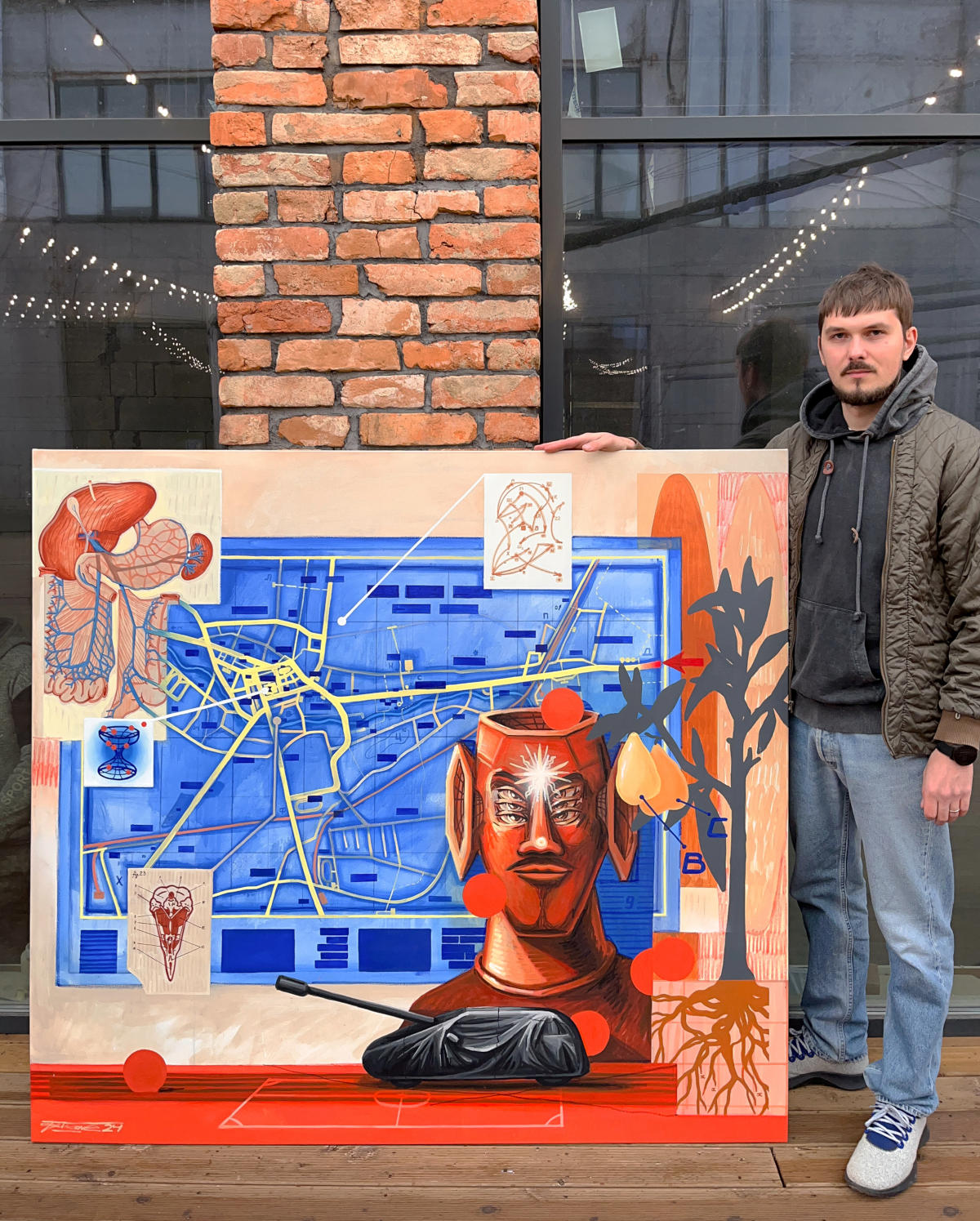
When I look at your works, I see a shift from ecological themes to wartime landscape - from murals in Tbilisi through charitable projects to the Black Spots cycle. What drives you internally to paint - what do you need to express?
I, the country, society are experiencing tectonic changes, events that concern everyone. This could not but influence the work. Somehow naturally these phenomena transferred into the subjects of the paintings. Sometimes quite directly, sometimes through metaphors.
What drives me is the satisfaction from the process, a little less so the analysis of the result. Overall, I like when painting becomes a kind of infographic, visualizes data and tells a story, or part of a story.
How would you describe your style to someone who doesn't know your work? And who or what shaped you - which influences, artists, experiences?
The figurative canvases are a kind of infographic, composed of many layers. They somewhat resemble vintage graphics, combining elements of topography and graphic inserts. In them I think through sketches, carefully search for information and content that will become the basis for the works.
In abstract painting it is a flow of energy, a rapid release of the subconscious. The search for form and color directly on the canvas. It is similar to post-graffiti practice, when you focus on the process, the environment, and the inner vibe.
Style is a certain filter of everything I like and what is important to me. Here it is harder not to find, but to refuse the superfluous, to maintain focus and flexibility. What influenced me was the environment, especially working with my twin brother Ferosone. A love for maps, vintage graphics, experience in design and painting graffiti and murals.
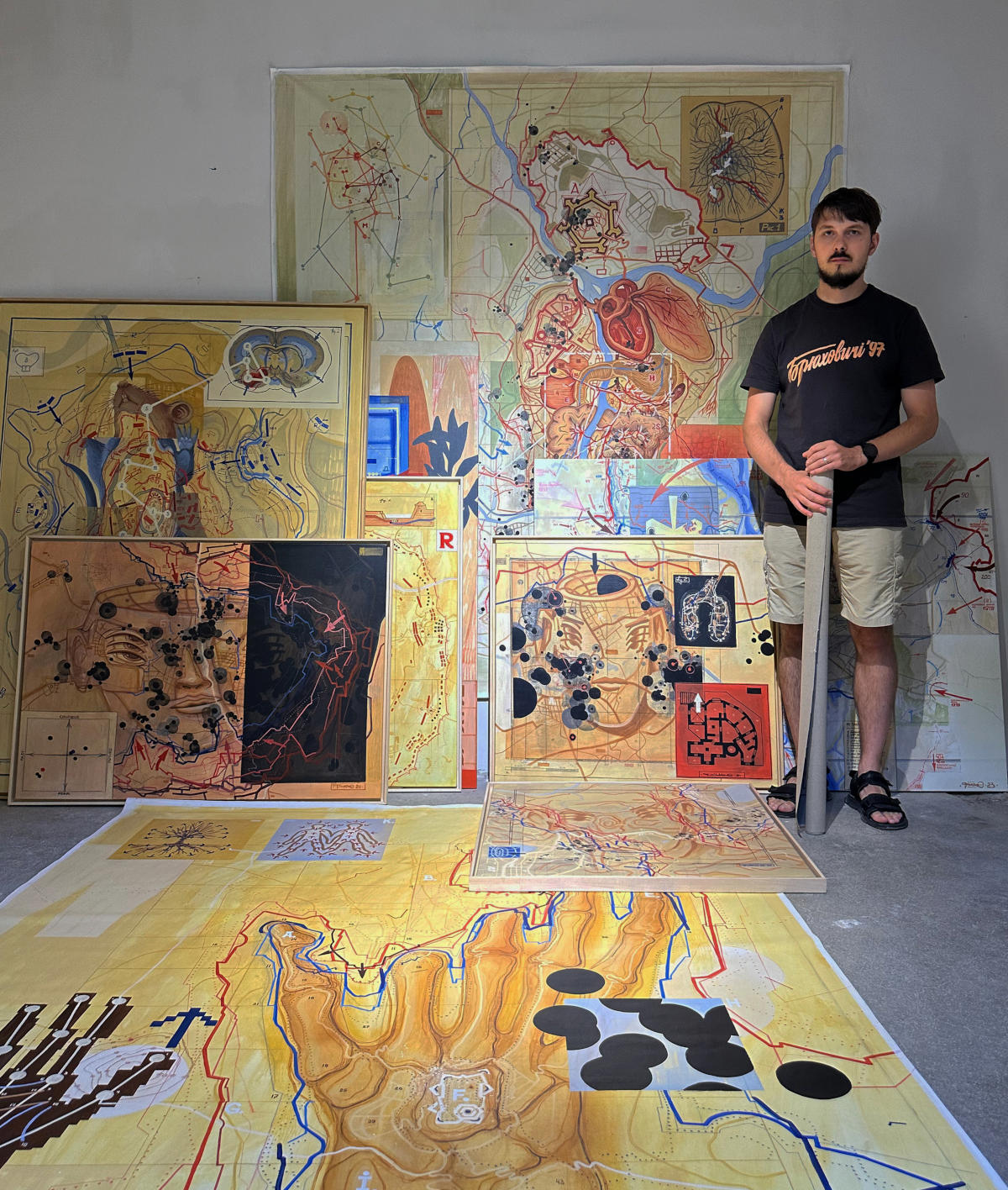
You initiated the project "Steering Wheel of Rescue," in which ten Ukrainian artists, including Waone and Interesni Kazki, donated paintings for the purchase of evacuation vehicles for the Zaporizhzhia front. Together with your brother, you painted a mural at the stadium in Hostomel, which was destroyed by the Russian occupation. You publicly responded to an Italian muralist who worked in occupied Mariupol. How do you perceive the role of an artist in war - where is the boundary between creativity and civic responsibility?
Since 2022 I started doing fundraising for the needs of the military. Mainly for relatives and friends. From 2023 I joined a team of friends at the charitable foundation "Vdyachni" (Grateful), where we work every day to provide for the needs of military medics. Here I can realize fundraising projects. Exchange works of art for donations, involve other actors from the art sphere. Perhaps I don't always do enough, but I feel I am in my place.
Many of my friends do fundraising and it has become the norm. This has nothing to do with creativity. It is simply the basic settings of a person whose home has been invaded by a great war. And when I say great war, I mean a front line stretching 1,000 km, with trench lines, artillery, aviation, and drones. With hundreds of thousands of soldiers who just recently had civilian professions and now live in fields and tree lines to protect the lives of others.
I think the role of an artist in war is the same role as that of a person of any other profession. The only advantage, or disadvantage, is that they can somehow express it in their work, feel a little more subtly and convey it.
Many Ukrainian artists have emigrated - to Vienna, Berlin, Warsaw. You stayed. What keeps you in Ukraine - and how do you experience the daily reality of a person who faces mobilization?
I had no legal or ethical grounds to choose emigration. My moral compass is on this side of the border. I live in relative safety, 1,000 km from the front line, in my city. Over the past four years, although with great difficulties, I traveled abroad on work trips and always returned. I thought about joining the military, but never dared to take that step.
In general, thinking about the dreamed-of Europe or the Western world is a dilemma not only of my generation, but of past ones as well.
Our magazine is read by people in the European Union who are dealing with questions of an art career, grants, exhibition opportunities. You live in a country where artists become soldiers from one day to the next. How do you, from this perspective, look at the concerns of artists in comfortable Europe - and what would you tell them about what is truly important in life?
A carefree life is beautiful. I look at you and I envy you in a good way. In general, it is nice that there is a territory where life is developing. That gives hope. I have almost nothing to say. The only serious phrase: every carefree existence has its price.
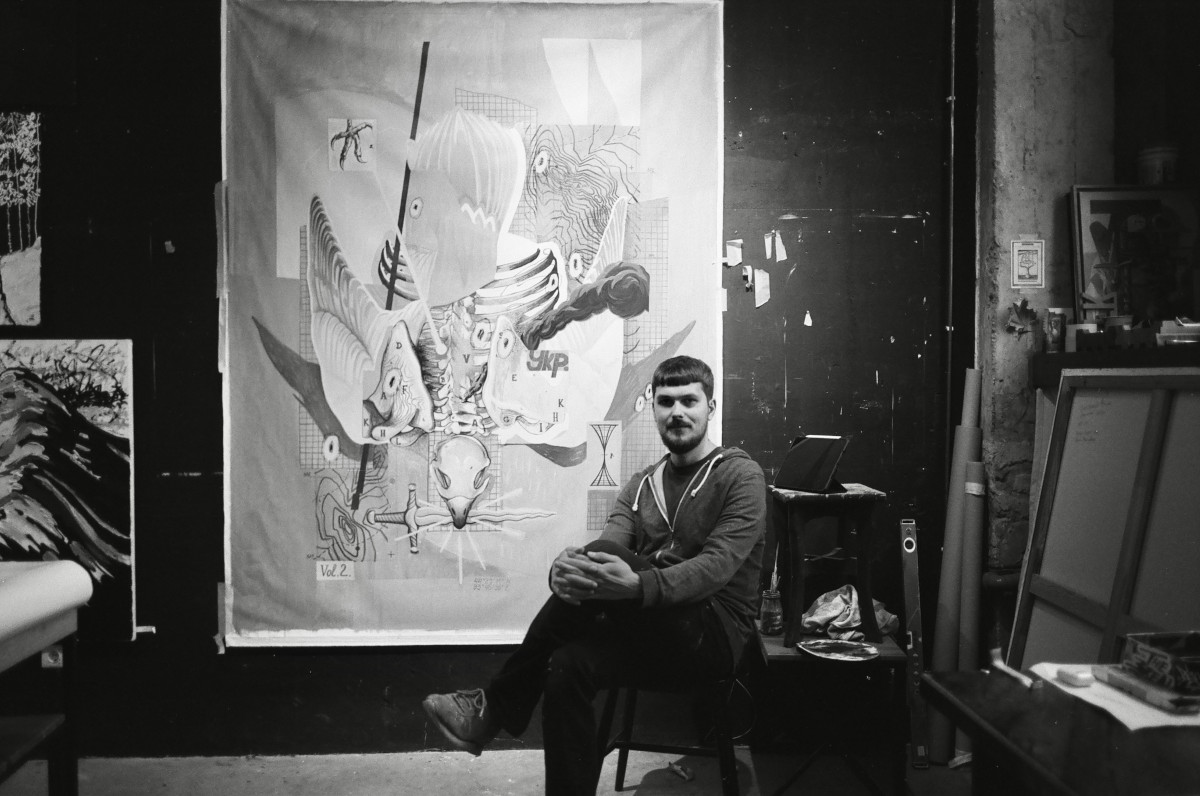
Our readers would like to help directly - do you know a verified fundraiser or organization through which people from abroad can support Ukrainian soldiers or artists?
At the Charitable Foundation "Vdyachni" (Grateful), every hryvnia is spent wisely and with care to protect combat medics, their crews, and to help the wounded.
https://www.grateful.com.ua/en/bank-details/
As for artists, buying art is the best support in these turbulent times.
What would you still like to experience in your life?
I dream of living a carefree life, and even better, that it would come to my country. Just walking to the studio like that and painting pictures, printing graphics, and not worrying about anything else. Without historic events every day. Thank you.
Thank you for the conversation.