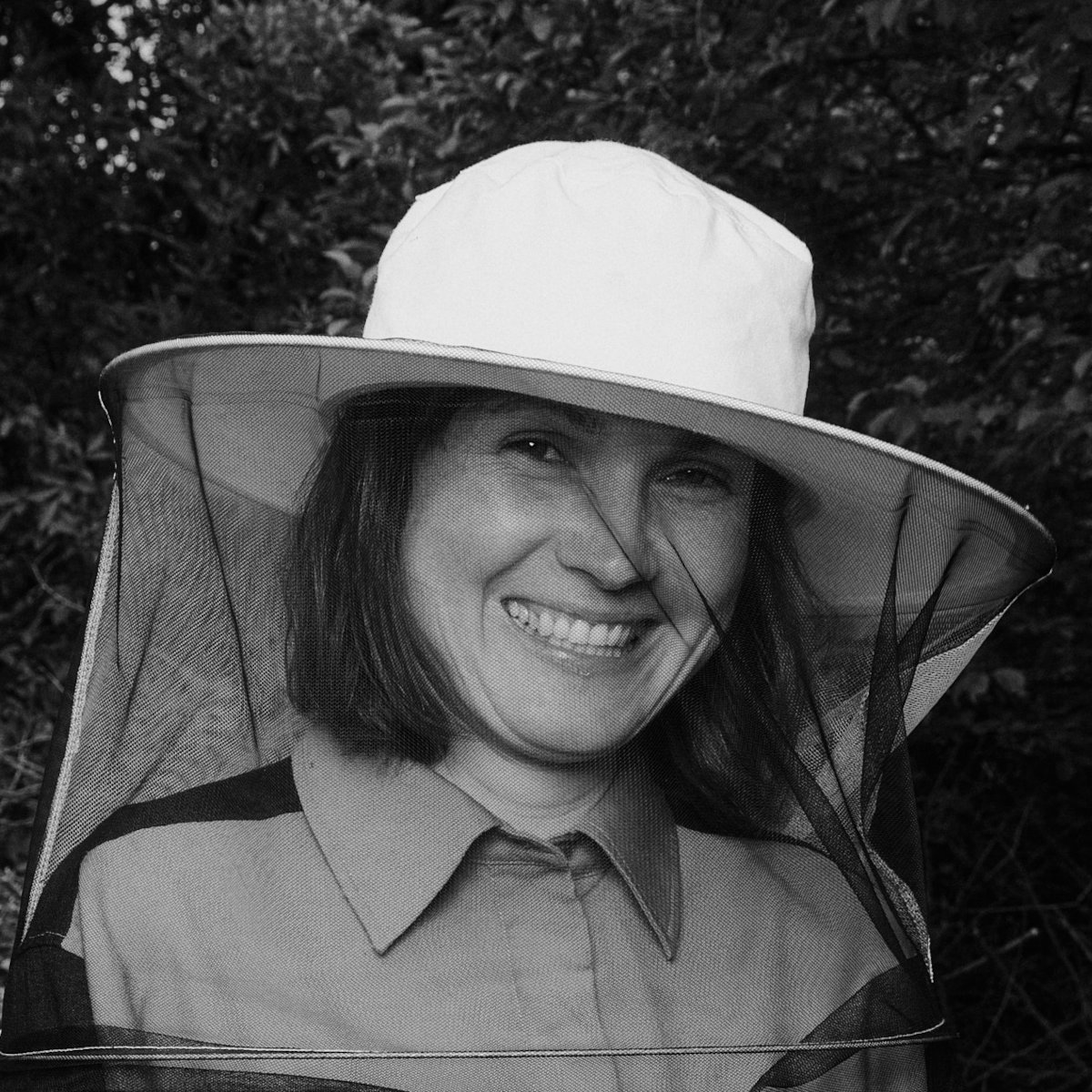
Anna Hulačová is a Czech sculptor whose work with live bee colonies transcends the boundaries of contemporary art. She places figurative sculptures on beehives, in whose cavities bees build honeycombs - referencing ancient legends about the immortality of the spirit. We spoke about emotions in the creative process, sharing a life as two sculptors under one roof, raising children in the countryside, and why the most important thing for an emerging artist is to never stop creating - even if it means working in a ten-square-meter kitchen.
Can you describe your creative work - how you experience it emotionally, from the heart? What does creating give you on an emotional level?
For me, creating is an escape from all the chaos and happenings of the world - from family, politics, and social relationships. At the same time, however, it is a constant connection to this reality, because I respond to it in my work. It has nothing to do with running away from responsibilities and problems. It is precisely about tuning into a different state of mind - one that you enter in moments of creative fervor.
Once I get to work and I am not dealing with the complex technical procedures that come with it, I feel freedom - regardless of what material or medium I am working with. This mental attunement is a healing process for both mind and body, and I am absolutely convinced of that. In fact, my mind is often tuned to creation even during everyday tasks, but these fragments of ideas need to be recorded and then filtered. During full concentration in the creative process itself, I want to give them a more layered and poetic form.
Your sculptural work features organically integrated honeycomb structures built by bees. How does your collaboration with live bee colonies work? What do the honeycombs most often symbolize?
I have been exploring the theme of bees and honeycombs in sculpture over the past decade. In earlier years, I worked with bees by placing figurative sculptures on the upper levels of beehives. I make use of the natural tendency of part of the colony to expand from the original lower levels of the hive upward into the cavity within the body of the sculpture, which they inhabit during the season.
This process is symbolic, inspired by ancient beliefs, beekeeping practices, and Greek legends. The honeycombs built by bees inside the sculpture replace the innards or vital organs, or may symbolize the materialized spirit as a primordial systematic structure within the body. Cavities are carved into the facial and abdominal areas - spaces that allow the bees to expand into these parts. During swarming season, the sculptures thus become a living part of the hives.
Honeycombs built within the abdominal cavities can evoke a hybrid organism - a spirit born from the organs, symbolizing the return of nature's spirit and the arrival of life through the entrails of the physical body. The ancient Greeks and Romans believed that bees inhabit and emerge from the cavities of dead bodies of large animals as a transforming spirit that reinforces the bond between the living and dead worlds, and whose arrival ensures reconciliation and a good relationship with the gods and natural forces in times of environmental and civilizational collapse.
Other ancient cultures likewise associated bees emerging from the entrails of dead bodies with the immortality of the spirit and its return to this world. Bees "returning" from bodily cavities were regarded as spirits rising from the realm of the dead. A bee born in organic cavities thus assumes physical form so that it may co-create and sustain the plant kingdom in bloom, the cycle of fruits we eat, and the oxygen we breathe.
The concept of figurative and organic sculptures in whose cavities bees build honeycombs is further influenced by ancient beliefs inspired by the legend of Aristaeus, mentioned in Virgil's Georgics. In connection with this story, the Greeks, Romans, and other cultures personified the bee and attributed superhuman spiritual qualities to its existence.
You are a resident artist at the prominent Hunt Kastner gallery, which works with its artists in an exceptionally active way by Czech standards. Can you describe how you perceive this collaboration and how it specifically helps you? Does being part of a gallery also come with any drawbacks or limitations?
Hunt Kastner has represented me since 2015. That same year, I installed my first exhibition there - with my then six-month-old daughter, while Káča helped me with babysitting during the installation. A very good personal relationship developed between us from the very start.
It is not only about commercial support. While selling art is the goal of most commercial galleries, this gallery has long been focused primarily on systematically establishing its artists and introducing them to curators and institutions, which is more essential for artists in the long run.
You live and work in Klučov - what does this environment mean to you in relation to your work?
We moved to Klučov in 2015. It was more of a necessity for us to leave Prague, while staying within reach. It is actually a good location because it sits on a train line and I can get there from central Prague in 40 minutes. We have no roots or family ties here - we simply needed a place of our own. Mainly me, with my infant daughter - while breastfeeding, I couldn't work on larger pieces when I needed to continue in the evenings while the child was sleeping. We bought what was essentially a ruin that even the bank refused to finance because we were truly broke. Eventually, we managed it through a financial advisor. We have spent ten years renovating this old house and there is still work to do. In any case, now when we see rental prices in Prague, we can see it was a good choice. Things could be better, but we are content.
Your partner Václav Litvan is also a sculptor. What does the coexistence of two artists under one roof look like - and how do you influence each other's work?
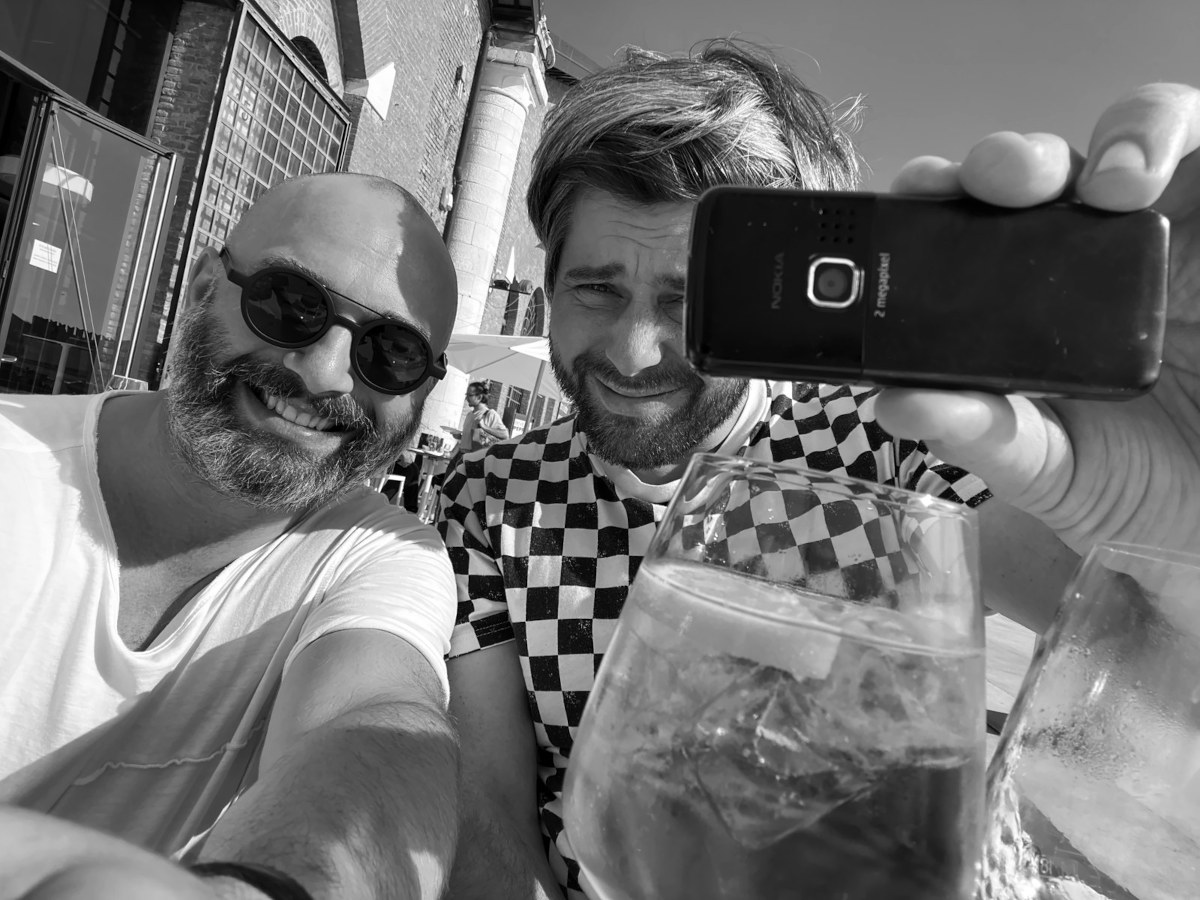
Václav is my greatest support and helps me raise the children. In recent years, he has actually devoted more time to them than I have. At the same time, he is an excellent sculptor - he studied under Jan Koblasa, then under Jaroslav Róna, where we met, and subsequently under Jiří Příhoda. His work is very sensitive and progressive, often more ecologically minded in terms of materials than mine, because he works with readymades and gives them a new form from which few people can tell they were originally found objects.
He often collaborates on my projects as an assistant, and although we sometimes disagree on certain technical procedures, his skills are invaluable. We have clearly divided roles so that we can function under one roof and collaborate effectively.
Has online visibility helped your art career in any way?
I cannot say that unequivocally. Online visibility certainly helps most artists. When it comes to social media like Instagram, it has perhaps become an almost indispensable part of every young visual artist's practice today.
I started using Instagram relatively late - and I do not think it fundamentally influences the way my career operates. There are artists who do not use social media at all and yet function very successfully. However, galleries and institutions take over communication on their behalf, because online visibility has become a standard and essentially necessary practice across the artistic spectrum.
What would you say to students and recent graduates of fine art academies who aspire to succeed professionally?
I do not like advising anyone on how to function or which path to take. Each of us has their own path of development and creation. Generally, though, I could probably say just one thing - try to keep creating as much as you can, even though it is increasingly difficult to manage financially these days.
Rents are high, and if on top of that you are paying for a studio, you often end up earning just enough to cover your costs, with no time or energy left for creating. But if you want to continue, you need to create however and wherever you can and try to avoid unnecessarily high living costs - especially if you come from a less affluent background, as my husband and I do.
As a new mother, for example, I was working in a studio apartment six months after giving birth - in a kitchen of ten square meters, later in a space of twelve meters. When we were building the studio, I was sculpting essentially in the mud of the house's foundations, in cold outdoor conditions, and while breastfeeding our second daughter - only in moments within range of the baby monitor, when the child was sleeping next door in the house. I think it is important at the beginning to adapt to such conditions so that you do not have to bear unnecessary expenses, even though it is really tough.
Another thing is not to be afraid to travel and engage with environments beyond just the Czech one. That is very important. There are actually many such things, and frankly - in today's world, increasingly saturated with visual art, it is really very challenging for an emerging artist to break through and be competitive. You must have your own distinctive language and keep pushing your own limits. In any case, in every difficult moment or traumatic situation, it is precisely creation that serves as the place where you can take refuge and find something to lean on.
Thank you for the interview, Anna!