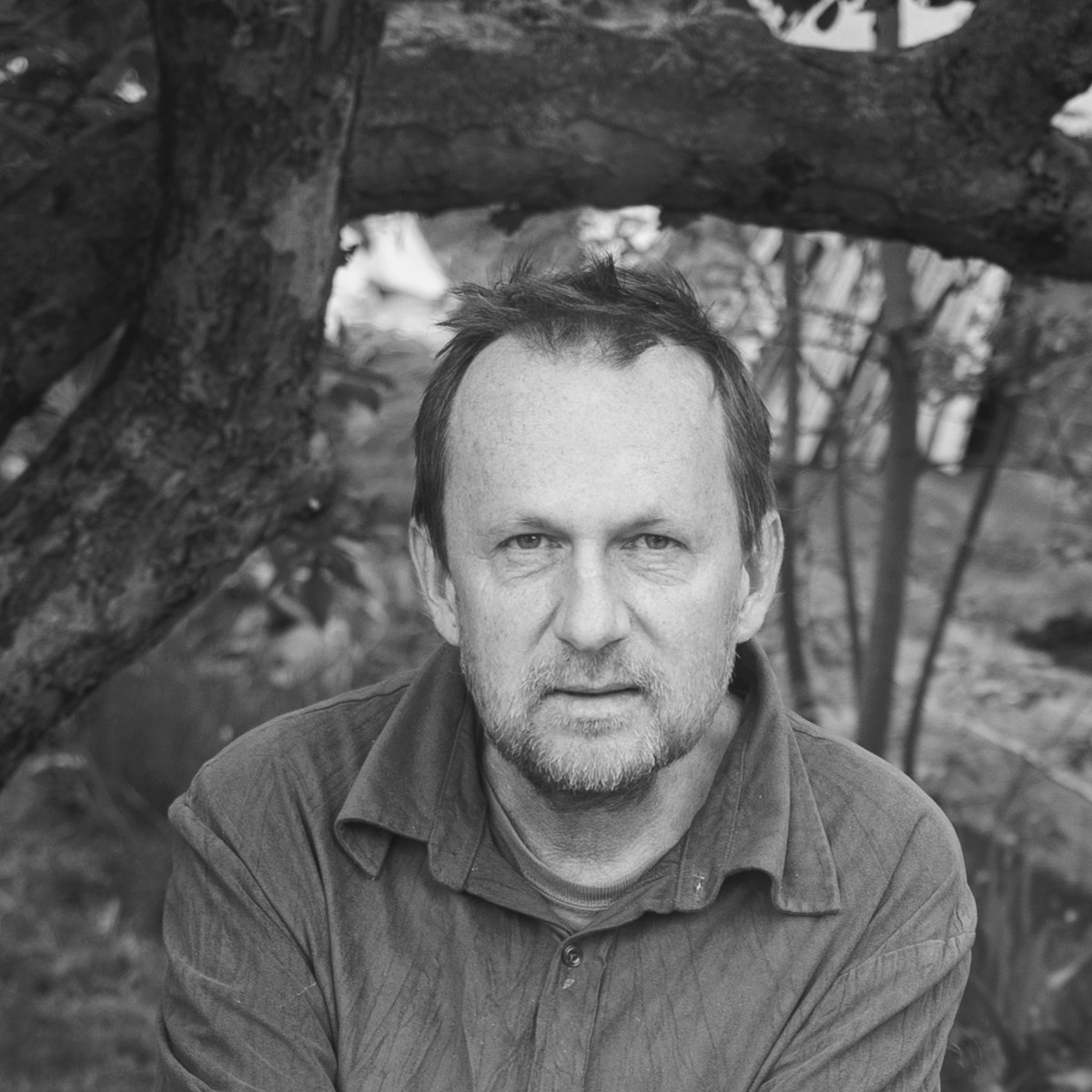
Lukáš Karbus lives in seclusion in northern Bohemia and paints large-format watercolors that emerge slowly, layer by layer. After the closure of Polansky Gallery, he is leaving the future open. We talked about the daily practice of painting, teaching at a glassmaking school, social media, and why the most important thing is simply to keep painting.
How are you doing these days? What are you up to?
I'm doing well. Keeping the fire going.
Polansky Gallery, which exclusively represented you, has closed - according to its owner, for economic reasons. Can you describe how and when your collaboration began? What were the advantages and disadvantages of working with a gallery?
I met Filip Polanský eleven years ago - Jiří Ptáček introduced us. Polanský saw some of my work and expressed interest in an exhibition. He gave me a year to prepare and paint new pieces. After the show, we agreed to collaborate. A gallery naturally tries to work with your art, finds clients, arranges transport, insurance, or photography - if you don't live in a bigger city, these services make a real difference. On the other hand, splitting fifty percent or selling exclusively through a gallery isn't for everyone, but it made sense for me.
What does your typical day or week look like now that there's no gallerist in Prague expecting your paintings at regular intervals? Has anything changed in how you think about who you paint for?
My typical day or week follows the school schedule (holidays throw things off a bit). Evenings are reserved for painting - that's been the same for several years. A change may come in the time I spend on each painting; it will be longer. To be honest, I don't keep any list of people who've bought my work. I don't paint or choose subjects for a particular group of collectors. It's always a spontaneous decision, even though the themes often build on one another.
Are you actively working on how collectors can access your paintings, or are you leaving that open for now?
I'm leaving it open.
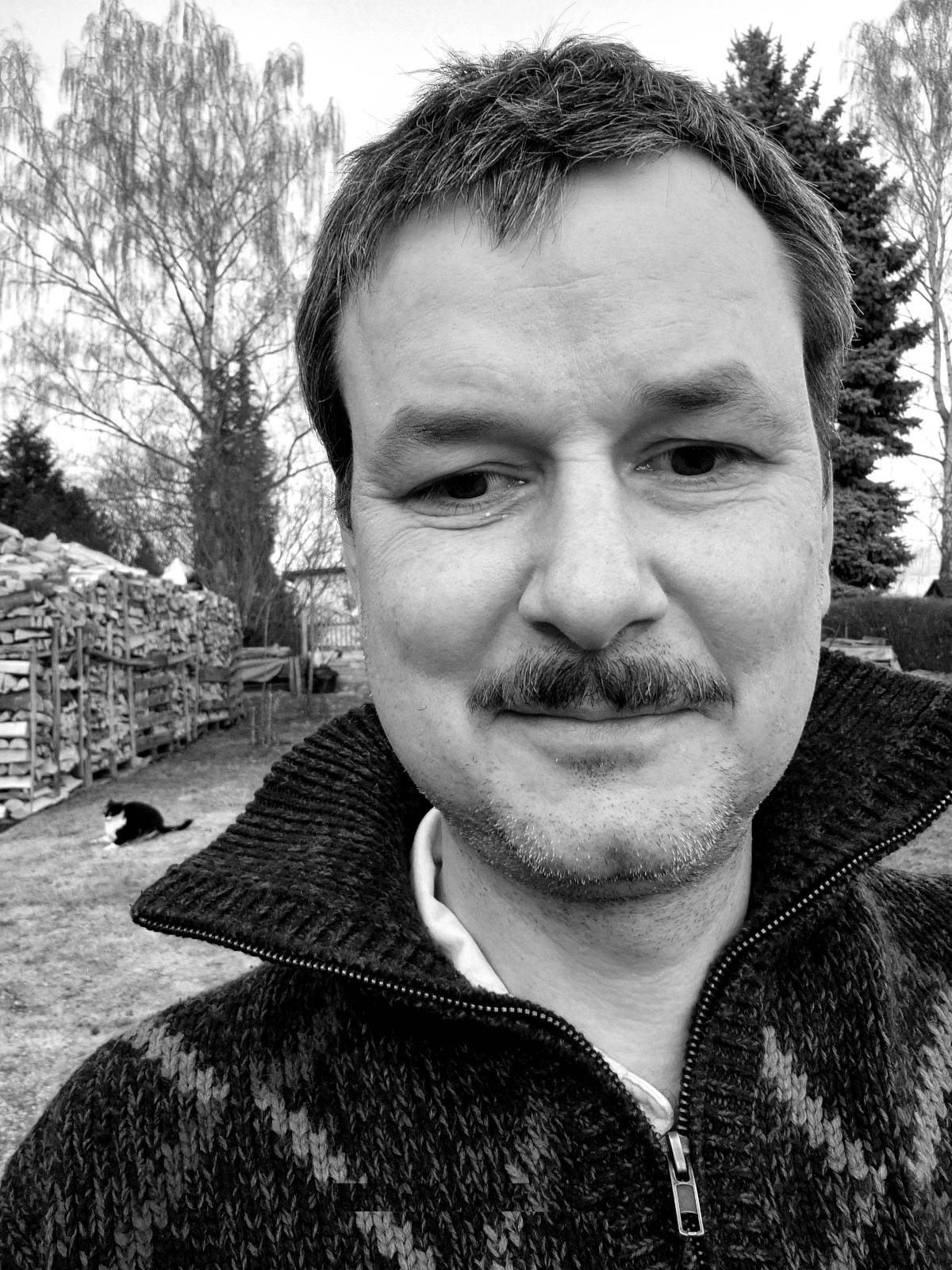
At one point you withdrew quite a bit from social media. I don't think you're on Facebook at all - you just occasionally post a blurry photo of flowers from your garden, chopped firewood, or exhibition invitations on Instagram. How do you personally view social media and online self-presentation?
Yes, I probably don't spend as much time on social media as proper self-promotion would require. When I post a photo or an invitation on Instagram, it's about whatever is happening around me at the time. But I don't feel the need to post every two weeks. It's really not that big a deal. It's true that at one point I was weighing the effectiveness of social media, and I concluded that less is more. The gallery handled the presentation of my work. I'm leaving the future open.
You clearly prefer peace of mind over constant self-promotion. Is that calm important for your work, or is it more that you simply don't want to spend time on social media?
Both. And also, I don't really understand how it works - I don't know what it's supposed to look like. The distance between the painting and me should be as short as possible.
You teach painting at a glassmaking school. In your view, what are today's art students' ambitions and motivations? In what ways are they the same as your generation, and how are they different?
Many factors come into play. The mix of individual personalities is very important - when it comes together well, it's a joy, and it mutually supports every student's personal growth. Otherwise, communication gets harder. I wouldn't want to generalize... The motivations or ambitions are probably similar, just with different content or different backdrops. Those inner decisions typically happen when you're sure of yourself; until then, you might just "want" something. I try to approach everyone individually, and over the years I've encountered a really wide range of young personalities. From very talented and hardworking to completely untalented and lazy. The thing is, three years later everything can be different - I think everyone has their own timing.
School, beyond teaching students craft skills, personal competencies, and similar "things," should above all be a supportive environment in the broadest sense. To see secondary art education merely as a stepping stone to producing craftsmen or artists would be stupid.
What was your path to becoming a respected painter, and what steps or approaches would you recommend to aspiring artists today?
That path starts somewhere in secondary school, then the Faculty of Fine Arts, work experience in Derby, England, working in agriculture and forestry, and finally teaching at a secondary art school. But it was no rocket launch, no straight line. Really, the whole winding road has been accompanied by an interest in painting. The difficulties you naturally encounter are easier to handle when you have a sense of purpose.
I'd tell aspiring artists to take an interest in art. In the course of doing so, many scenarios can unfold. They might study some form of art at university and discover it concerns them more than they expected. I think it's good to stay informed. Various regularly announced prizes for visual artists can help, as can attending openings, working, and perhaps building a profile on a social platform.
Do you still have a personal ambition to achieve something in art?
Yes, I'd like to paint something more.
In your watercolors, there's a gradual shift from descriptive landscapes toward greater and greater abstraction. Do you have any control over that direction, or does it happen on its own? Would you paint something more figurative again?
A few paintings were nearly abstract - a series like that emerged around 2022. There's always some continuity; certain elements become dominant. Over the last two years it's been a bit of everything, but still lifes and landscapes prevail.
How do you experience the friction between authentic inner creativity and the external pull of success, sales, artistic competition, and career?
Success with audiences and sales are important - without them, it's frustrating. I'm glad when someone buys a painting. I actually see the whole thing as interconnected. Whether we're talking about authentic creativity, artistic competition, success, or career, it doesn't really matter - each of these is an anchor point. What matters most to me is the time I spend painting. And things don't always go well, neither in the outside world nor inside. That's what the anchor points are for.
That sounds almost like a spiritual practice. Do you have a ritual or habit that helps you stay grounded - whether in painting or in life in general?
What comes to mind is continuity. Paintings emerge slowly; I add individual layers, thin and thicken. The ritual or habit is daily practice.
Thank you for the interview!