Lukáš Kania
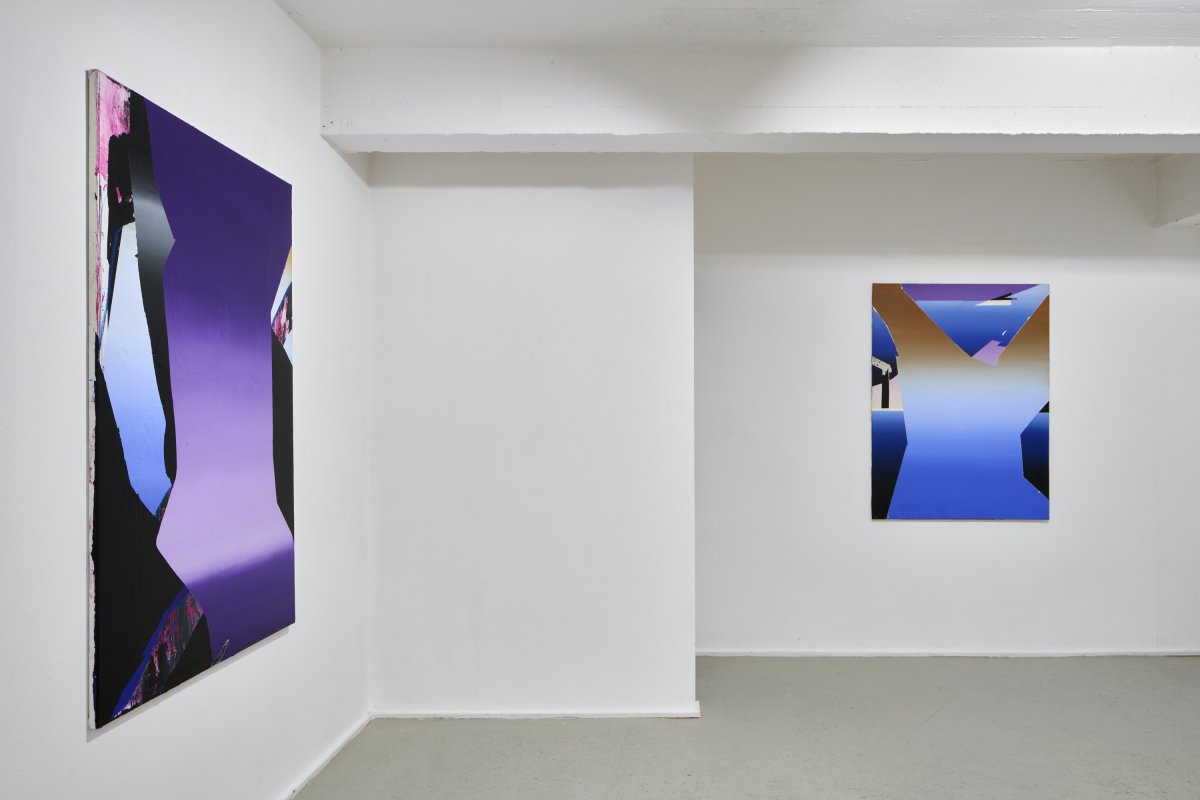
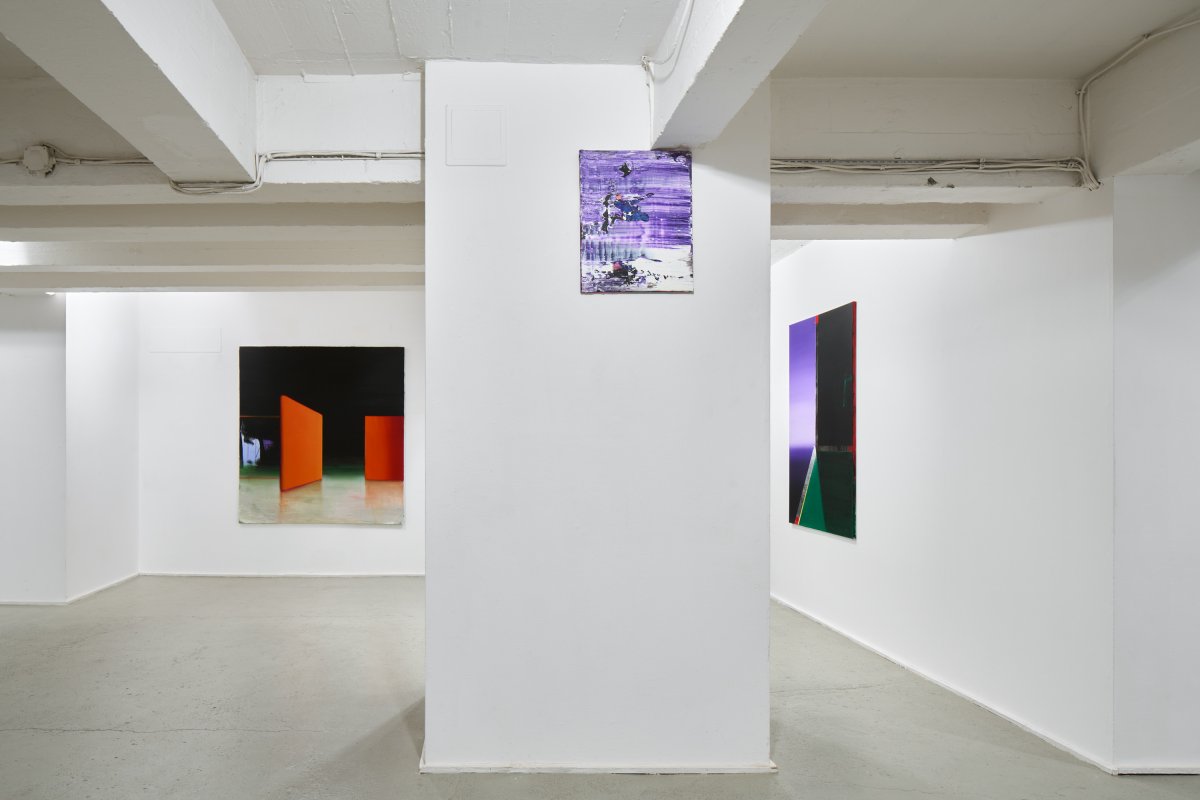
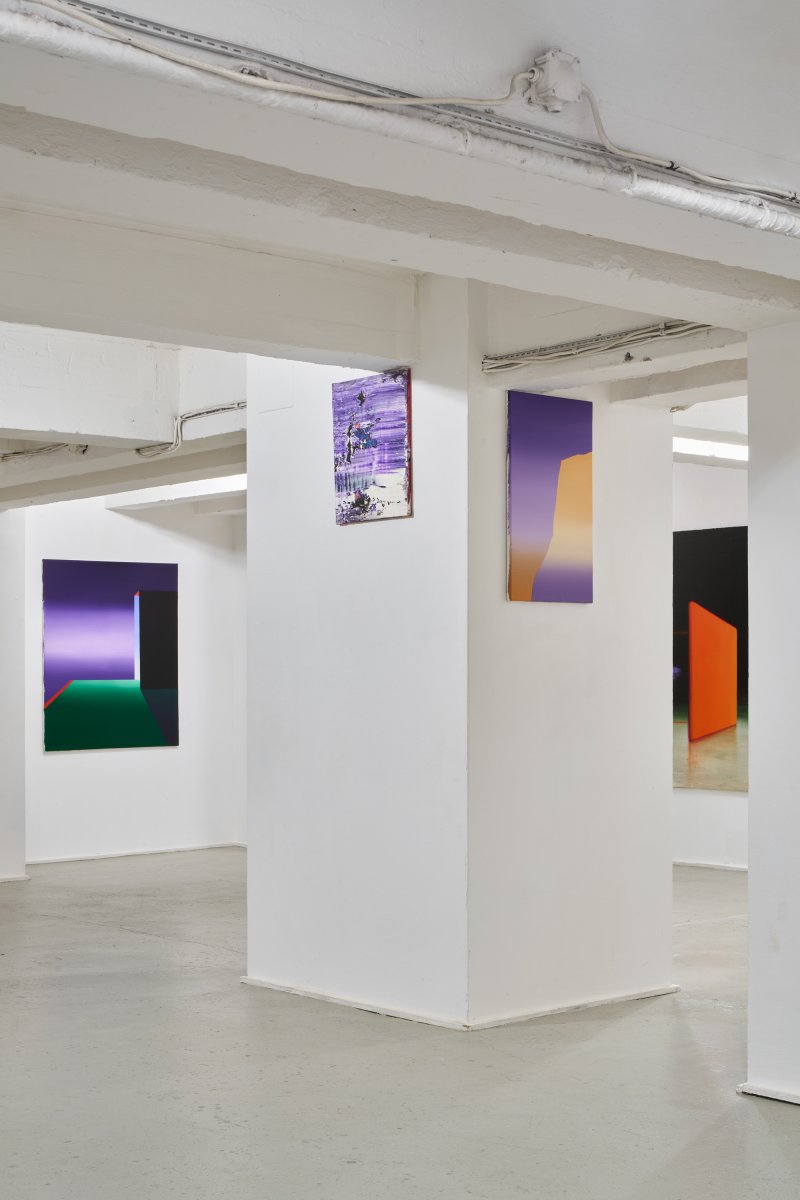
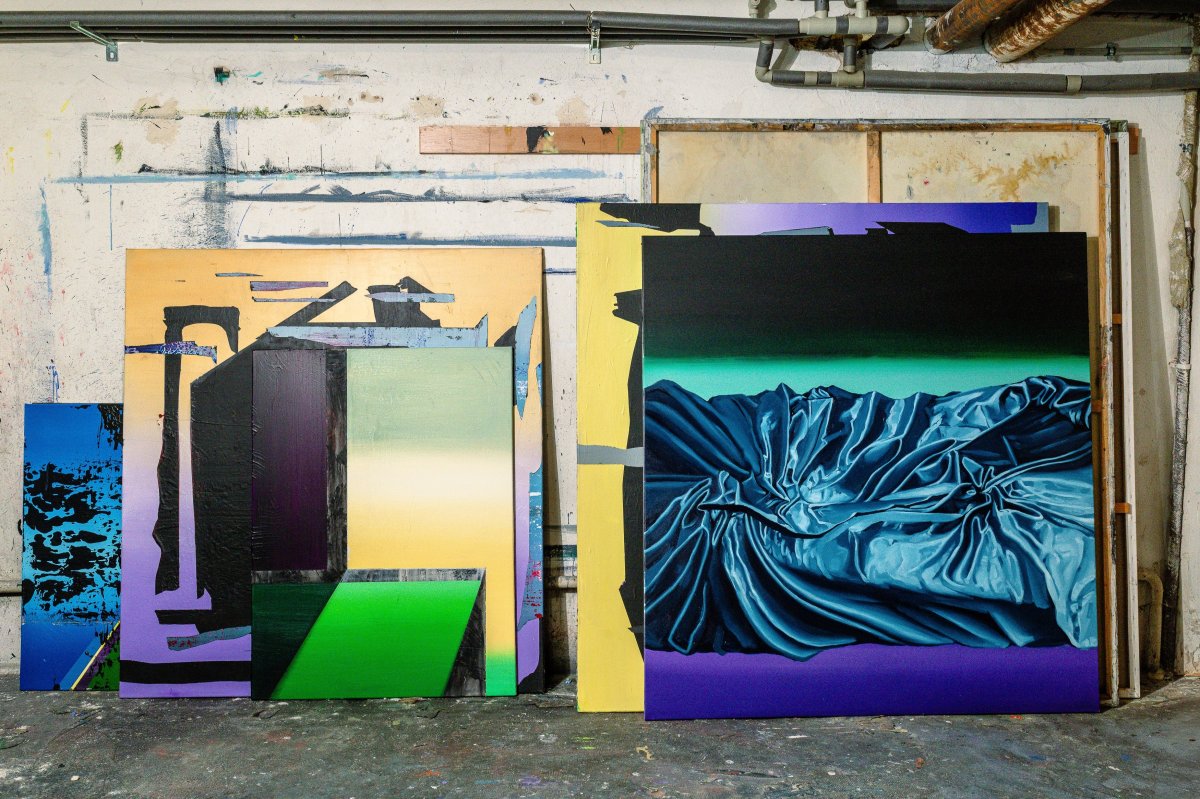
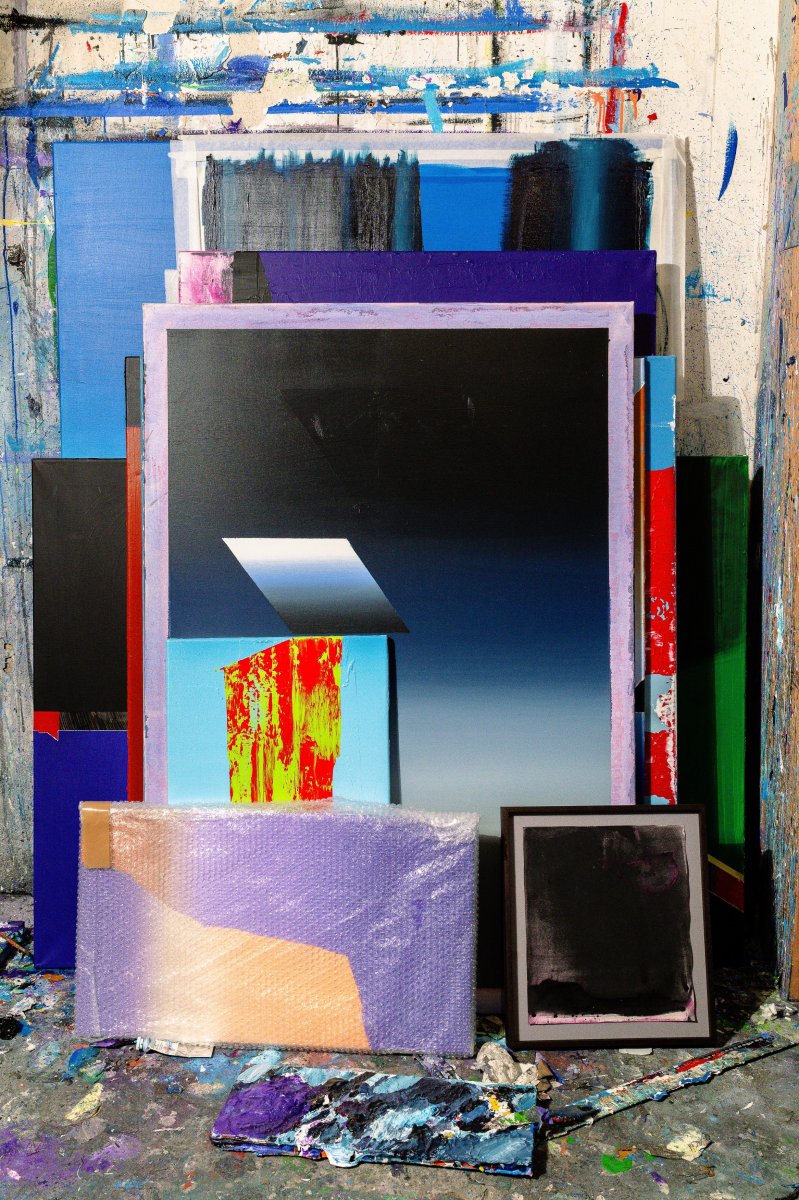
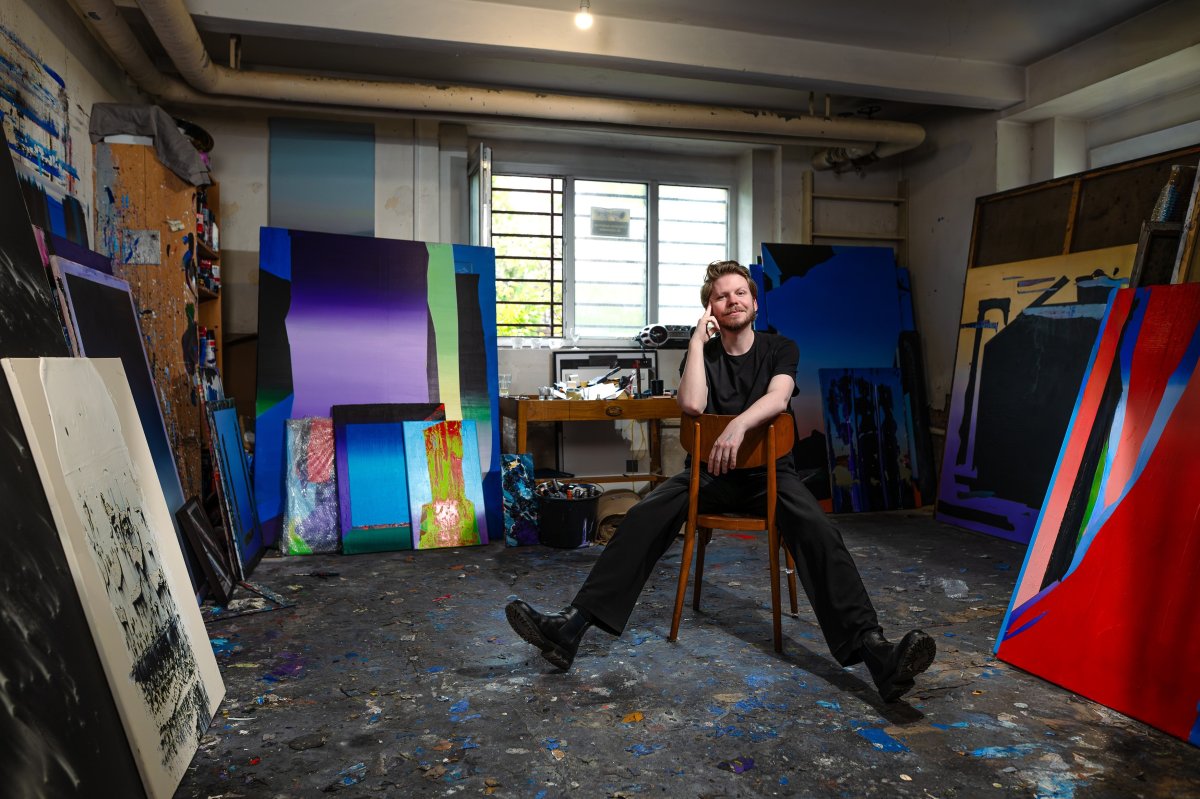
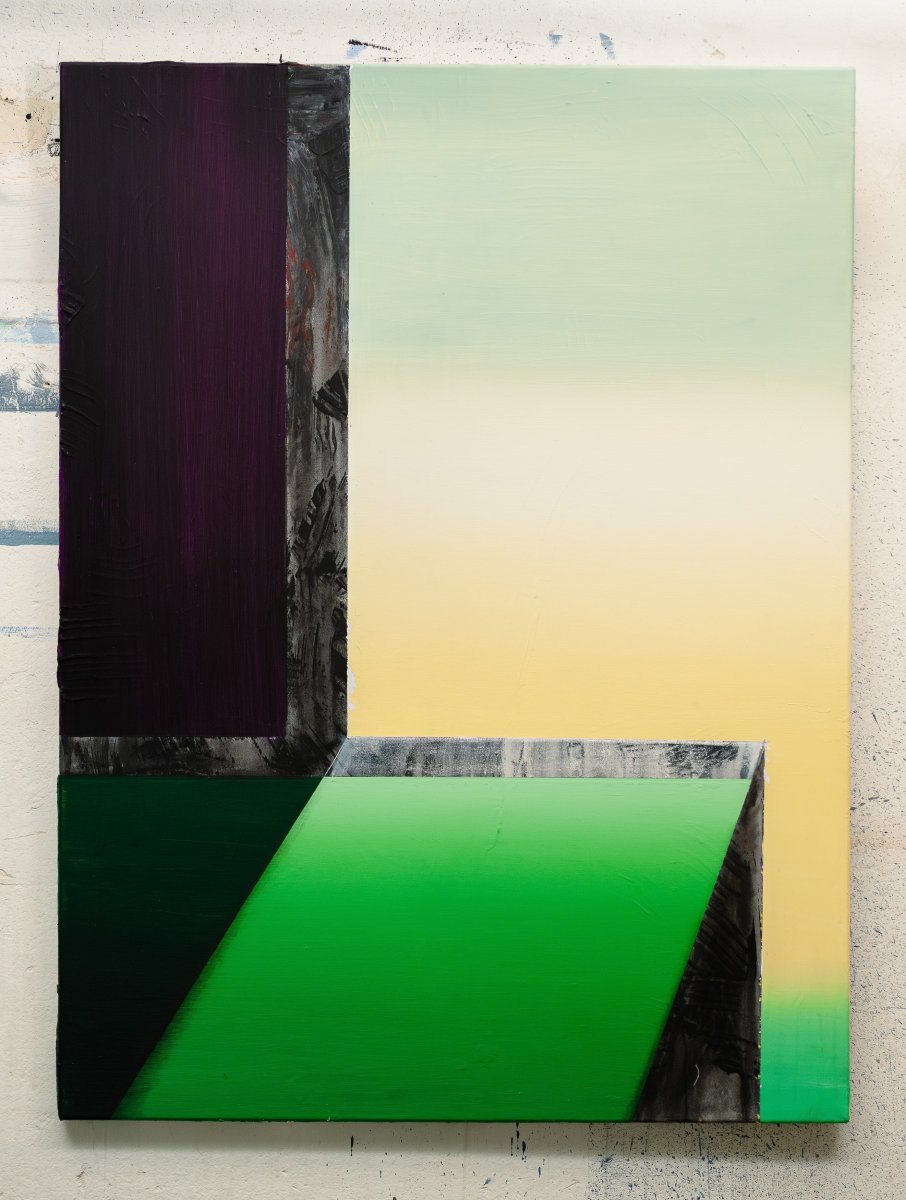
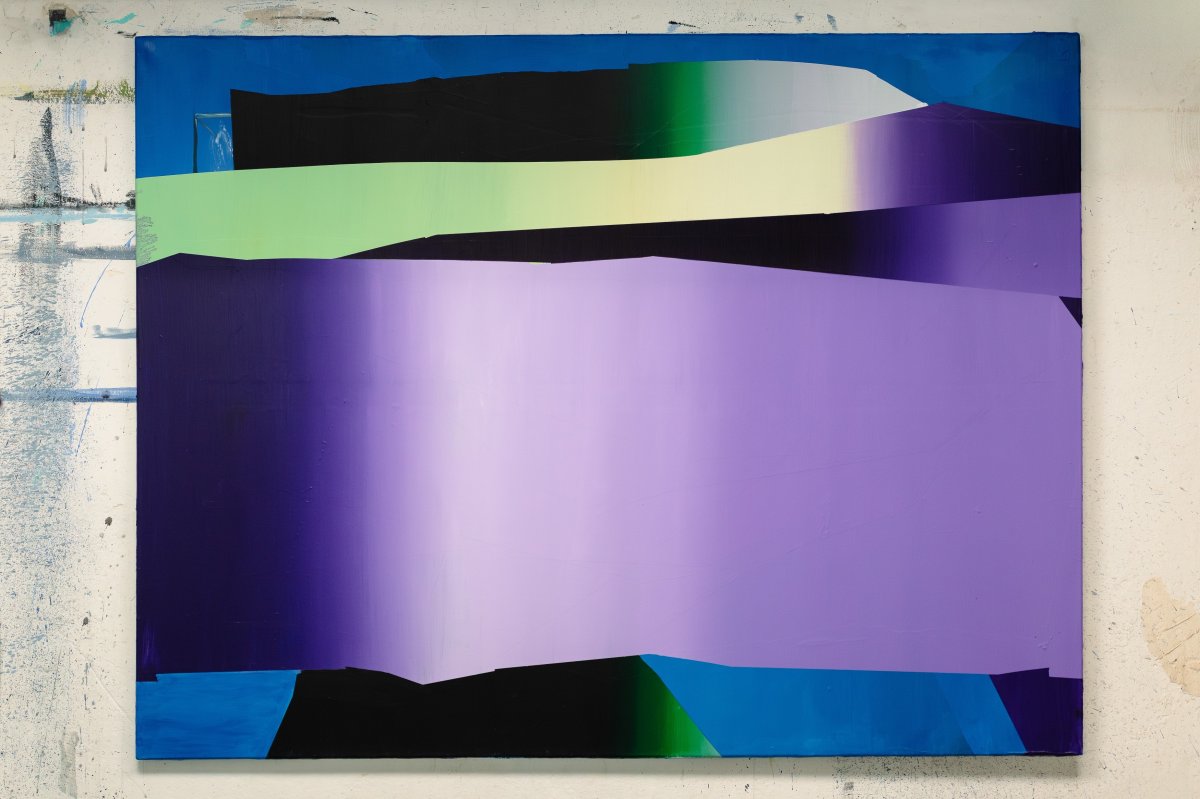
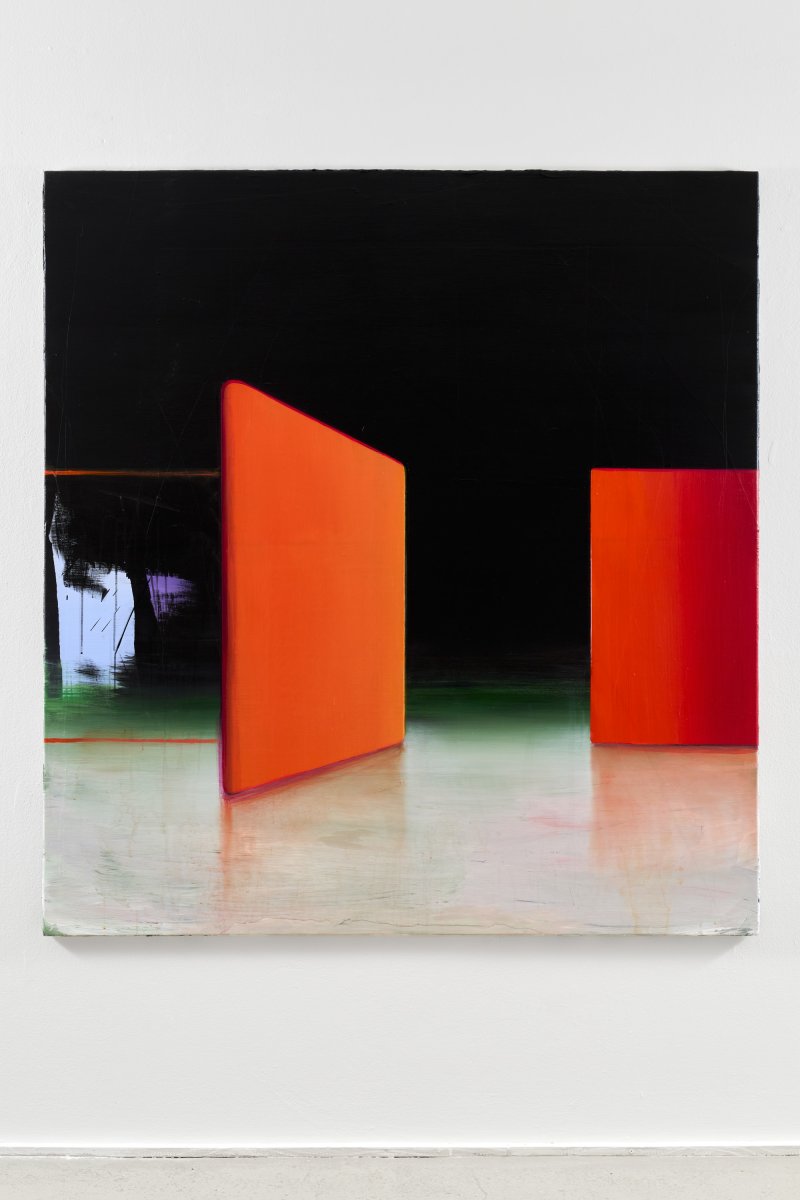
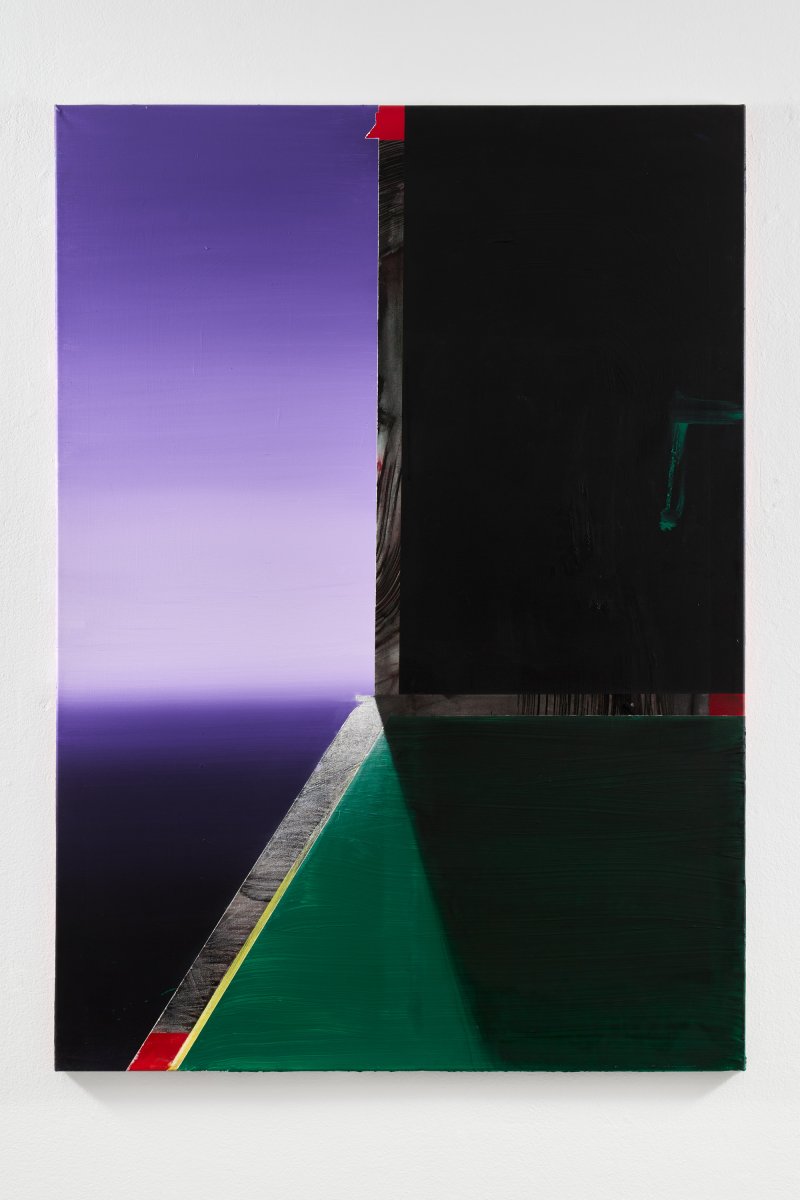
Although Lukáš Kania has long been based in Prague, his relationship to space and landscape is shaped by his experience of the North Moravian region he comes from. An environment marked by an industrial past, the mutability of the landscape and the interweaving of different cultural influences became one of the starting points for his thinking about the image as a site of uncertainty. In his work he creates seemingly familiar spatial situations that, on prolonged observation, begin to drift away from ordinary experience. Horizons draw apart, layers of space overlap, and the soft colour transitions are disrupted by tiny deviations that act like inconspicuous “errors” in the very structure of reality.
The artist has a long-standing interest in the moments when our trust in the stability of the world begins to break down. Space in his paintings is not a fixed backdrop but a shifting field in which logic ceases to be a given. Subtle shifts of perspective, ambiguous relationships between the individual planes, or disruptions of spatial connections create the feeling that we are looking at a reality that has been slightly “hacked” and rewritten according to different rules. In his more recent works the artist develops this principle further through paradoxical situations in which basic physical relationships contradict one another – for example, the position of the light source and the cast shadow.
These paintings stem not only from visual experience but also from philosophical questions bound up with the nature of time and reality. Inspiration can be traced to thinkers such as Henri Bergson and John Ellis McTaggart, who challenged conventional notions of linear time and objective reality. Kania's paintings thus become visual experiments in which time, space and identity itself are exposed to doubt. The point is not to find answers but to create situations that lead the viewer to ask whether they are truly moving through a fixed, given reality, or whether everything they take for granted is merely a construct of consciousness. The horizons in his paintings therefore remain open and keep receding.
The artist has a long-standing interest in the moments when our trust in the stability of the world begins to break down. Space in his paintings is not a fixed backdrop but a shifting field in which logic ceases to be a given. Subtle shifts of perspective, ambiguous relationships between the individual planes, or disruptions of spatial connections create the feeling that we are looking at a reality that has been slightly “hacked” and rewritten according to different rules. In his more recent works the artist develops this principle further through paradoxical situations in which basic physical relationships contradict one another – for example, the position of the light source and the cast shadow.
These paintings stem not only from visual experience but also from philosophical questions bound up with the nature of time and reality. Inspiration can be traced to thinkers such as Henri Bergson and John Ellis McTaggart, who challenged conventional notions of linear time and objective reality. Kania's paintings thus become visual experiments in which time, space and identity itself are exposed to doubt. The point is not to find answers but to create situations that lead the viewer to ask whether they are truly moving through a fixed, given reality, or whether everything they take for granted is merely a construct of consciousness. The horizons in his paintings therefore remain open and keep receding.
Profile created 3 June 2026
Artwork Gallery